

Key Takeaways
Creates a clear visual focal point
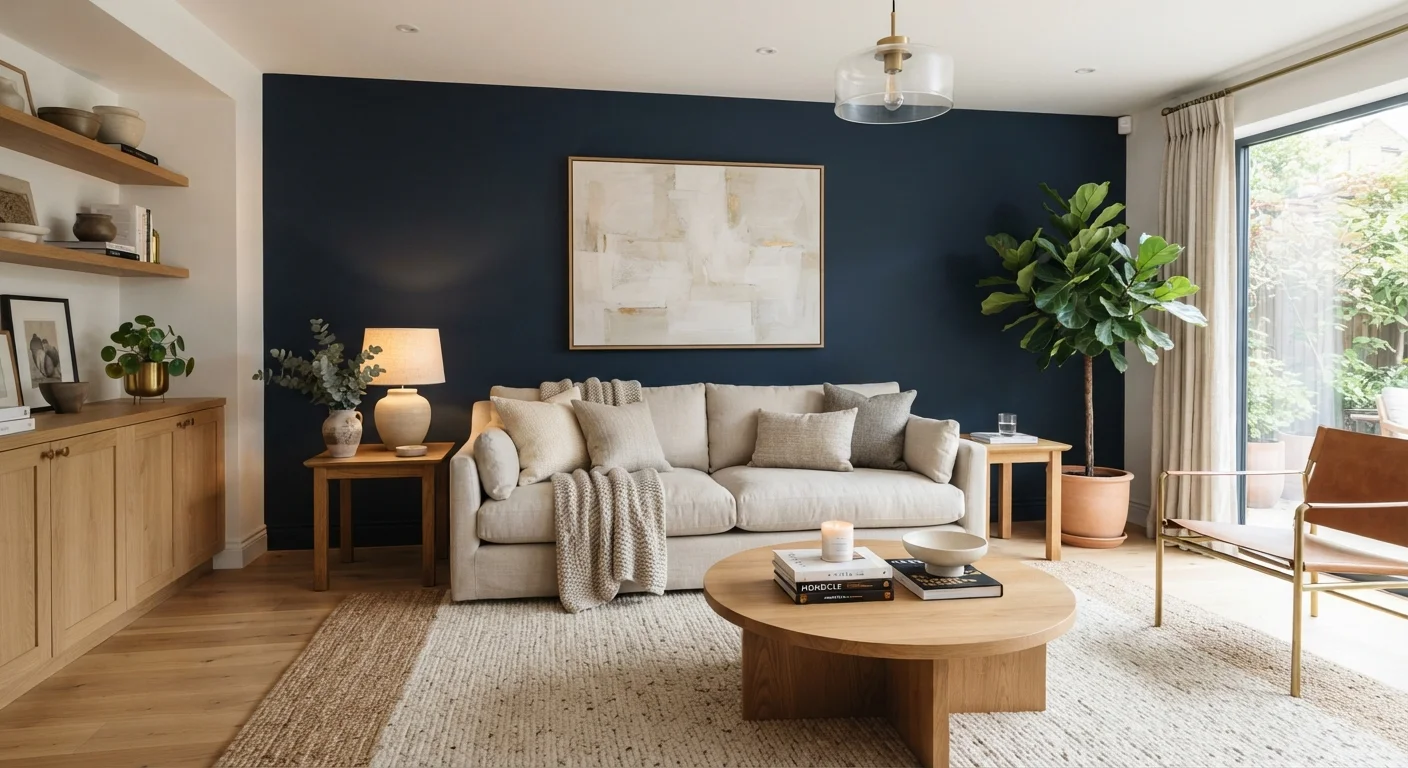
A well-placed accent wall directs attention to the room's most architecturally significant surface, giving the eye a natural anchor and the room a sense of intentional design.
Adds depth and dimension affordably
A single wall of contrasting color or texture can make a room feel more layered and considered without a full repaint or renovation - often a cost-effective upgrade.
Defines zones in open-plan spaces
In open layouts where living and dining areas share one large footprint, an accent wall can visually distinguish zones without requiring physical dividers.
Allows bolder choices with less risk
Committing to a dramatic color or pattern on one wall is significantly less risky than applying it throughout. It's an opportunity to experiment with a shade that would feel overwhelming on four walls.
Works with a range of materials
Paint, wallpaper, wood paneling, tile, and textured plaster all work as accent treatments, offering flexibility to match the room's existing style and the homeowner's skill level.
Wrong wall choice fragments the room
Applying an accent treatment to a wall the room doesn't naturally emphasize creates visual confusion rather than clarity, making the space feel more disjointed than before.
Can make small rooms feel compressed
In rooms with limited square footage or low ceilings, a strongly contrasting accent wall can visually shrink the space rather than add interest or character.
Color mismatches are hard to recover from
A hue that clashes with the room's existing furniture and palette creates a jarring focal point. Re-painting is always an option, but it's an avoidable cost when the planning stage is skipped.
Trendy choices date quickly
Accent wall trends cycle in and out of fashion. A bold choice that feels current today may read as dated within a few years, particularly with material-heavy treatments like certain wallpaper styles.
Poorly lit rooms amplify mistakes
Dark accent walls in rooms with minimal natural or layered lighting often feel heavy and oppressive rather than dramatic, and the effect is difficult to correct without changing the lighting scheme.
Our Verdict
An accent wall is a genuinely useful design tool when it's chosen with intention - working with a room's architecture, light, and existing palette rather than against them. When applied arbitrarily or to a space that lacks the proportions to support it, the result often feels forced and visually noisy. The technique rewards careful planning and punishes impulse decisions.
Homeowners with a clear focal point in mind - a fireplace wall, a bed headboard wall, or an architectural niche - who are willing to assess the room's light and proportions before committing to a color or material.
What an Accent Wall Is Actually Doing
An accent wall is a single surface treated differently from the other three - typically through a contrasting paint color, wallpaper, wood paneling, tile, or textured material. The purpose is to direct the eye toward a deliberate focal point, add visual depth, and give a room a sense of hierarchy. Done well, it answers the question every room silently asks: where should I look first?
Before picking up a sample card, it helps to understand what the room already offers. Assessing a space honestly before you start - its light sources, proportions, and existing focal points - is the single most useful step you can take. An accent wall should reinforce what's already there, not substitute for a plan.
Creates a clear visual focal point
A well-placed accent wall directs attention to the room's most architecturally significant surface, giving the eye a natural anchor and the room a sense of intentional design.
Adds depth and dimension affordably
A single wall of contrasting color or texture can make a room feel more layered and considered without a full repaint or renovation - often a cost-effective upgrade.
Defines zones in open-plan spaces
In open layouts where living and dining areas share one large footprint, an accent wall can visually distinguish zones without requiring physical dividers.
Allows bolder choices with less risk
Committing to a dramatic color or pattern on one wall is significantly less risky than applying it throughout. It's an opportunity to experiment with a shade that would feel overwhelming on four walls.
Works with a range of materials
Paint, wallpaper, wood paneling, tile, and textured plaster all work as accent treatments, offering flexibility to match the room's existing style and the homeowner's skill level.
Where Accent Walls Tend to Go Wrong
The most common mistake is choosing the wrong wall. An accent wall on a surface with a window or doorway interrupts the treatment and looks unfinished. Placing it on a wall that the room doesn't naturally draw attention to creates visual tension rather than resolving it.
Color selection is the second major failure point. A hue that's striking in a paint chip can overwhelm once it covers 80 square feet, especially in a room with limited natural light. The relationship between the accent color and the room's existing palette matters enormously - a mismatch fragments the space rather than anchoring it. This connects to a broader set of decorating misconceptions that keep rooms looking unfinished, including the idea that bold always means better.
Small rooms are particularly vulnerable. In a compact bedroom or narrow hallway, a dramatically contrasting wall can compress the perceived dimensions rather than add interest. Consider also how the accent interacts with your lighting setup - layered lighting can make a dark accent wall feel rich and intentional, while a single overhead fixture makes it feel like a mistake.
Wrong wall choice fragments the room
Applying an accent treatment to a wall the room doesn't naturally emphasize creates visual confusion rather than clarity, making the space feel more disjointed than before.
Can make small rooms feel compressed
In rooms with limited square footage or low ceilings, a strongly contrasting accent wall can visually shrink the space rather than add interest or character.
Color mismatches are hard to recover from
A hue that clashes with the room's existing furniture and palette creates a jarring focal point. Re-painting is always an option, but it's an avoidable cost when the planning stage is skipped.
Trendy choices date quickly
Accent wall trends cycle in and out of fashion. A bold choice that feels current today may read as dated within a few years, particularly with material-heavy treatments like certain wallpaper styles.
Poorly lit rooms amplify mistakes
Dark accent walls in rooms with minimal natural or layered lighting often feel heavy and oppressive rather than dramatic, and the effect is difficult to correct without changing the lighting scheme.
Choosing the Right Wall, Material, and Approach
The wall most likely to succeed as an accent is the one the room already emphasizes architecturally - the wall a fireplace sits on, the wall behind a bed's headboard, or the wall you face when entering a room. These are natural resting points for the eye, and an accent treatment confirms rather than invents that hierarchy.
Material matters as much as color. Paint is the most forgiving option, especially if you're experimenting. Wallpaper adds pattern and texture but commits more deeply to a look. Wood paneling, shiplap, and board-and-batten treatments introduce dimension that reads well in transitional and traditional spaces. Tile accent walls work particularly well in bathrooms and kitchens, where moisture resistance is also a practical consideration - the full process of tiling is worth understanding before committing.
Paint finish is also worth considering carefully. A flat or matte finish on an accent wall recedes slightly, making it feel more atmospheric. A satin or semi-gloss finish draws more attention and reflects light - useful in some contexts, distracting in others. For a deeper look at how finishes behave, see our guide to interior paint finishes.
~60%
Homeowners who repaint within 2 years
Industry surveys from paint manufacturers consistently suggest a significant share of homeowners repaint interior rooms within two years, often due to dissatisfaction with color choices made without adequate planning.
1 wall
Recommended maximum per room
Most interior design guidelines suggest limiting accent treatments to a single wall per room to avoid visual competition and maintain a cohesive palette.
Alternatives Worth Considering
If the accent wall concept feels right but the commitment feels daunting, there are adjacent approaches that achieve similar results with more flexibility. A gallery wall can define a focal point through composition rather than color, and it's easier to adjust over time. A large-format mirror, a piece of oversized art, or an architectural treatment like built-in shelving can anchor a wall without the permanence of paint or wallpaper.
For renters, the calculus is different. Most leases restrict paint, making traditional accent walls impossible without risking a security deposit. Renter-friendly alternatives - removable wallpaper, large tapestries, or temporary wall panels - can approximate the effect without violating lease terms.
Whatever direction you choose, run a room-by-room décor audit first. Adding a bold accent wall to a room that already has competing patterns, inconsistent furniture styles, or unresolved clutter rarely improves the situation - it amplifies the disorder.
Test Before You Commit
Paint a large sample - at least 12 by 12 inches - directly on the wall and observe it at different times of day before committing. Morning light, afternoon sun, and evening artificial light can all shift how a color reads. What looks warm and grounded at noon may appear dull or stark under evening lighting. This step takes less than an hour and can prevent a decision you'll want to reverse in a month.