

Key Takeaways
Why Most Exercise Schedules Fail Early
The most common reason people abandon workout plans isn't lack of motivation - it's that the plan never reflected their actual life in the first place. Overly ambitious schedules that assume limitless time and consistent energy tend to collapse within two to three weeks. What replaces them is often guilt, inertia, and the cycle of starting over.
Building a schedule that lasts requires accounting for recovery, competing obligations, and the natural variability in human energy. It also means accepting that a modest, consistent plan is more valuable than an impressive one you'll quit. This is a principle that applies across many areas of sustainable behavior - much like building a budget that reflects your actual life rather than an idealized one.
Talk to Your Doctor Before Starting
This article provides general fitness education, not personalized medical advice. If you have a chronic health condition, recent injury, or have been sedentary for an extended period, consult a qualified healthcare professional before beginning a new exercise program. This is especially important for individuals managing cardiovascular, metabolic, or musculoskeletal conditions.
What You'll Need Before You Start
You don't need expensive equipment or a gym membership to build an effective weekly schedule. What you do need is a realistic picture of your time, your current fitness level, and any physical considerations that should shape your approach.
What you will need
Weekly calendar or planner
Used to visually map workout days, rest days, and time blocks across the week.
Fitness journal or notes app
Tracks how you feel after each session to inform ongoing schedule adjustments.
Timer or interval app
Helps structure workout duration and rest periods during sessions.
How to Build Your Weekly Schedule
Follow these steps to create a weekly workout plan that accounts for recovery, real-life constraints, and your energy patterns. Each step builds on the last - work through them in order before finalizing your schedule.
Assess your starting point honestly
Before you schedule a single workout, take stock of where you actually are - not where you wish you were. If you've been largely sedentary, two to three days of movement per week is a meaningful and appropriate starting point. If you're returning after a break, what to expect when restarting exercise differs significantly from building on an existing base.
Ask yourself: How many days per week can I realistically commit to movement? What time of day do I have energy and availability? Honest answers to these questions are more valuable than ambitious targets you'll abandon by week three.
Choose your workout days and build in rest
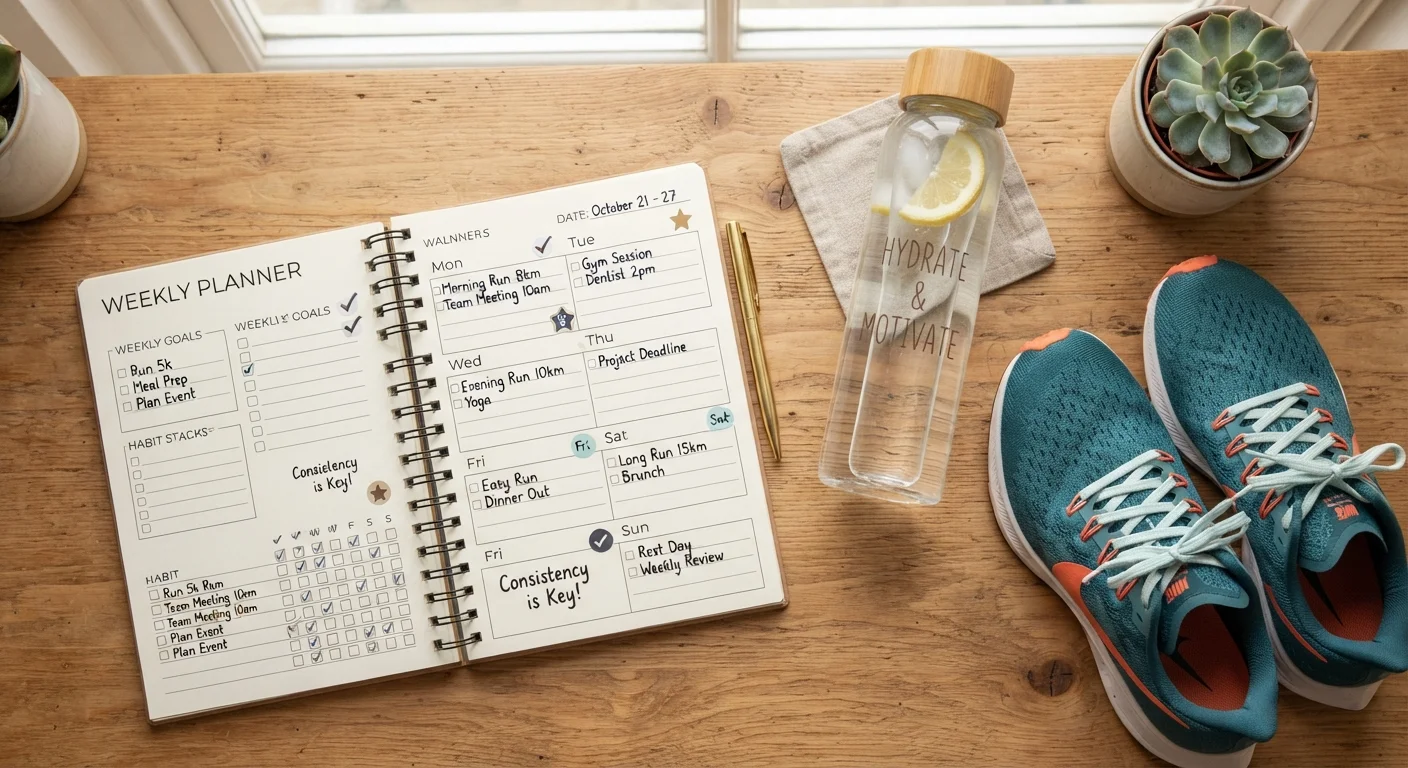
Most adults benefit from three to five active days per week, with at least one to two full rest or active recovery days. Resist the urge to fill every day - rest is physiologically necessary for muscle repair and adaptation. A common structure that works well for beginners is alternating workout and rest days (e.g., Monday, Wednesday, Friday active; Tuesday, Thursday, Saturday rest or light movement).
Active recovery - gentle walking, stretching, or yoga - on non-workout days counts as rest from high-intensity effort while still keeping you moving.
Balance workout types across the week
A well-rounded weekly plan generally includes cardiovascular exercise, strength training, and flexibility or mobility work. You don't need separate sessions for each - many workouts blend these naturally. A useful starting framework: two days of strength-focused work, two days of cardio or aerobic activity, and one day of mobility or low-intensity movement.
Whether you work out at home or in a gym matters less than finding an environment that reduces friction for you. Comparing home and gym workouts can help you decide which setting fits your routine best.
Set realistic session lengths
Thirty to forty-five minutes per session is sufficient for meaningful fitness gains for most people, especially when starting out. You do not need hour-long workouts to make progress. Shorter, consistent sessions outperform long, sporadic ones - a principle well supported by exercise science and discussed further in our article on why consistency matters more than intensity.
Schedule your sessions like appointments. Block the time in your calendar and protect it the way you would any other commitment.
Account for sleep and recovery in your plan
Exercise and sleep are tightly connected. Poor sleep impairs performance, slows recovery, and undermines motivation. When building your schedule, factor in whether your workout timing supports or disrupts your sleep. High-intensity evening workouts can delay sleep onset for some people. A structured wind-down routine in the evening can help offset this if you prefer later workouts.
Similarly, nutrition timing - eating enough before and after sessions - supports recovery. A pre-workout checklist covering hydration and readiness cues can make each session safer and more effective.
Review and adjust after two weeks
No schedule survives contact with real life unchanged. After two weeks, review what actually happened versus what you planned. Which days were skipped? Which sessions felt energizing versus depleting? Use that data to refine your plan rather than judge yourself. Sustainable schedules are built through iteration.
The same logic applies to other healthy habits. Just as meal planning requires honest revision to stick, your workout schedule should evolve based on what's genuinely working in your life.
Treat Your Schedule Like a Prototype
Your first weekly plan is a draft, not a contract. Track how you feel after two weeks and adjust accordingly. Sustainability comes from iteration, not perfection. Even small tweaks - shifting a workout from Monday to Tuesday, or swapping a run for a walk - can meaningfully improve adherence.
More Is Not Always Better
Scheduling intense workouts every day without rest is one of the most common mistakes new exercisers make. Overtraining leads to fatigue, increased injury risk, and often complete dropout. If you feel persistent soreness, low energy, or dread around workouts, your schedule likely needs more recovery time, not more willpower.