

Travel & Trips

Before You Leave the Driveway: A Road Trip Readiness Checklist

Share
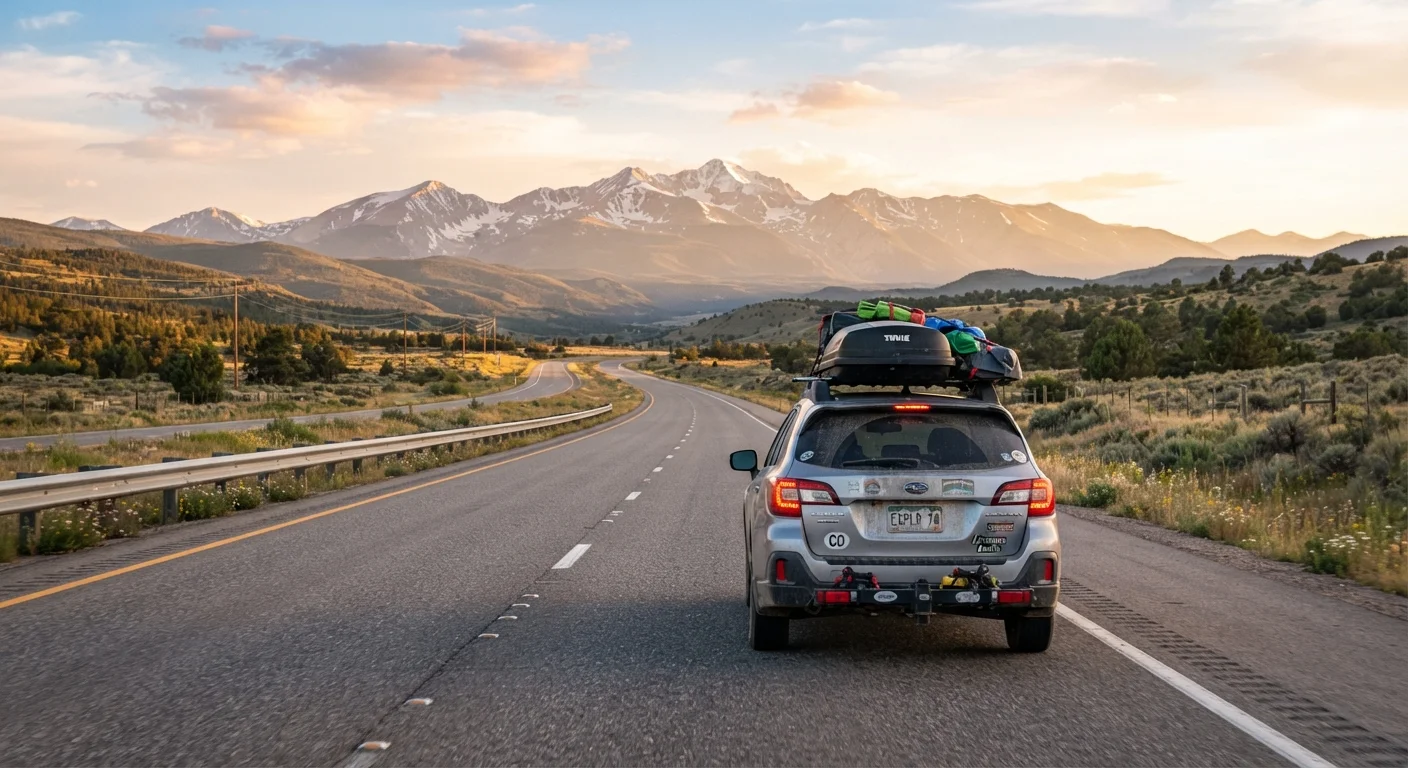
A packed car on an open American highway heading toward mountains at golden hour.

Key Takeaways

Checking tires, fluids, and lights before departure can prevent breakdowns and costly roadside delays.
Carrying physical maps and offline navigation backups protects you when cell service disappears.
Emergency gear — jumper cables, a first-aid kit, and water — should ride in every road trip vehicle.
Documents like insurance cards and roadside assistance info belong in an easy-to-grab spot, not buried in a bag.
Personal comfort essentials — snacks, medications, and a phone charger — are easy to forget and hard to replace on the road.
45–90 min

Summary

28 items · 45–90 minutes

Why a Pre-Departure Checklist Actually Matters

Most road trip disasters don't start on a remote stretch of highway — they start in the driveway, with something that could have been caught in five minutes. A slow tire leak, a missing insurance card, a dead phone before you've even hit the interstate. The good news: a quick, systematic check before you pull out is genuinely all it takes to head off the majority of preventable headaches.

This checklist covers five core areas: your vehicle's mechanical condition, navigation and connectivity, emergency preparedness, travel documents, and personal essentials. Whether you're doing a weekend loop through the Smoky Mountains or a two-week push across the Southwest, these items apply. For driving in particularly demanding environments, see our guide to desert driving in the American Southwest — conditions there raise the stakes on several of these items significantly.

Work through the groups below in order. The whole process takes under 90 minutes, and the peace of mind is worth every one of them.

Required

Tire pressure gauge

Accurately checks each tire's PSI so you can inflate to the manufacturer's recommended level before departure.

Required

Portable jump starter

Lets you restart a dead battery independently without waiting for another vehicle to assist.

Required

Offline navigation app

Provides turn-by-turn directions in areas where cell service is unavailable or unreliable.

Optional

Physical road atlas

Serves as a fail-safe navigation backup when devices lose power or connectivity.

Required

Basic first-aid kit

Addresses minor injuries and health needs during the trip when medical facilities may be far away.

Optional

Reflective warning triangle

Alerts other drivers if your vehicle is stopped on a shoulder or in a low-visibility area.

The Full Road Trip Readiness Checklist

Run through each group below before you load the last bag. Tick items off as you go — or screenshot the list and work from your phone.

Vehicle Condition

Check all four tire pressures (including the spare) against the manufacturer's recommended PSI found on the door jamb sticker. Must
Inspect tires visually for uneven wear, cracks, or embedded objects that could cause a blowout. Must
Verify engine oil level using the dipstick; top off or schedule a change if you're within 1,000 miles of your interval. Must
Check coolant, brake fluid, windshield washer fluid, and power steering fluid levels. Must
Test all exterior lights — headlights, taillights, brake lights, and turn signals. Must
Confirm windshield wipers clear cleanly without streaking; replace blades if they're leaving smears. Should
Have a mechanic inspect brakes if you notice any squealing, vibration, or longer stopping distances. Must

Navigation & Connectivity

Download offline maps for your full route using your preferred navigation app before leaving home Wi-Fi. Must
Pack a physical road atlas or printed turn-by-turn directions as a backup for areas with no cell coverage. Should
Charge all devices fully the night before and confirm your car's charging ports or a power bank are ready. Must
Research cell coverage gaps along your route — particularly in national parks, mountain corridors, and rural plains. Should
Note the location and hours of fuel stations on remote segments where pumps may be 80+ miles apart. Must

Emergency Preparedness

Pack a basic first-aid kit that includes bandages, antiseptic wipes, pain relievers, and any personal medications. Must
Carry jumper cables or a portable jump starter in your trunk. Must
Store at least one gallon of drinking water per person for vehicle-breakdown scenarios, especially in hot or remote climates. Must
Include a reflective warning triangle or road flares to signal other drivers if you're stopped on a highway shoulder. Should
Carry a flashlight with fresh batteries for nighttime emergencies and campsite arrivals. Should
Save your roadside assistance provider's number (and your policy number) as a phone contact and on paper. Must

Documents & Financial Prep

Place your driver's license, vehicle registration, and proof of insurance in one accessible spot — not buried in luggage. Must
Photograph or scan those documents and store copies in a cloud account or email to yourself as a backup. Should
Notify your bank or credit card company if you'll be travelling through unfamiliar states to avoid fraud holds. Should
Carry a modest amount of cash — some rural gas stations, toll booths, and campground pay stations are cash-only. Should

Personal Essentials

Pack all prescription medications in their original labeled containers with enough supply to cover the full trip plus a few days buffer. Must
Prepare a cooler with snacks and drinks to reduce pit stop reliance and keep energy levels steady through long driving days. Nice to have
Apply sunscreen before long driving days — UV exposure through side windows adds up on multi-hour stretches. Should
Pack entertainment for passengers — downloaded podcasts, playlists, or audiobooks for stretches without radio signal. Nice to have
Confirm pet travel essentials if bringing a dog — water bowl, leash, vet records, and pet-friendly accommodation confirmation. Must

Medications Deserve Their Own Check

If anyone in your vehicle takes prescription medication, verify you have enough supply before you leave — not when you're two states away from home. Pharmacies in rural areas may not carry specific medications or be able to transfer prescriptions quickly. Pack medications in their original containers, and consult your healthcare provider about any travel-specific considerations before departure.

If this is a family trip, our guide to packing for a family trip without overpacking pairs well with this checklist — it covers what actually needs to come with you versus what you can source locally, so your car isn't stuffed before you even hit the road.

For a faster, pre-every-drive version of the vehicle checks, see the pre-trip safety check — a shorter scan of tires, lights, mirrors, and fluids you can run through in under five minutes.

One Last Thought Before You Go

There's a difference between being prepared and being anxious. This checklist exists so you can handle both efficiently: do the work once, check it off, and then actually enjoy the drive. The car maintenance basics behind items like tire pressure and fluid levels aren't complicated — they just require a moment of attention that's easy to skip when you're excited to get moving.

Some of the most rewarding drives in America pass through stretches that are longer and more isolated than they look on a map. Our piece on stretches of road that catch first-time travelers off guard is worth a read before you plot your route — knowing what's ahead helps you decide which checklist items to prioritize. Now go find that open road.

Don't Rely Solely on Your Phone for Navigation

Cell coverage across large portions of rural America — from the Great Plains to the mountain West — is far patchier than navigation apps suggest at the planning stage. Downloaded offline maps help, but they can still fail to load turn-by-turn guidance when data is truly unavailable. A printed route summary or a physical atlas costs almost nothing and has saved more than a few road trippers from a very long detour.

Travel & Trips Editorial Team is the collective byline for our editorial team and contributor network. Articles published under this byline or an editorial pen name are researched, written, and reviewed according to our editorial standards for clarity, consistency, and independence before publication.

View all articles by Travel & Trips Editorial Team →
Disclaimer: The content provided on our blog site traverses numerous categories, offering readers valuable and practical information. Readers can use the editorial team’s research and data to gain more insights into their topics of interest. However, they are requested not to treat the articles as conclusive. The website team cannot be held responsible for differences in data or inaccuracies found across other platforms. Please also note that the site might also miss out on various schemes and offers available that the readers may find more beneficial than the ones we cover.