

Key Takeaways
Why Rental Decorating Requires a Different Mindset
Decorating a rental isn't about settling - it's about working within real constraints without defaulting to bare walls and mismatched furniture. Most lease agreements prohibit painting, drilling into tile, or making structural changes, but they rarely restrict what sits on the floor, hangs from a tension rod, or rests on a shelf. Understanding that distinction opens up more options than most renters realize.
The golden rule: treat every change as reversible. Before you reach for any tool, ask whether you can undo it cleanly in thirty minutes. If the answer is no, there's almost always a renter-friendly alternative. This mindset doesn't limit creativity - it redirects it toward solutions that are often more portable and adaptable than permanent ones anyway.
For a broader look at what your space actually needs before adding anything new, the room-by-room décor audit is a practical starting point.
Best Practices for Decorating Without Damage
The following approaches are consistently effective across a wide range of rental layouts and lease types. Apply them in combination for the strongest results.
Use removable adhesive strips and hooks rated for your wall type
Modern damage-free adhesive products can hold significant weight when applied to the right surface and removed according to instructions. Using the correct product for drywall versus tile versus brick prevents the surface damage that costs deposits. Overloading a strip rated for lighter items is the most common cause of wall damage.
Anchor your design in furniture and area rugs rather than wall treatments
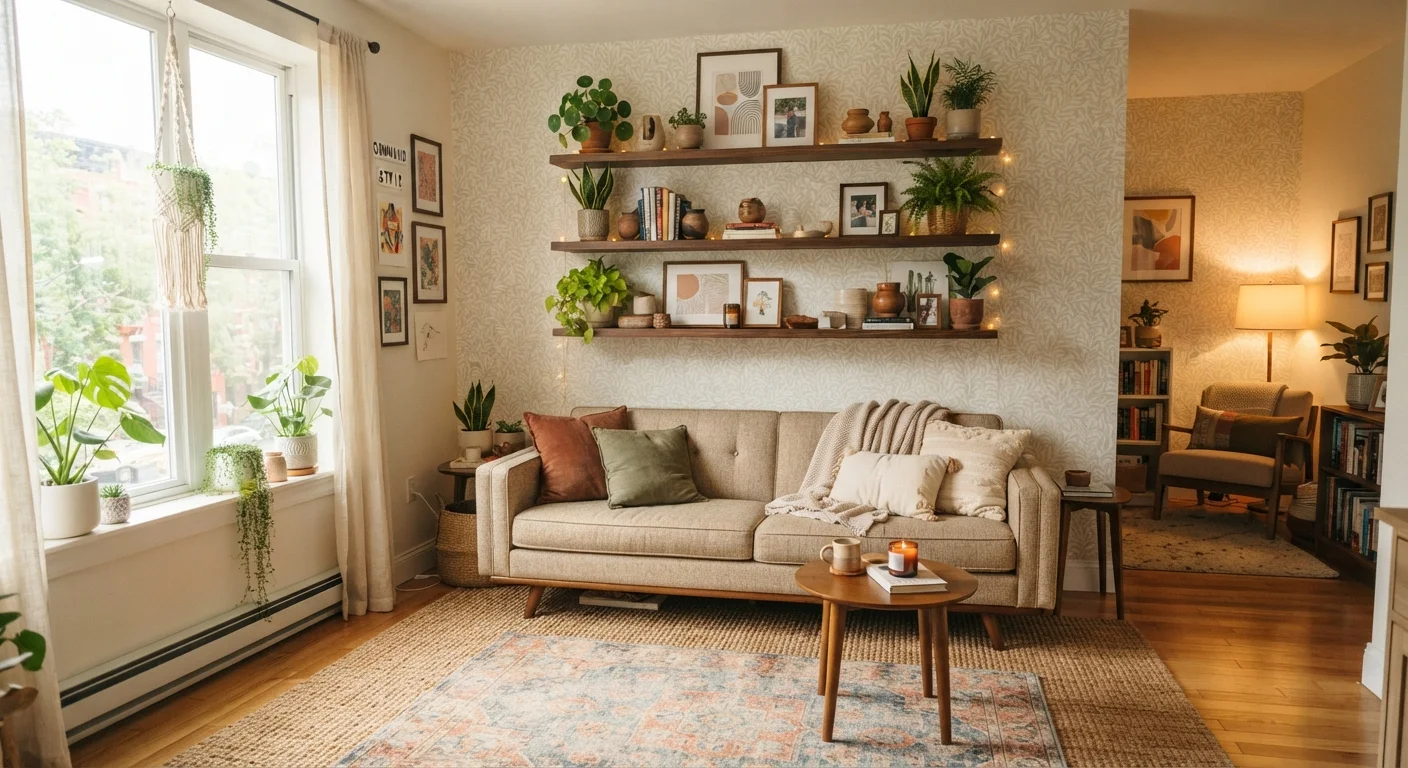
Large furniture pieces and rugs define a room's character far more than what's on the walls. They require no landlord permission, move with you, and can be layered to add warmth, texture, and color in any rental. Renters who invest in a few quality furniture pieces typically achieve a more cohesive look than those who focus on wall décor.
Apply removable wallpaper or peel-and-stick panels as a focal-point treatment
Removable wallpaper has matured significantly as a product category and now adheres cleanly to most painted drywall without lifting paint on removal when applied and removed correctly. It delivers the visual impact of an accent wall without permanent commitment - relevant context for anyone curious about when accent walls actually work.
Replace window treatments with tension-rod alternatives
Standard curtain rods require drilling into walls or window frames. Tension rods and inside-mount curtain systems fit within the window frame itself and hold most curtain weights without fasteners. This swap also lets you bring curtains that suit your taste rather than living with builder-grade blinds.
Lean art and mirrors rather than hanging them
Large-format art and mirrors leaned against walls - on the floor, atop a shelf, or on a mantel - is a deliberate design approach seen in professionally styled spaces, not a workaround. It eliminates wall damage entirely and allows easy rearrangement. Pieces above a certain size actually look better leaned than hung.
Layer lighting with portable fixtures instead of replacing installed ones
Installed light fixtures often can't be replaced under a lease, and even when they can, it adds move-out complexity. Adding floor lamps, table lamps, and battery-operated under-cabinet lighting lets you control the quality and warmth of light in every zone without touching wiring. This also means your lighting moves with you.
Quick Upgrades You Can Make Today
Not every improvement requires planning or a shopping trip. Several high-impact changes use items you may already own or can source inexpensively.
One area renters frequently overlook is lighting. Swapping a harsh overhead bulb for a warm-toned option (keep the original in a labeled bag for move-out), adding a floor lamp to a dim corner, or placing a table lamp at eye level changes the entire atmosphere of a room. For more on why fully furnished rooms can still feel cold, see why rooms with lots of furniture still feel empty.
Protecting Your Deposit from Start to Finish
Deposit disputes most often hinge on documentation, not intent. On move-in day, photograph every room thoroughly - walls, floors, fixtures, and any existing damage - and send those photos to your landlord in writing so they're time-stamped. This single habit resolves most disagreements at move-out before they begin.
When using adhesive products, follow the manufacturer's weight and surface guidelines precisely. Most peel-and-stick products specify a curing time before loading weight onto them; skipping that step causes the failures that lead to wall damage. If a product leaves residue, a soft cloth with warm water removes it from most painted surfaces without affecting the paint itself - test in a hidden area first.
Review Your Lease Before Any Change
Lease agreements vary significantly. Some explicitly permit removable adhesive products; others restrict any wall modification regardless of method. Read your lease carefully and, when in doubt, send a written message to your landlord asking for clarification. A documented 'yes' protects you far more than an assumption.
If you're sharing your rental with a cat, some of these same strategies apply to keeping surfaces intact. The cat-friendly home guide covers surface protection and furniture choices that work for both deposit preservation and pet safety.