

Key Takeaways
Paint Finish (Sheen Level)
A paint finish - also called sheen level - describes how much light a dried coat of paint reflects off a wall or surface. Finishes range from completely flat (no reflection) to high-gloss (mirror-like shine). The sheen level affects both the look of a color and how durable and washable the painted surface will be.
Sheen is determined by the ratio of resin binders to pigment in the paint formula; higher resin content produces more reflectivity and generally greater scrub resistance.
Why Paint Finish Is Just as Important as Color
Most homeowners spend considerable time selecting the perfect paint color, then quickly point at a finish without much thought. That's a mistake. The sheen level you choose determines how light interacts with your walls, how well the surface stands up to cleaning, and how prominently surface imperfections show through. Choosing the wrong finish can leave you with a beautiful color that looks dull, streaky, or impossible to keep clean.
Paint finishes exist on a spectrum from completely flat to mirror-like gloss. Each step up the sheen ladder adds reflectivity, increases washability, and typically improves durability - but also makes surface flaws more visible. Understanding where each finish falls on that spectrum helps you make a confident choice for every room in your home.
If you're also thinking about color placement and design decisions, our piece on common decorating misconceptions is worth a read before you finalize your plan.
The Finishes, From Flattest to Glossiest
Flat and Matte
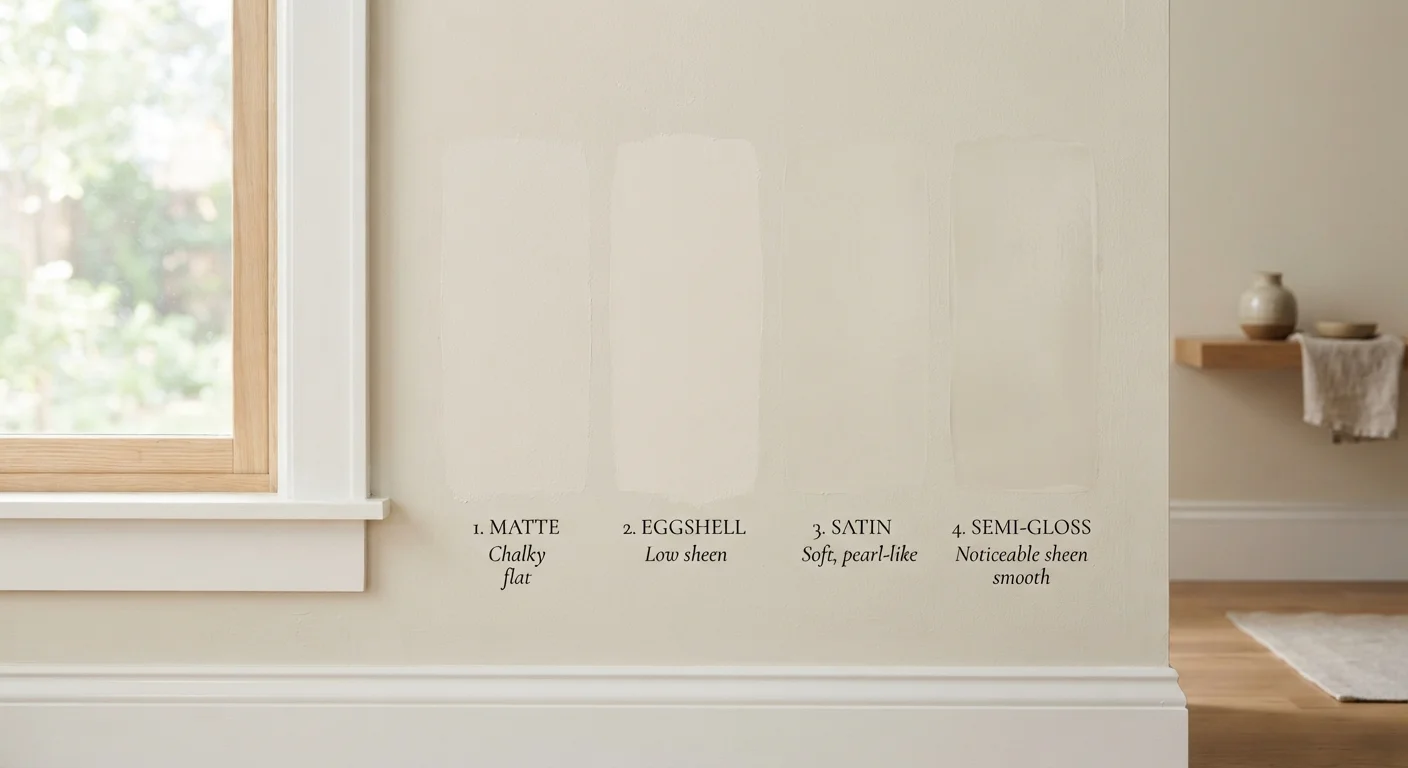
Flat paint - sometimes labeled matte - reflects almost no light. This makes it excellent at hiding surface irregularities like minor wall texture, small patches, and roller marks. The tradeoff is durability: flat paint scuffs easily, absorbs stains, and doesn't respond well to scrubbing. Reserve it for low-traffic areas like adult bedrooms, formal dining rooms, and ceilings, where walls rarely get touched.
Eggshell
Eggshell has a very subtle sheen - similar to the surface of an actual egg - that gives walls a soft, warm depth without obvious shine. It's more washable than flat and handles the occasional wipe-down well. This makes it a go-to finish for living rooms, bedrooms, and hallways that see moderate foot traffic but not heavy moisture or grease exposure.
Satin
Satin sits in the middle of the sheen spectrum and is often the right answer for kitchens, bathrooms, laundry rooms, and kids' bedrooms. It reflects enough light to brighten a space while standing up to humidity, fingerprints, and repeated cleaning. Satin does show brush strokes more readily, so careful application technique matters.
Test Before You Commit
Paint swatches look different depending on the sheen, the light source, and the time of day. Before painting an entire room, apply a test patch of your chosen color in the intended finish and observe it in both natural daylight and artificial evening light. Dried paint also looks different from wet paint, so allow the test patch to cure fully - usually 24 hours - before making your final call.
Semi-Gloss
Semi-gloss is highly durable and moisture-resistant, which is why it's the standard finish for trim work, baseboards, window casings, and doors. On walls, it can feel stark and institutional unless used intentionally - for example, as an accent wall treatment in a contemporary space.
High-Gloss
High-gloss is the most reflective finish available. It's extremely durable and easy to clean but shows every imperfection. It's typically limited to cabinetry, furniture, and architectural details where a lacquered effect is a deliberate design choice.
Matching the Right Finish to Each Room
A simple room-by-room approach removes most of the guesswork:
- Bedrooms: Flat or eggshell. Low traffic means durability is less critical, and softer finishes create a restful atmosphere.
- Living and dining rooms: Eggshell. Handles occasional cleaning and gives walls a polished, livable look.
- Kitchens and bathrooms: Satin. Resists moisture, grease, and frequent wiping without looking overly shiny.
- Hallways and kids' rooms: Satin. High-traffic areas benefit from the extra scrub resistance.
- Trim, doors, and cabinets: Semi-gloss. Provides crisp definition and holds up to constant handling.
- Ceilings: Flat or ceiling-specific flat paint. Hides roller texture and doesn't create distracting light reflections overhead.
4-6 years
Average interior repaint cycle for most homes
General industry guidance from painting professionals suggests interior walls typically need repainting every four to six years, though high-traffic areas and lower-sheen finishes may require more frequent attention.
~60%
Light reflected by high-gloss finish vs. flat
High-gloss paints can reflect significantly more light than flat finishes; the exact sheen value is measured on a 60-degree gloss meter scale, where flat paints score under 10 and high-gloss can exceed 70.
Pairing the right finish to each room's demands is one of the most practical steps you can take toward a home that both looks good and holds up over time. For more on how finish choices fit into a broader design approach, see our overview of major decorating styles to understand which aesthetics favor higher or lower sheen.