
What Interior Designers Mean by 'Scale' - And Why Your Furniture Might Be Fighting Your Room

Key Takeaways
Scale in Interior Design
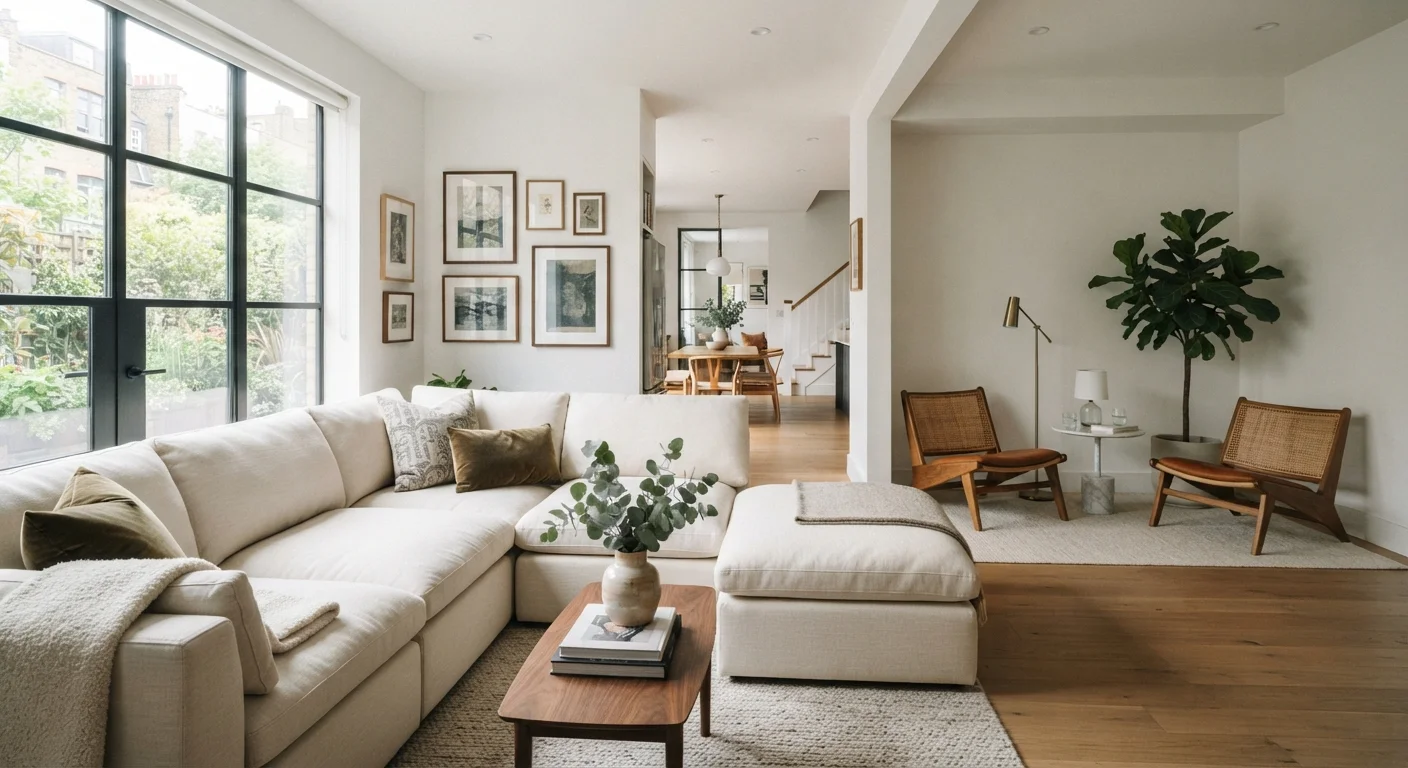
Scale refers to the size of objects in a room relative to one another and to the space itself. When a piece of furniture is 'in scale,' it feels proportionally appropriate - neither too large to crowd the room nor too small to look lost. Getting scale right is one of the most reliable ways to make a room feel cohesive and intentional.
Designers distinguish between 'scale' (size relative to surroundings) and 'proportion' (the ratio of parts within a single object). Both concepts work together to create visual harmony.
Why Scale Is the Silent Culprit Behind an Off-Feeling Room
Most homeowners troubleshoot rooms by changing color, rearranging accessories, or adding more décor. But when a room persistently feels wrong - too crowded, too sparse, or simply uncomfortable - scale is often the real issue. It operates quietly beneath the surface of taste and style, shaping how a space reads before a visitor can even name what they're responding to.
Scale is not the same as size. A sofa that measures 90 inches wide is large in absolute terms, but whether it's in scale depends entirely on the room around it. That same sofa could anchor a wide, open-plan living area beautifully while making a standard 12-by-14-foot living room feel like a furniture showroom. Before you assess what a space needs, understanding scale gives you a clearer diagnostic lens.
⅔
Maximum wall length a sofa should occupy
A commonly applied interior design guideline holds that a sofa should span no more than two-thirds of its adjacent wall to maintain visual breathing room.
30-36 in
Recommended clearance on main traffic pathways
Interior design and ergonomic standards generally recommend at least 30 to 36 inches of clearance on primary walkways between furniture pieces for comfortable movement.
The Relationship Between Room Size, Ceiling Height, and Furniture
Three architectural factors determine what scale works in a room: floor area, ceiling height, and the visual weight of existing features like fireplaces, windows, and built-ins.
Ceiling height is frequently overlooked. A room with 10-foot ceilings can accommodate a tall wardrobe, a dramatic floor lamp, or a large abstract canvas without feeling oppressive. That same wardrobe in a room with 8-foot ceilings cuts the visual breathing room and makes the space feel compressed. Designers often call this the vertical scale of a room.
Floor area governs horizontal scale. A sectional sofa may be technically movable but functionally too large if it leaves only a narrow band of floor visible on all sides. As a rough working rule, a sofa should occupy no more than two-thirds of a wall's length. Traffic flow - the clearance between pieces - should be at least 30 to 36 inches on primary pathways.
Architectural features act as anchors. A room with a large stone fireplace has an inherent visual weight that smaller, lighter furniture can struggle to balance. This connects directly to visual weight in living rooms, where scale and mass work together to create - or undermine - balance.
Test Scale Before You Commit
Use painter's tape on the floor to mark the exact footprint of any large furniture piece you're considering. Leave the tape in place for a day and live with it - walk around it, sit near it, see how it affects traffic flow. This simple step catches scale problems before delivery and eliminates the need to return or reselect.
Common Scale Mistakes and What They Look Like
Certain scale errors appear so consistently that designers treat them as reliable starting points when evaluating a room.
- Undersized rugs: A rug that only fits under the coffee table - rather than anchoring the entire seating group - makes furniture appear to float. At minimum, front legs of all key seating pieces should rest on the rug.
- Too many small pieces: A room filled with petite accent chairs, narrow side tables, and compact lamps creates visual clutter even when the overall quantity is reasonable. One or two anchor pieces of appropriate scale bring order.
- Artwork hung too small: A single 8-by-10 print centered on a large wall disappears. Art should relate to the wall space it occupies - either a single substantial piece or a curated grouping treated as one visual unit.
- Towering furniture in low-ceilinged rooms: Tall bookcases and armoires installed in rooms with standard ceilings draw the eye up to an uncomfortable stopping point.
These patterns also explain why rooms full of furniture can still feel empty - quantity does not substitute for proportional logic.
How to Evaluate and Correct Scale Before Buying
The most effective scale check happens before purchase, not after delivery. A few practical habits make a significant difference.
Sketch a floor plan to scale. It doesn't need to be precise - even a rough grid drawing with approximate measurements reveals whether a piece will dominate or disappear. Free digital tools and graph paper both work well.
Use painter's tape on the floor to mark the footprint of a prospective piece. This low-effort step physically shows how much floor a sofa, bed, or dining table will consume and whether traffic flow remains comfortable around it.
When evaluating art or wall-mounted items, cut paper or newspaper to the intended dimensions and tape it to the wall. The difference between how 24 inches and 48 inches reads in a given space becomes immediately obvious.
Be especially cautious with accent walls and bold architectural choices - a feature wall adds visual weight that changes the scale demands of everything placed in front of it.
Finally, question design rules that feel rigid. The idea that small rooms always need small furniture, for example, is one of several decorating misconceptions that keep rooms looking unfinished. One appropriately scaled anchor piece often does more for a small room than a collection of undersized alternatives.
“Scale is the grammar of interior design. You can have beautiful words - wonderful pieces - but without the grammar, the sentence doesn't make sense.”
— Albert Hadley, American interior designer, widely regarded as a defining voice in 20th-century American interior design