

Key Takeaways
The Paradox of the Furnished but Flat Room
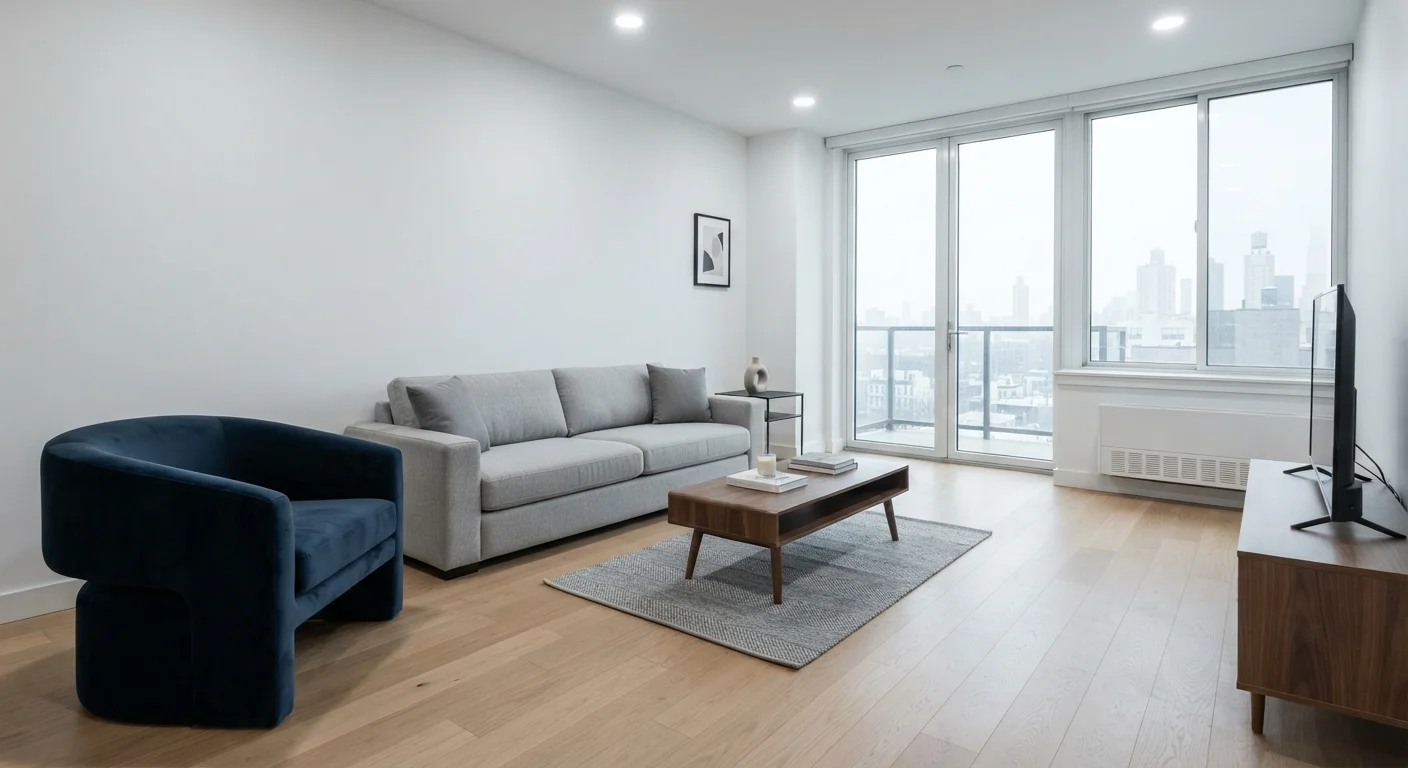
It's one of the most frustrating experiences in home décor: you've filled a room with furniture, added a rug, hung a few things on the walls - and it still feels cold, incomplete, or vaguely off. You're not imagining it. A room that's technically furnished can still feel empty, and the reasons are almost always rooted in specific, correctable design decisions rather than a shortage of stuff.
Understanding what creates that hollow feeling is the first step to fixing it. Before buying a single new item, it's worth doing an honest room assessment. Our guide on reading a room before you start walks through exactly that process. Once you've evaluated the space, the mistakes below will help you pinpoint what's going wrong.
Furniture is the wrong scale for the room.
Why it happens: Shoppers often choose pieces based on how they look in a showroom or online, without accounting for the actual dimensions of their space. A sectional that fills a large showroom floor can make a modest living room feel like a furniture warehouse - yet a loveseat in a large open space creates an island of loneliness.
Every light source is overhead and on the same circuit.
Why it happens: Relying on a single ceiling fixture is the default in most homes, and many people don't think of lighting as a décor element. Flat, shadowless overhead light eliminates depth and visual warmth from any room, regardless of how well it's furnished.
There is no clear focal point anchoring the room.
Why it happens: Without a deliberate layout plan, furniture often ends up pushed to walls or arranged symmetrically out of habit, leaving the center of the room empty and the eye with nowhere to land.
Texture and material variety are absent.
Why it happens: It's easy to end up with rooms where everything is smooth, flat, or the same material family - especially when buying matching furniture sets. Rooms need tactile contrast: rough against smooth, matte against sheen, soft against hard.
The walls are treated as an afterthought.
Why it happens: Wall décor is often the last thing people get around to, or it's done minimally out of concern about damaging surfaces - a legitimate worry for renters especially. But large expanses of bare wall drain warmth from a room.
There are no organic or living elements in the space.
Why it happens: Plants, natural materials, and organic shapes are often skipped because they require maintenance or seem like an add-on. In practice, they're one of the most effective tools for making a room feel alive rather than staged.
How to Bring a Room Back to Life
Most of these fixes don't require a complete overhaul or significant spending. Rearranging furniture to create a true conversational anchor, swapping a single overhead fixture for layered lighting, or adding a woven throw and a few textured pillows can shift a room's feel dramatically. The goal is to address the why behind the emptiness rather than filling space with more volume.
~⅔
Ideal furniture-to-floor area ratio
Interior designers commonly recommend furniture occupy roughly two-thirds of a room's usable floor space to balance presence with openness.
3+
Distinct textures per room recommended
Design practitioners generally suggest introducing at least three contrasting material types to create visual depth and tactile interest in any room.
It's also worth questioning assumptions you might be holding about how a room "should" look. Many of the habits that keep rooms feeling unfinished are actually design myths that have been repeated so often they feel like rules. Our article on decorating misconceptions that keep rooms looking unfinished breaks down some of the most persistent ones.
If you're ready to take stock of everything in your space before adding anything new, a structured room-by-room décor audit is a practical next step. It helps you identify what's already working, what's creating visual noise, and where the genuine gaps are - so your next move is intentional rather than reactive.
More Furniture Won't Solve a Layout Problem
Buying additional pieces to fill a room that already feels empty rarely works - and often makes things worse. If the issue is scale, focal point, or lighting, adding more furniture compounds the confusion rather than resolving it. Audit the space honestly before spending anything new.