
Raised Beds vs. In-Ground Gardening: What the Difference Actually Means for Your Yard

Key Takeaways
Option A
Raised Beds
The controlled, high-setup growing environment.
Best for: Gardeners dealing with poor native soil, drainage problems, or physical limitations who want faster results and more control.
Option B
In-Ground Gardening
The traditional, lower-barrier growing approach.
Best for: Gardeners with decent existing soil who want to grow at larger scale without significant upfront investment.
If your yard has compacted, clay-heavy, or contaminated soil
Raised Beds
Raised beds let you bypass poor native soil entirely by filling with a custom mix, giving plants a clean start.
If you want to grow a large volume of vegetables affordably
In-Ground Gardening
Scaling up in-ground plots requires little more than labor and soil amendments, keeping costs low across a wide area.
If you have back, knee, or mobility concerns
Raised Beds
The elevated height of a raised bed significantly reduces bending and kneeling, making gardening more physically manageable.
If you're growing deep-rooted crops or sprawling plants like pumpkins
In-Ground Gardening
In-ground soil gives taproots and spreading root systems the unlimited depth and lateral space they need.
If you're a first-time gardener with no soil testing history
Raised Beds
Starting with a known, balanced soil mix removes one major variable while you learn the fundamentals of plant care.
The Core Difference: Soil Control vs. Natural Integration
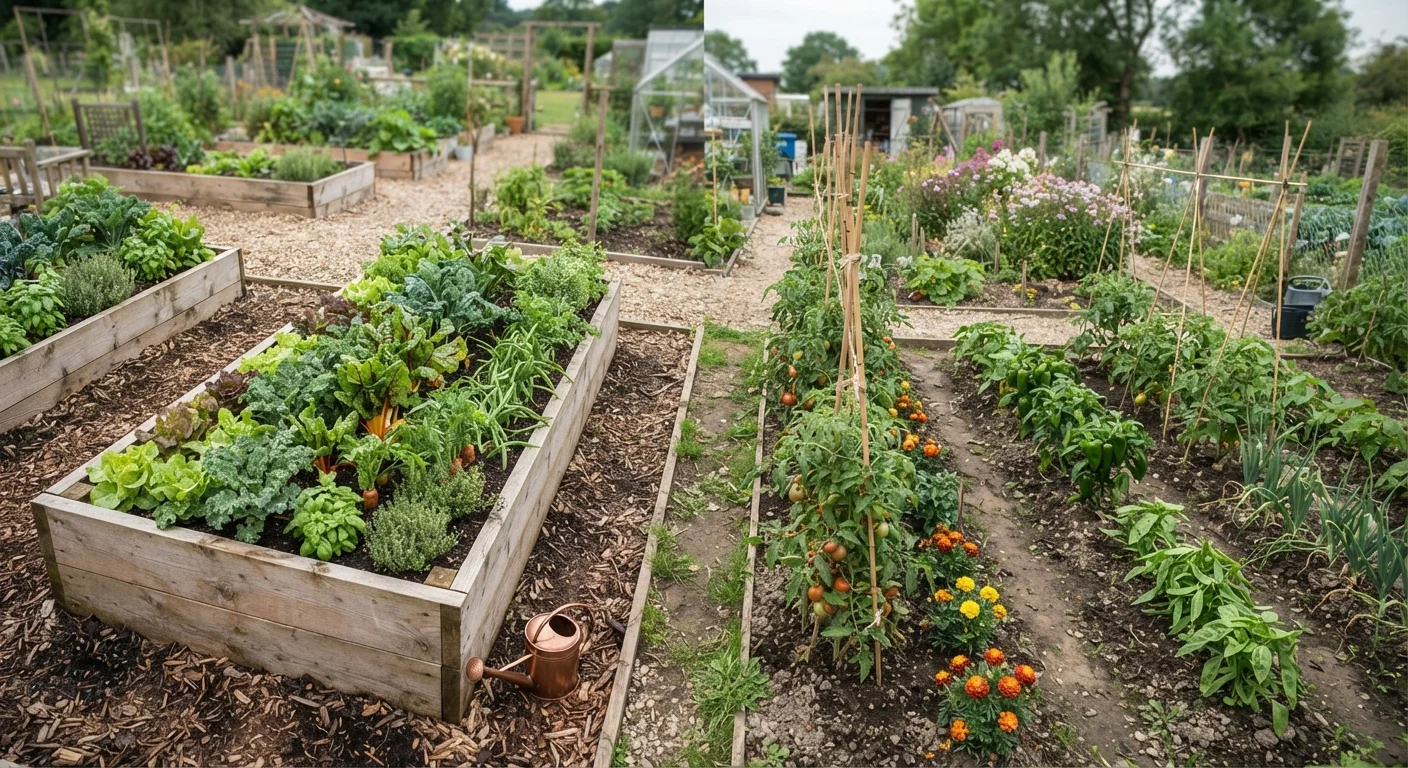
At the heart of this comparison is a simple question: do you want to work with the soil you have, or build the soil you want? Raised beds sit above the native ground, filled with a custom growing medium you choose and amend yourself. In-ground gardening puts plants directly into your yard's existing earth, asking you to improve what's already there over time.
Neither approach is inherently superior - but they suit different starting points. If your yard has decent loam with reasonable drainage, in-ground gardening is a natural fit. If your soil is compacted clay, sandy and nutrient-poor, or potentially contaminated (common in older urban lots), raised beds offer a practical workaround without years of remediation. For a broader look at getting started, see our beginner's guide to vegetable gardening.
Soil quality isn't static in either system. In-ground plots improve with consistent amendments - compost, cover crops, and organic matter added each season. Raised beds, meanwhile, can compact and lose volume over time, requiring periodic topping-off. Both systems reward the same underlying investment: attention to soil health.
Drainage, Temperature, and Growing Conditions
One of the most practical advantages of raised beds is drainage. Because the growing medium sits above the surrounding grade, excess water moves away from roots more readily than in flat, compacted ground. This matters most in regions with heavy spring rainfall or yards that stay soggy after storms.
Raised beds also warm up faster in spring. The elevated soil mass absorbs heat from the sides as well as the top, which can translate to earlier planting dates in cooler climates - sometimes by two to three weeks. For gardeners working with short growing seasons, this is a meaningful edge.
| Criterion | Raised Beds | In-Ground Gardening |
|---|---|---|
| Upfront cost | Moderate to high (materials + fill soil) | Low (labor + amendments) |
| Soil control | High - you choose the mix | Lower - amend over time |
| Drainage | Excellent by design | Varies by native soil |
| Spring warm-up | Faster - earlier planting | Slower in cold climates |
| Scalability | Limited by cost and space | Easily expanded |
| Weed pressure | Lower initially | Higher, ongoing |
| Root depth available | Limited to bed depth | Effectively unlimited |
| Physical accessibility | Easier - less bending | Requires ground-level work |
In-ground soil, by contrast, stays more temperature-stable through summer heat. Deep roots can access cooler, moister layers during dry stretches, which some crops - particularly those prone to bolting in heat - actually prefer. Drainage in an in-ground garden can be improved through raised rows, swales, or adding organic matter, though results take longer to materialize than simply building a bed above grade.
If your watering method is also under consideration, our comparison of drip irrigation vs. sprinkler systems walks through how each system pairs with different garden setups.
Cost, Setup, and Long-Term Maintenance
Setup cost is where the two approaches diverge most sharply. In-ground gardening requires little more than labor, a soil test, and amendments to address deficiencies - a relatively modest investment. Raised beds carry the cost of frame materials (wood, galvanized metal, or composite), quality fill soil, and any weed-barrier underlayment. For multiple beds, these costs add up quickly.
A Note on Soil Testing
Before committing to either method, a basic soil test is worth the modest cost. Cooperative extension services in most U.S. states offer affordable testing that reveals pH, nutrient levels, and sometimes heavy metal content. This information shapes both how much work your in-ground soil needs and what amendments your raised bed mix may be missing from the start.
That upfront investment in raised beds does pay forward in some ways. Weed pressure is often lower, especially early on, because you're starting with fresh soil rather than a seed bank of weed species. Pest management can also be more targeted - it's easier to add row covers, netting, or physical barriers to a defined bed structure.
Long-term, in-ground gardens generally require more ongoing weed management but less structural maintenance. Raised bed frames eventually weather and may need repair or replacement depending on materials. Good upfront garden planning decisions - including how you orient beds, manage pathways, and source materials - can significantly affect how much work either system demands over the years.
Mulching plays a meaningful role in both systems. It suppresses weeds, retains moisture, and moderates soil temperature whether you're working with an in-ground row or a raised frame. Our guide to mulch types and what each one does breaks down the trade-offs between wood chips, straw, and other common options.
Which Crops Favor Each Method
Crop selection is a practical lens for making this decision. Raised beds excel with shallow- to medium-rooted vegetables: lettuce, herbs, tomatoes, peppers, bush beans, and most greens perform well in 10-12 inches of good growing medium. The contained environment also makes it easier to tailor soil pH and nutrient levels for specific crops.
In-ground gardening better accommodates crops that need significant root depth or lateral spread. Corn, winter squash, pumpkins, large melons, and deep-rooted root vegetables like parsnips and large carrot varieties benefit from the effectively unlimited soil volume below. Trying to grow these in a standard raised bed often results in restricted root development.
Perennial edibles - asparagus, rhubarb, established herb clumps - can work in either system, though in-ground planting generally makes more sense for plants you expect to stay put for a decade or more. For those thinking through the annual-versus-perennial question more broadly, our piece on perennials vs. annuals is a useful companion read.