

Key Takeaways
Our Verdict
Neither perennials nor annuals outright 'win' - the two plant types serve different roles in a well-designed garden. Perennials provide dependable structure and long-term value, while annuals deliver flexible, season-long color that you can refresh each year. The most satisfying gardens use both strategically.
| Best for | Recommended |
|---|---|
| Homeowners who want lower ongoing maintenance and long-term value | Perennials |
| Gardeners who want bold color, flexibility, and variety each season | Annuals |
| Most home gardens seeking structure with seasonal freshness | A mix of both |
What Actually Makes a Plant a Perennial or an Annual
The distinction comes down to life cycle. Perennials are plants that live for three or more years - they die back to the ground in winter (in most climates) and regrow from the same root system each spring. Annuals complete their entire life cycle - germinating, flowering, setting seed, and dying - within a single growing season.
There's also a middle category worth knowing: biennials, which take two years to complete their cycle, and tender perennials, which are technically perennial in warm climates but behave like annuals in regions with freezing winters. Common examples include snapdragons and geraniums.
Understanding this distinction helps you plan smarter. When you're thinking through your garden layout from the ground up, see our guide to garden planning decisions for a broader look at how plant choices interact with sun mapping, soil prep, and spacing.
The Case for Perennials: Structure, Longevity, and Spreading Value
Perennials are the backbone of most enduring garden designs. Once established - typically after their second season - they require far less intervention than annuals. Many spread gradually, filling in bare patches without additional planting. Over five to ten years, a well-chosen perennial bed can become largely self-sustaining.
Common reliable perennials for American home gardens include coneflowers (Echinacea), black-eyed Susans, daylilies, hostas, and ornamental grasses. Many also support local pollinators, particularly native species - a consideration worth exploring further in our article on native vs. non-native ornamentals.
The trade-off: perennials often cost more per plant at purchase, and many have a defined bloom window of a few weeks rather than months. A perennial bed can look sparse in early spring or between bloom cycles if not planned carefully.
| Perennials | Annuals | |
|---|---|---|
| Lifespan | 3+ years from same root system | One growing season only |
| Bloom duration | Weeks (defined window) | Months (often frost to frost) |
| Upfront cost | Generally higher per plant | Generally lower per plant |
| Ongoing cost | Low - spreads over time | Recurring - replant each year |
| Design flexibility | Fixed once established | Refreshable each season |
| Maintenance level | Lower after establishment | Moderate; consistent deadheading helps |
| Best use | Structure, backbone, borders | Color, gaps, containers, entryways |
The Case for Annuals: Color, Flexibility, and Season-Long Bloom
Annuals are workhorses when it comes to sustained, high-impact color. Plants like petunias, zinnias, marigolds, and impatiens bloom continuously from planting until frost - something most perennials simply don't do. That uninterrupted color is why annuals remain indispensable even in mature gardens.
They also give gardeners a reset button. Want to try a completely different color palette next year? With annuals, you can. This flexibility makes them especially appealing for front-yard beds, entryway containers, and any spot where visual impact matters most. If you're working with limited space, our container gardening guide covers how annuals perform particularly well in pots and planters on patios and balconies.
The cost of that flexibility: annuals must be replanted each year, which adds up in both money and time. In new garden beds, however, annuals serve an important functional role - filling space while slower-growing perennials get established.
Fill New Beds With Annuals While Perennials Establish
Perennials are notoriously slow to show their full potential - there's a reason gardeners say 'sleep, creep, leap' to describe the first three years of growth. While your perennials are getting their root systems established, annuals fill the visual gap and suppress weeds. Budget for a heavier annual mix in year one and two, then scale back as perennials mature and spread.
How to Mix Both for a Garden That Works Year After Year
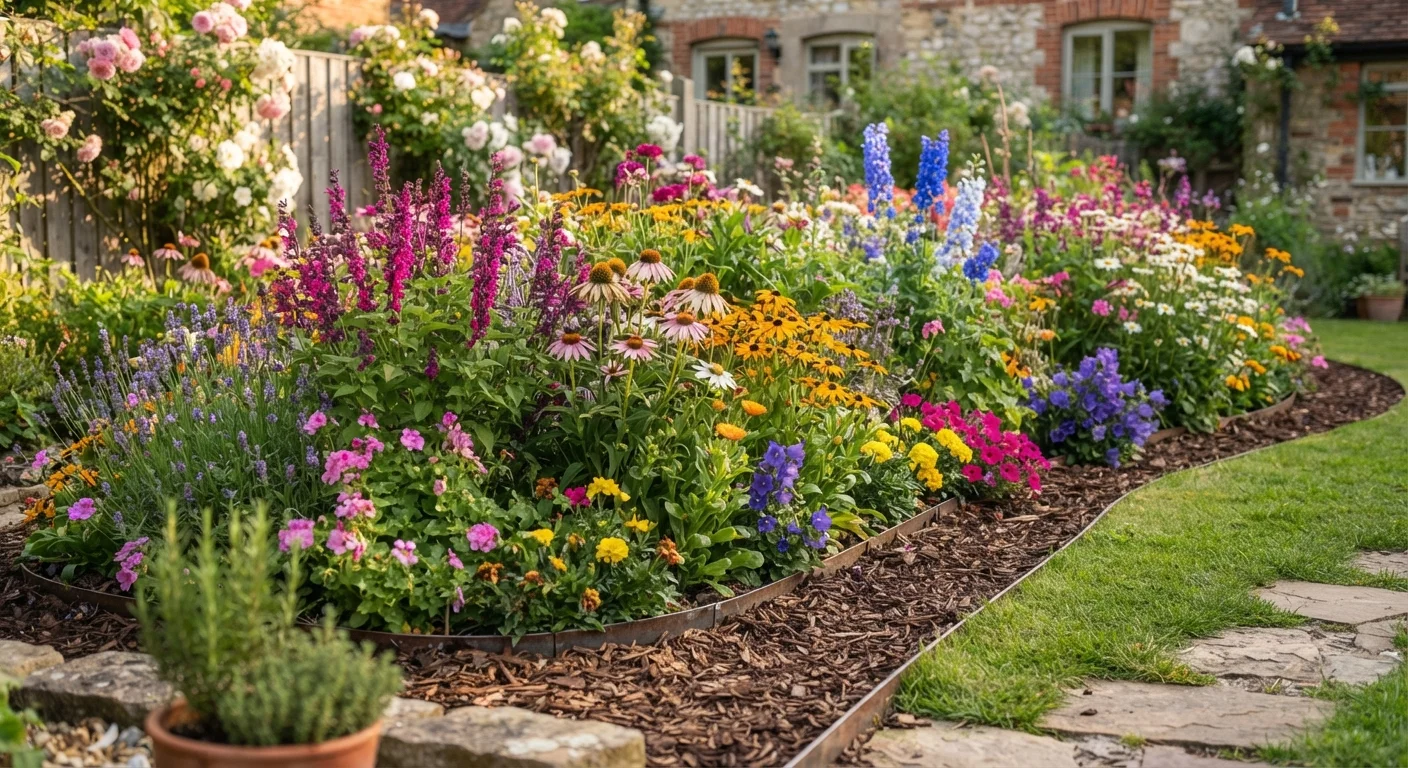
The most practical approach for most American homeowners is a layered strategy: use perennials as your structural foundation and fill gaps with annuals for season-long color.
A common framework:
- Back of the border: Taller perennials like ornamental grasses, rudbeckia, or Joe-Pye weed provide height and texture.
- Middle layer: Mid-size perennials (coneflowers, salvia, catmint) anchor the design and bloom in rotation.
- Front and fill-in spots: Low-growing annuals - alyssum, lobularia, marigolds - keep color continuous and cover bare soil while perennials mature.
As your perennials spread and fill in over the years, you'll naturally need fewer annuals. That gradual shift is one of the most satisfying aspects of garden development. The choice of garden bed type also plays a role in how these plants establish - our comparison of raised beds vs. in-ground gardening walks through how drainage and soil conditions affect plant performance.
One more factor often overlooked: soil health. Both plant types perform better in well-amended, appropriately pH-balanced soil. If your plants have been struggling, it's worth checking our article on soil pH and plant health before you replant.