

| Best for vegetable gardens | Straw or shredded leaves |
| Best for trees and shrubs | Wood chips (2-4 inch layer) |
| Longest-lasting mulch type | Rubber or stone (does not decompose) |
| Soil health benefit | Organic mulches only; inorganic mulches provide none |
| Recommended depth (most types) | 2-4 inches |
| Keep mulch away from plant bases | Leave a 2-3 inch gap at trunks and stems |
Why Mulch Type Matters More Than You Think
Mulch is one of the most reliable tools in a gardener's toolkit, but not all mulch works the same way. The type you choose affects soil temperature, moisture retention, weed suppression, and whether your soil actually improves over time. Picking the wrong one for your situation can mean more watering, persistent weeds, or soil that slowly degrades rather than builds. This reference guide breaks down the most common mulch types and what each one genuinely does - so you can match the material to your actual garden goals.
| Best for vegetable gardens | Straw or shredded leaves |
| Best for trees and shrubs | Wood chips (2-4 inch layer) |
| Longest-lasting mulch type | Rubber or stone (does not decompose) |
| Soil health benefit | Organic mulches only; inorganic mulches provide none |
| Recommended depth (most types) | 2-4 inches |
| Keep mulch away from plant bases | Leave a 2-3 inch gap at trunks and stems |
Mulch decisions also connect to larger planning choices. If you're weighing garden structure, see how mulching fits into long-term garden planning decisions that compound in value over time.
Organic Mulches: They Break Down and That's the Point
Wood Chips
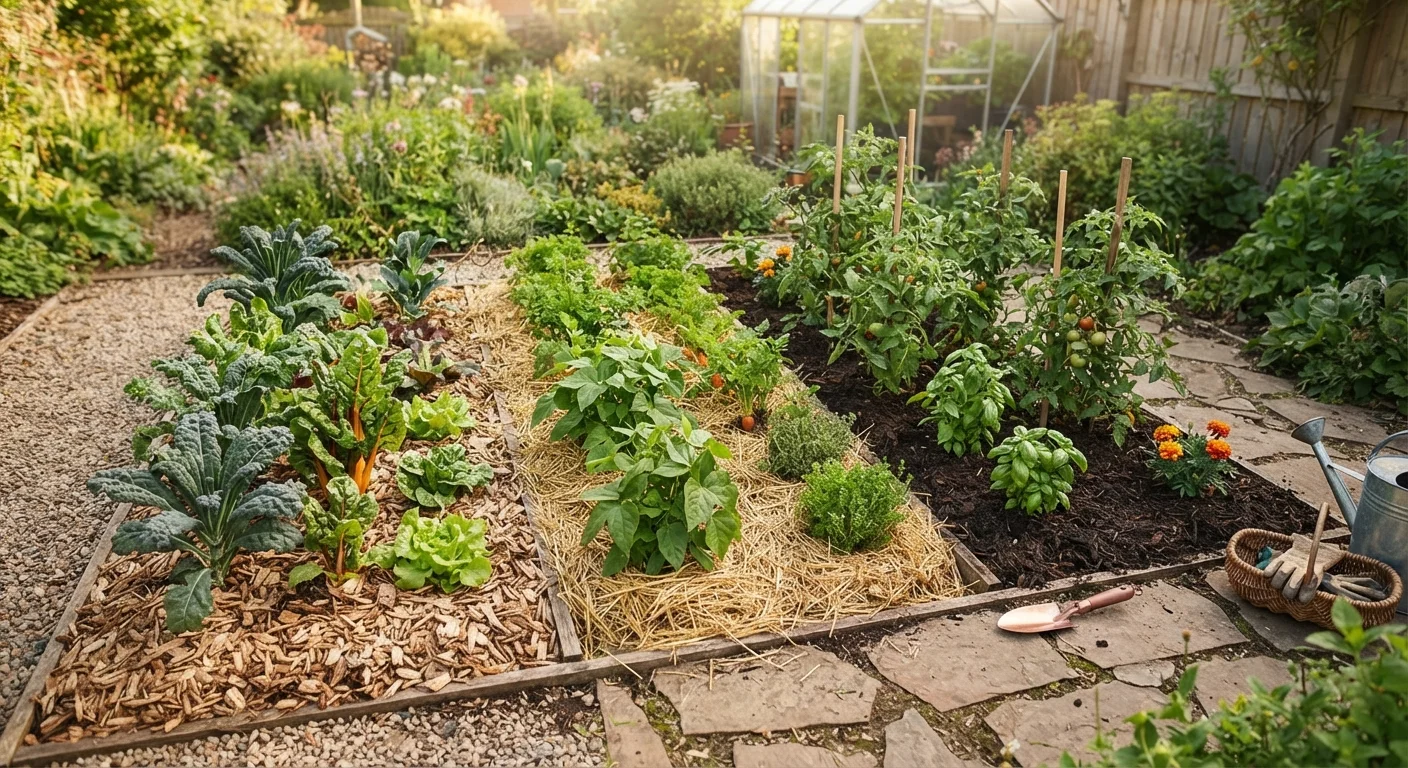
Wood chips are one of the most widely available organic mulches. They break down slowly - over one to three years - and gradually add organic matter to the soil as they decompose. They're particularly effective at moderating soil temperature and retaining moisture in ornamental beds and around trees and shrubs. One important note: fresh wood chips temporarily tie up nitrogen near the soil surface as they decompose, so avoid mixing them directly into planting beds where vegetables are actively growing.
Straw
Straw (not hay, which contains seeds) is a popular choice for vegetable gardens. It decomposes faster than wood chips, adding organic matter within a single season. It insulates soil effectively in cooler months and keeps moisture from evaporating in summer heat. It's lightweight and easy to move around plants, making it practical for annual beds that get replanted often.
Shredded Leaves
Shredded leaves are a low-cost, high-value mulch that most homeowners can source right from their own yard. They decompose relatively quickly, feeding soil organisms and improving soil structure. Whole leaves tend to mat together and shed water, so shredding first is important. Leaf mulch pairs well with home composting as part of a closed-loop soil-building approach.
Compost
Applied as a mulch layer (roughly 1-2 inches), finished compost feeds soil biology directly while suppressing weeds and retaining some moisture. It's thinner than other mulches, so it's better used in combination with another organic layer rather than as a standalone weed barrier.
Organic Mulch
Mulch made from plant-based or once-living materials - such as wood chips, straw, or leaves - that gradually decompose and add organic matter to the soil.
Inorganic Mulch
Mulch made from materials that do not decompose, such as rubber, gravel, or stone. These provide weed suppression and durability but do not improve soil health.
Nitrogen Drawdown
A temporary reduction of available nitrogen in the soil surface layer that occurs when carbon-rich materials like fresh wood chips decompose. It affects surface soils but not deeper root zones.
Xeriscape
A landscaping approach designed to reduce or eliminate the need for supplemental irrigation, often using drought-tolerant plants and materials like gravel mulch.
Landscape Fabric
A woven or non-woven synthetic sheet installed under mulch to block weed growth. Its effectiveness diminishes over time as organic debris accumulates on top.
Inorganic Mulches: Durability Over Soil Health
Rubber Mulch
Made from recycled tires, rubber mulch is extremely long-lasting and does not decompose. It excels at weed suppression and retains its appearance for years. However, it does nothing to improve soil health, and some studies suggest it can leach trace compounds over time - though research on long-term garden impact is still evolving. It's most suitable for playgrounds or paths, not vegetable or edible gardens.
Gravel and Stone
Gravel, river rock, and crushed stone are permanent, low-maintenance options well suited to xeriscape gardens, desert plantings, and drainage pathways. Stone absorbs heat during the day and releases it at night, which benefits heat-loving plants but can stress cool-season varieties. Stone does not add organic matter and can make soil amendments harder to apply over time. Consider your long-term soil access before committing to a large stone installation.
Landscape Fabric
Landscape fabric is often used under stone or gravel to block weeds. When used alone, it initially suppresses weeds well, but organic matter accumulates on top over time and weeds eventually root into that layer. It also restricts soil organism activity, which can gradually reduce soil health. If you use it, plan for periodic replacement or removal.
If you're gardening in raised beds, inorganic mulches on pathways can complement your layout - the raised beds vs. in-ground comparison covers how bed type affects your overall approach to soil management.
Matching Mulch to Your Garden's Needs
The right mulch depends on what you're growing and what you need most:
- Vegetable gardens: Straw or shredded leaves - both decompose and can be turned in at season's end.
- Trees and shrubs: Wood chips applied in a 2-4 inch layer, kept a few inches away from the base of trunks to prevent rot.
- Perennial flower beds: Shredded leaves or bark mulch; renew annually as they break down.
- Pathways and hardscaping: Gravel or rubber mulch where foot traffic is high and soil amendment isn't a priority.
- Water-conscious gardens: Any organic mulch reduces evaporation, working hand-in-hand with efficient watering systems. See how mulch pairs with drip vs. sprinkler irrigation to reduce overall water use.
Depth matters too: most organic mulches perform best at 2-4 inches. Too thin and they won't suppress weeds or retain moisture adequately; too thick and they can prevent water and air from reaching roots. When in doubt, start with 3 inches and adjust based on what you observe over a growing season.