
Drip Irrigation vs. Sprinkler Systems: How Each One Handles Your Yard's Water Needs

Key Takeaways
Option A
Drip Irrigation
The precise, root-level water delivery method.
Best for: Garden beds, vegetable plots, shrubs, and landscapes where targeted watering and water conservation are priorities.
Option B
Sprinkler Systems
The broad-coverage solution for lawns and open spaces.
Best for: Turfgrass lawns, large open areas, and yards where uniform overhead watering across wide zones is practical.
If you have a vegetable garden or established flower beds
Drip Irrigation
Drip lines deliver water where roots actually are, reducing disease risk from wet foliage and stretching every gallon further.
If your primary concern is keeping a turfgrass lawn green
Sprinkler Systems
Grass needs even surface coverage across wide areas, which overhead sprinkler heads are specifically designed to provide.
If water conservation is a top priority
Drip Irrigation
Drip systems apply water slowly and directly at soil level, minimizing losses to wind, evaporation, and runoff compared to sprinklers.
If you want a low-maintenance, automated system for mixed yard zones
Sprinkler Systems
Modern in-ground sprinkler systems with zone controls can be automated easily and require less hands-on seasonal adjustment than drip setups.
If you're gardening on a slope or in a drought-prone region
Drip Irrigation
Slow, targeted drip delivery prevents runoff on slopes and reduces overall water demand, which matters in areas with usage restrictions.
How Each System Actually Delivers Water
The most important difference between drip irrigation and sprinkler systems isn't price or installation time - it's where water ends up. Understanding that distinction shapes every other comparison.
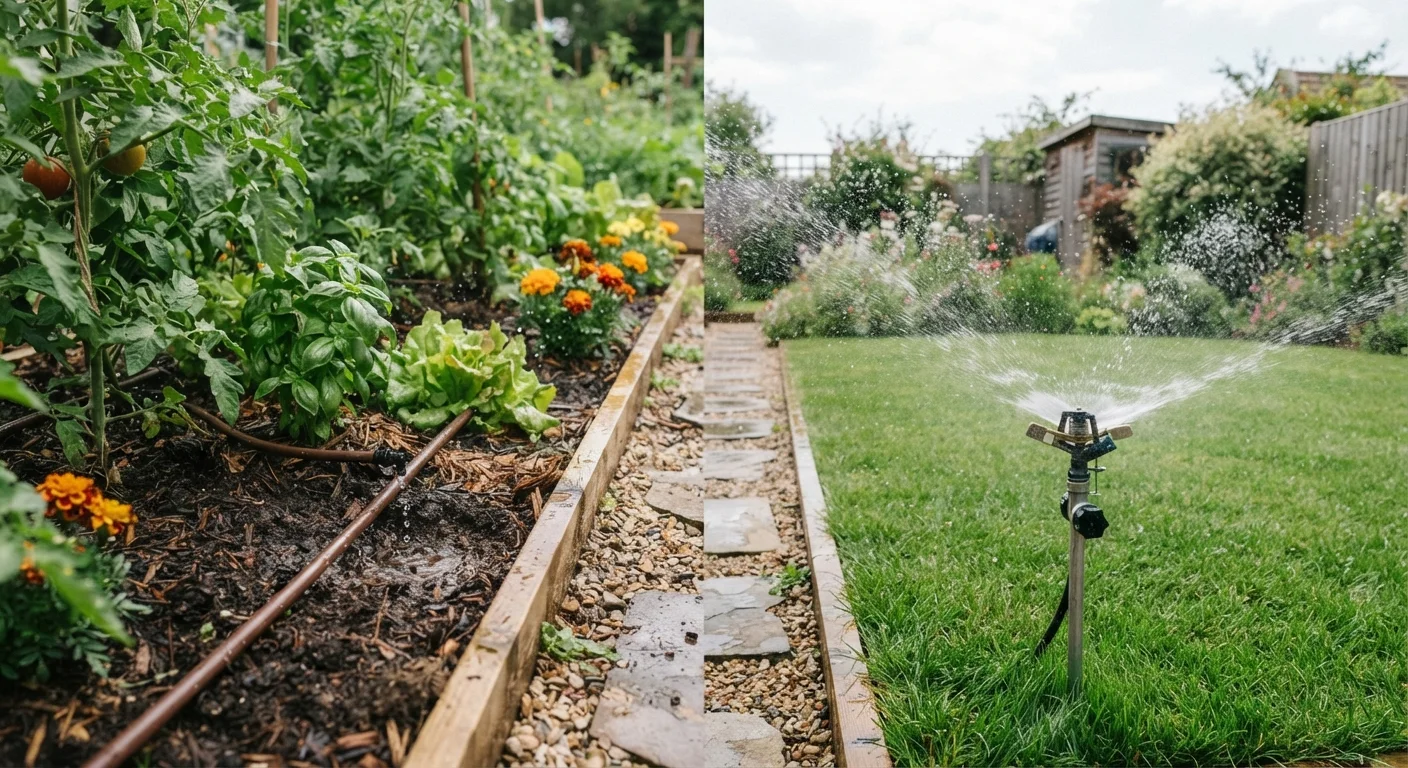
Drip irrigation uses a network of flexible tubing and small emitters placed at or just below soil level. Water seeps out slowly, directly into the root zone of individual plants. Because the water never becomes airborne, losses to wind and evaporation are minimal. Drip systems are also less likely to wet plant foliage, which can help reduce the conditions that encourage fungal diseases.
Sprinkler systems push water through fixed or rotating heads that spray it upward and outward in arcing patterns. That overhead coverage is what makes sprinklers well-suited to lawn turf - grass needs consistent moisture across its entire surface area. The trade-off is that some water never reaches the soil. Wind drift, evaporation in warm weather, and overspray onto pavement are real losses with most overhead systems.
For a broader look at how your watering choices interact with plant health, the article why overwatering is harder to spot than underwatering is worth reading alongside this one - delivery method affects how easy it is to overdo it.
| Criterion | Drip Irrigation | Sprinkler Systems |
|---|---|---|
| Water delivery method | Slow, direct to root zone | Overhead spray coverage |
| Best suited for | Garden beds, shrubs, vegetables | Turfgrass lawns, open areas |
| Water efficiency | High - minimal evaporation loss | Moderate - wind and heat cause losses |
| DIY installation | Generally manageable | Often requires professional install |
| Upfront cost | Lower to moderate | Moderate to high |
| Foliage wetting | Minimal | Common with overhead heads |
| Winterization required | Minimal (surface lines stored) | Yes - lines must be blown out |
| Automation options | Available with timers and sensors | Widely available, well-established |
Installation, Cost, and Maintenance Realities
Neither system is a weekend project to take lightly, but they have meaningfully different demands.
Drip systems are generally more DIY-accessible. Surface-laid tubing can be installed without trenching, and kits sold at garden centers allow homeowners to expand gradually, one zone or bed at a time. The emitters and tubing do require periodic inspection - clogging is the most common maintenance issue - and drip lines in annual vegetable beds need to be repositioned or replaced more often than permanent installations. Pairing drip irrigation with mulch noticeably reduces evaporation from the soil surface; the article mulch types and what each one does for your garden explains how different mulch materials perform in that role.
In-ground sprinkler systems typically involve more upfront work: trenching for supply lines, professional layout for zone coverage, and - in most regions - winterization (blowing out the lines with compressed air before freezing temperatures arrive). Professionally installed systems carry higher initial costs, though they can add to a home's resale appeal and tend to be more durable long-term. Controller technology has improved considerably, with weather-based and soil-moisture-sensor controllers now available to reduce unnecessary watering cycles.
~30-50%
Water savings from drip vs. overhead irrigation
The EPA's WaterSense program notes that drip irrigation can be 20-50% more efficient than conventional sprinkler systems, depending on installation and conditions.
~50%
Outdoor water use that goes to landscaping
According to the EPA, roughly half of residential water use in the U.S. is for outdoor purposes, with landscaping irrigation making up the majority of that share.
If your yard includes both a lawn and garden beds, the two systems aren't mutually exclusive - a sprinkler zone for turf combined with drip lines for planted areas is a practical hybrid that many homeowners use successfully.
Matching the Right System to Your Yard
The right choice usually comes down to what you're watering, not which system sounds more appealing in the abstract.
Drip irrigation is well-matched to:
- Vegetable and herb gardens
- Established perennial beds and shrubs
- Slopes where runoff is a concern
- Areas with water restrictions or limited supply
- Container gardens with access to a water source nearby
Sprinkler systems tend to be the practical choice for:
- Cool- or warm-season turfgrass lawns
- Large, relatively flat open areas
- New grass seed establishment, which needs frequent light moisture across the surface
- Yards where even, automated coverage across wide zones is the priority
If you're still early in planning your outdoor space, it helps to think about irrigation alongside other foundational choices. The article garden planning decisions that pay off over time covers how early layout decisions - including where beds go relative to a water source - shape how smoothly irrigation works for years ahead.
There's no single system that wins outright. The practical question is which delivery method matches what you're growing, how your yard is shaped, and how much active management you're willing to do each season.