

Key Takeaways
Start here
Choosing the Right Spot
Next
Understanding Your Soil
Then
Deciding What to Grow
Finally
Planting and Watering Basics
Choosing the Right Spot
Location is the single biggest factor in whether a vegetable garden succeeds or struggles. Most vegetables - tomatoes, peppers, beans, squash - need at least six hours of direct sunlight each day. Walk your yard at different times and watch which areas actually receive uninterrupted sun, rather than guessing. Morning sun is especially valuable because it dries dew off leaves quickly, reducing the risk of fungal diseases.
Beyond sunlight, look for a spot that drains well after rain. Vegetables sitting in waterlogged soil develop root rot fast. If your yard tends to pool water, a raised bed built up six to twelve inches above grade solves the problem neatly. Proximity to a water source also matters more than beginners expect - hauling a hose across a long yard gets old quickly.
Start Smaller Than You Think You Should
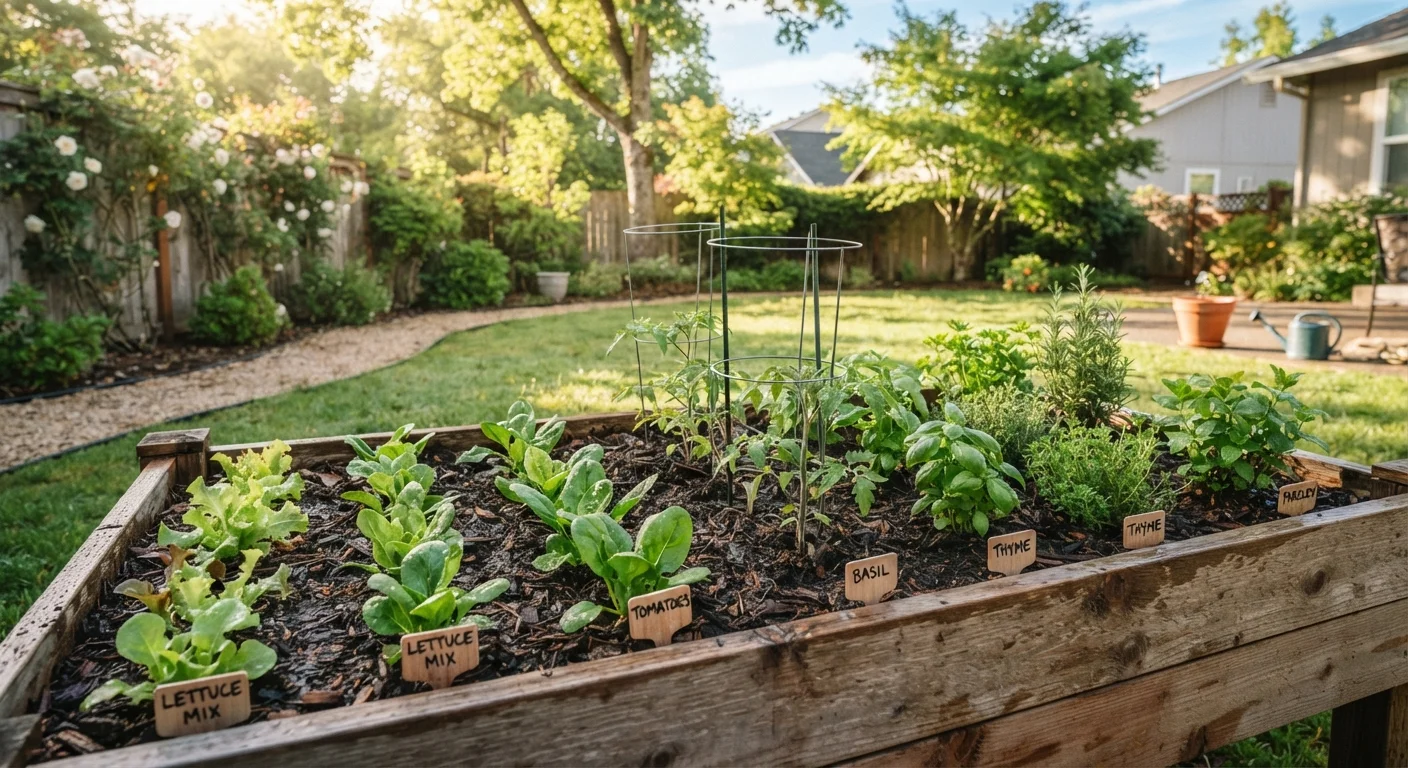
New gardeners almost universally underestimate how much time maintenance takes. A 4×4-foot raised bed or a handful of containers is genuinely enough for a first season. You'll learn more from one well-managed small plot than from a large one you struggle to keep up with.
If you're tight on outdoor space, a sunny driveway edge, a south-facing fence line, or even a balcony can support a productive container garden. The spot's light quality matters far more than its size.
Understanding Your Soil
Healthy soil is alive - full of microorganisms, earthworms, and organic material that make nutrients available to plant roots. Before you plant anything, squeeze a handful of your garden soil. It should crumble apart easily, not clump into a hard ball or fall apart like dry sand. Either extreme - heavy clay or pure sand - signals that you need to add organic matter.
Compost is the most practical amendment for nearly any soil type. Working two to four inches of finished compost into the top foot of soil before planting dramatically improves structure, drainage, and fertility. If you want to build your own supply over time, see our guide to composting at home for a straightforward approach to turning kitchen scraps into garden-ready material.
Soil pH - a measure of acidity or alkalinity - also affects how well plants absorb nutrients. Most vegetables prefer a pH between 6.0 and 7.0. Inexpensive home test kits are available at garden centers, and your local cooperative extension service can often provide free or low-cost testing. For a deeper look at what pH means for plant health, our article on soil pH and struggling plants covers the topic clearly.
Direct sunlight
Unobstructed sunlight that falls directly on a plant without shade from trees, buildings, or fences. Most vegetables need at least six hours of this each day.
Soil amendment
Any material mixed into existing soil to improve its structure, drainage, or nutrient content. Compost is the most common and broadly effective amendment.
Soil pH
A scale from 0 to 14 measuring how acidic or alkaline your soil is. Most vegetables grow best in slightly acidic soil, between 6.0 and 7.0 on the scale.
Days to maturity
The approximate number of days from planting (or transplanting) until a crop is ready to harvest, as listed on seed packets. It helps you plan what will be ready and when.
Cool-season crop
A vegetable that grows best in cooler spring or fall temperatures and can tolerate light frost. Examples include lettuce, spinach, and peas.
Transplant
A young seedling that was started in a pot or tray and then moved into the garden, rather than being seeded directly into the ground.
Mulch
A layer of material - such as straw, wood chips, or shredded leaves - spread over soil around plants to retain moisture, regulate temperature, and reduce weeds.
Deciding What to Grow
The temptation when browsing seed catalogs is to plant everything that looks appealing. Resist it. Your first season should be about learning the rhythms of a garden, not managing a full farm. Aim for four to six crop types and choose varieties with a reputation for reliability.
Divide your choices between cool-season and warm-season crops. Cool-season vegetables - lettuce, spinach, radishes, peas - thrive in spring and fall and can tolerate light frosts. Warm-season crops - tomatoes, cucumbers, zucchini, green beans - need warm soil and go in after your area's last expected frost date. Mixing both types extends your harvest window considerably.
- Quick confidence builders: Radishes, lettuce, and green beans germinate fast and produce in weeks.
- High-reward crops: Cherry tomatoes and zucchini are prolific and satisfying for beginners.
- Avoid for now: Corn requires large blocks to pollinate properly; melons need lots of space and a long warm season.
Reading seed packet information carefully is genuinely useful - it tells you days to maturity, spacing requirements, and whether to start seeds indoors or direct-sow outdoors.
Planting and Watering Basics
Seeds have two enemies: being planted too deep and being planted in cold soil. A general rule is to sow seeds at a depth of roughly two to three times their diameter. Tiny lettuce seeds barely need covering; bean seeds go in about an inch deep. Soil temperature matters too - warm-season seeds stall or rot in cold ground. A simple soil thermometer takes the guesswork out of timing.
For transplants (seedlings you buy or start indoors), dig a hole at least as deep as the root ball, set the plant in, firm the soil around it, and water immediately. Tomatoes are an exception - they benefit from being buried deeper than they grew in the pot, because roots form along the buried stem.
Watering at the base of plants, rather than overhead, keeps foliage dry and reduces disease pressure. Aim for about one inch of water per week in the absence of rain. A simple rain gauge helps you track actual rainfall so you don't overwater. Mulching around plants with straw or wood chips conserves moisture, moderates soil temperature, and suppresses weeds - three benefits from a single step.
Keeping a simple garden journal - noting what you planted, when you planted it, what worked, and what didn't - is one of the most underrated habits a new gardener can build. Your notes from this season become your best resource for next year. For more inspiration on planning a garden that grows well year after year, see our overview of perennials vs. annuals to understand how different plant types can work together across seasons.