

Key Takeaways
Our Verdict
Neither native plants nor non-native ornamentals are universally superior. Natives typically demand less long-term maintenance and actively support local wildlife, making them a strong foundation for most American yards. Non-native ornamentals earn a place when chosen carefully - avoiding invasive species and supplementing, rather than replacing, the native layer.
| Best for | Recommended |
|---|---|
| Low-maintenance yards with wildlife and pollinator goals | Native Plants |
| Gardeners prioritizing extended bloom seasons and design variety | Non-Native Ornamentals |
| Most everyday American home gardens | A deliberate mix of both |
Understanding the Core Difference
A native plant is one that evolved naturally in a specific region over thousands of years, developing relationships with local soils, rainfall patterns, insects, and birds. A non-native ornamental is a species introduced from another region or country - often selected for visual appeal, unusual color, or extended flowering. Both categories are broad and internally diverse; neither is monolithic.
The distinction matters because plants don't exist in isolation. They participate in ecological webs. Native plants and local pollinators, birds, and soil organisms have co-evolved dependencies that non-native species simply don't share. That said, not every non-native plant causes harm, and not every native plant is automatically the right fit for every yard or gardening goal.
Before choosing, it helps to think about three dimensions: ecological impact, maintenance demands, and aesthetic fit. These considerations point in different directions depending on your priorities - and on what you're already working with. If you're also weighing how and where to situate your plants, see our guide to raised beds vs. in-ground gardening for complementary planning context.
Ecological Trade-Offs
Native plants support local food webs in ways non-natives typically cannot. Research by entomologist Doug Tallamy and others has documented that many native caterpillars - which are critical bird food - can only feed on specific native host plants. A yard planted exclusively with non-native ornamentals may look lush but provide minimal wildlife value.
Non-native ornamentals range widely in their ecological footprint. Many are benign: they neither spread aggressively nor disrupt local ecosystems. Others, however, can escape cultivation and become invasive - outcompeting native vegetation and reducing biodiversity across entire regions. Burning bush (Euonymus alatus), English ivy (Hedera helix), and Japanese barberry (Berberis thunbergii) are examples that appear on many state invasive lists despite remaining popular at garden centers.
Not All Sold Plants Are Safe to Plant
Many invasive species remain freely sold at garden retailers, particularly ornamental grasses, certain shrubs, and vining plants. A plant being commercially available is not a safety signal. Always verify with your state's invasive species list before purchasing anything unfamiliar, especially fast-spreading or berry-producing ornamentals.
Before purchasing any non-native ornamental, check your state's invasive species list - maintained by most state departments of agriculture or natural resources - and cross-reference with the NISIC. A plant sold widely at retail is not necessarily safe to plant in your region.
Maintenance Realities
| Native Plants | Non-Native Ornamentals | |
|---|---|---|
| Establishment period | 1-2 seasons of attentive watering | Varies widely by species |
| Long-term water needs | Generally low once established | Low to high depending on origin |
| Wildlife support | High - supports local insects, birds | Typically low to minimal |
| Invasive risk | None by definition | Ranges from none to significant |
| Design flexibility | Growing selection; more naturalistic | Extensive; bred for ornamental traits |
| Fertilizer needs | Rarely needed | Often beneficial or required |
| Regional availability | Specialized nurseries; improving | Widely available at most retailers |
The maintenance gap between native and non-native plants is real, but it's often overstated in one direction. Native plants do typically require less supplemental watering, fertilizing, and pest intervention once they're established - because they're adapted to local conditions. The key phrase is "once established": most natives still need attentive watering during their first one to two growing seasons.
Non-native ornamentals vary enormously. Some thrive with minimal input; others demand regular irrigation, fertilization, or winter protection. Tropical plants used as annuals in northern climates, for instance, require consistent attention. A peony from Central Asia, by contrast, can naturalize successfully in many American gardens with relatively little care.
Your maintenance capacity is a legitimate factor. Upfront planning decisions - including honest self-assessment of how much time you'll realistically spend - will save years of struggle with plants poorly matched to your lifestyle.
Aesthetic and Design Flexibility
Non-native ornamentals have historically dominated garden design because breeders have extensively developed them for showier blooms, novel colors, extended flowering periods, and tidy growth habits. If you want continuous color from spring through fall frost, non-native selections - chosen responsibly - expand your palette considerably.
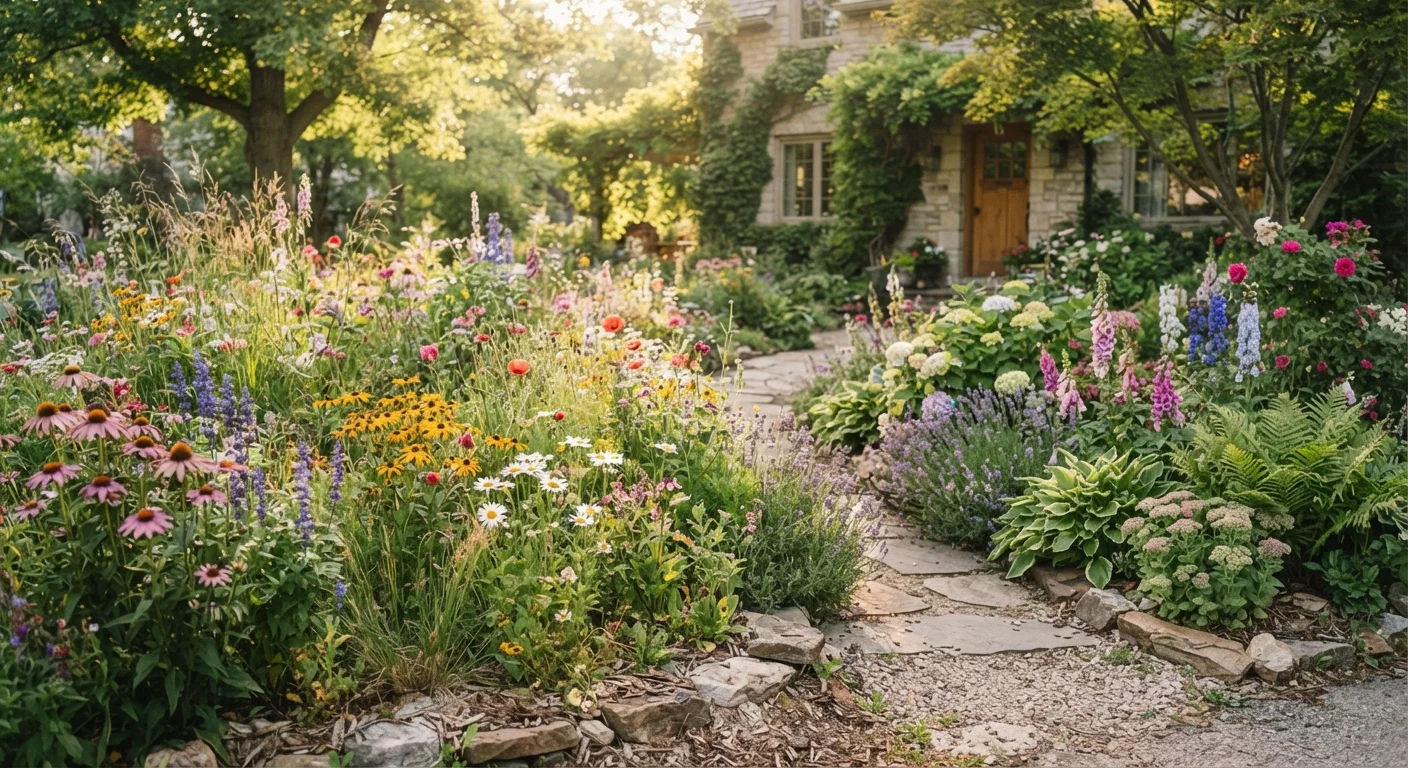
That said, native plants offer genuine beauty that's often underestimated. Coneflowers (Echinacea), black-eyed Susans (Rudbeckia), wild columbine (Aquilegia canadensis), and native grasses have become increasingly popular in designed landscapes precisely because they look naturalistic and require less grooming. Many native plant nurseries now offer cultivated varieties ("nativars") that retain ecological function while offering slightly more predictable form and color.
If space is limited - on a patio or balcony, for example - our container gardening guide covers how to incorporate both native and non-native selections in confined spaces. And if you're integrating multiple species for functional benefits, what companion planting actually offers is worth understanding before you commit to a planting scheme.
Start With One Native Anchor Plant
If transitioning to more natives feels overwhelming, start with a single native shrub or small tree - like a serviceberry, native viburnum, or oak species appropriate to your region. These anchor plants provide the greatest ecological return per square foot and give you a reference point for expanding your native selection gradually over subsequent seasons.
Building a Practical Strategy
Most home gardeners don't need to choose one camp exclusively. A practical approach treats native plants as the ecological backbone - particularly trees, shrubs, and ground covers that support wildlife year-round - while using non-native ornamentals selectively for seasonal color, structural variety, or areas where natives struggle to establish.
Pair this strategy with the perennials vs. annuals framework: native perennials provide reliable structure each year, while non-native annuals give you the flexibility to experiment with color and form without long-term commitment.
Prioritize sourcing native plants from reputable native plant nurseries rather than big-box retailers, which often stock limited regional selections. When adding non-native ornamentals, verify they aren't listed as invasive in your state, avoid those with heavy maintenance requirements if your schedule is tight, and place them where their spread can be monitored. Over time, this layered approach tends to produce gardens that are both satisfying to look at and meaningfully lower-maintenance than monoculture approaches in either direction.