

Key Takeaways
Why Container Gardening Works - and Where It Shines
Container gardening isn't a consolation prize for people without a yard - it's a genuinely effective method that offers control and flexibility most ground-level gardeners don't have. You choose the soil, the drainage, the positioning, and the plant mix. Problems like poor native soil, invasive weeds, or inconsistent sun become non-issues when your garden grows in portable pots.
Patios and balconies present unique variables: reflected heat from concrete, wind exposure at higher floors, limited square footage, and sometimes building restrictions on what can be attached to railings or walls. Understanding these conditions upfront is what separates a container garden that thrives from one that struggles by midsummer.
If you're drawn to growing edibles, container gardening is a natural starting point. You can dedicate one pot to herbs, another to lettuce, and another to a compact tomato variety without committing to a full garden bed. For those considering expanding to larger-scale growing, understanding how raised beds compare to in-ground gardening can help you plan future steps.
Think Vertically to Expand Your Space
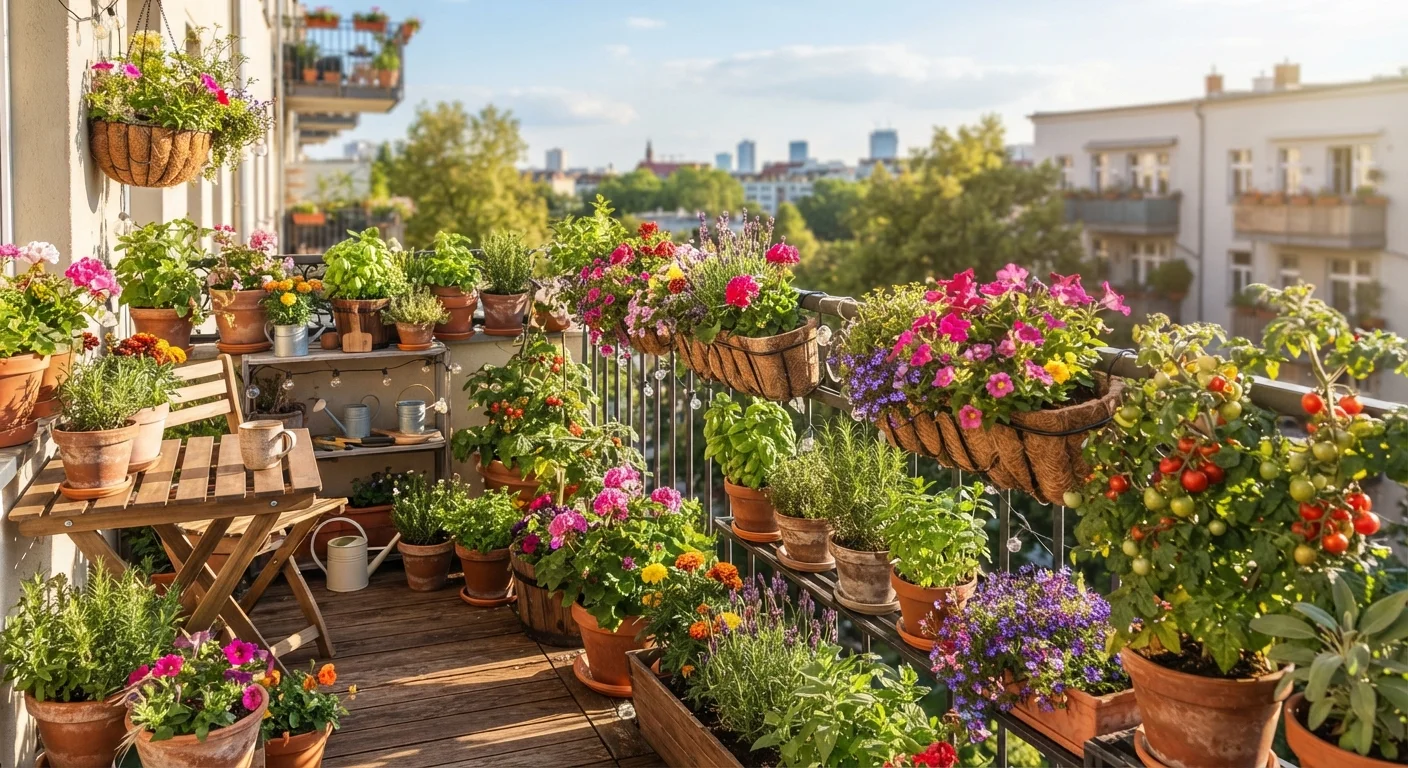
Wall-mounted planters, tiered plant stands, and railing-mount containers let you grow more plants without taking up additional floor space. This is especially useful on narrow balconies where floor area is limited. Just confirm that any wall-mounted hardware is appropriate for your surface and weight load.
Setting Up Your Container Garden: Step-by-Step
Follow the steps below to build a container garden suited to your space, light conditions, and goals. Gather your tools and materials before you begin - having everything ready makes the planting process much smoother.
What you will need
Containers (pots, planters, or grow bags)
Hold soil and plants; size and material affect moisture retention and root space.
High-quality potting mix
Provides the aeration, drainage, and nutrients container plants need - garden soil compacts and should not be used.
Watering can or hose with adjustable nozzle
Delivers water consistently and gently without dislodging soil or damaging seedlings.
Drainage saucers
Catch excess water to protect balcony surfaces and prevent overwatering.
Slow-release granular fertilizer
Supplements nutrients that flush out of containers with regular watering.
Trowel or hand shovel
Used to fill containers with soil and transplant seedlings.
Plant stakes or small trellis
Supports vining or tall plants like tomatoes, cucumbers, or climbing beans.
Assess your light and weight limits
Before buying a single pot, spend a day observing how sunlight moves across your space. Track how many hours of direct sun the area receives. Six or more hours is considered full sun; three to six hours is partial shade; fewer than three is full shade. Your light level will determine which plants are realistic choices.
If you're on a balcony, check your building's load-bearing specifications or ask your landlord or HOA. Large containers filled with wet soil are surprisingly heavy - a 15-gallon pot with moist soil can weigh over 100 pounds. Lightweight alternatives like fabric grow bags or plastic pots can reduce this significantly.
Choose the right containers
Select containers based on the mature size of your plants, not just the seedlings you're starting with. Most vegetables need at least a 5-gallon container; tomatoes and peppers do better in 10-15 gallons. Herbs can thrive in much smaller pots - even a 6-inch pot works for a single basil plant.
Every container must have drainage holes. Roots sitting in standing water will rot. Terracotta is breathable and attractive but dries out quickly. Plastic retains moisture longer but can overheat in direct sun. Fabric grow bags offer excellent aeration and are lightweight.
Select and fill with the right growing medium
Use a commercial potting mix formulated for containers, not soil dug from the ground or a garden bed. Garden soil compacts in pots, restricting air and water movement around roots. Look for mixes that include perlite or vermiculite for drainage and some form of organic matter for moisture retention.
For edibles, a general-purpose potting mix works well. For succulents or Mediterranean herbs like rosemary and lavender, use a mix formulated for cacti or add extra perlite for sharper drainage. Fill containers to within an inch or two of the rim to allow for watering without overflow.
Select plants matched to your conditions
Match your plant choices to the sun exposure you documented in Step 1. For full sun: tomatoes, peppers, basil, zucchini, and most flowering annuals. For partial shade: lettuce, spinach, kale, mint, parsley, and impatiens. For full shade: ferns, hostas, and begonias.
If you're growing food for the first time, start with fast-growing, forgiving crops like lettuce, radishes, and bush beans. For a broader introduction to vegetable growing, the beginner's vegetable garden guide covers the fundamentals clearly.
Consider mixing perennials and annuals in your containers for a balance of seasonal color and returning plants.
Water consistently and fertilize regularly
Container plants dry out far faster than in-ground plants because the soil volume is limited and often exposed to sun and wind on multiple sides. Check moisture daily during warm months by pressing a finger an inch into the soil - water when it feels dry at that depth.
Nutrients also leach out of containers with each watering. Apply a slow-release granular fertilizer at planting time and supplement with a diluted liquid fertilizer every two to three weeks during the growing season. Follow label directions and avoid over-fertilizing, which can damage roots and reduce fruiting in edible plants.
Balcony Weight Limits Are a Real Safety Concern
Before loading a balcony with large, soil-filled containers, verify the structural weight capacity of your outdoor space. This information may be in your lease, building management documents, or local building code. Overloading a balcony is a safety hazard - when in doubt, consult a qualified structural professional and opt for lightweight containers and growing media.
Maintaining and Troubleshooting Your Container Garden
Once established, container gardens need regular attention but not constant labor. The main tasks are watering, fertilizing, deadheading spent flowers, and watching for pests. Common issues include:
- Wilting despite moist soil: Often a sign of root rot from poor drainage - check that holes are clear and the mix isn't compacted.
- Leggy, stretched growth: Usually indicates insufficient light. Move containers to a sunnier spot if possible.
- Yellowing leaves: Can signal overwatering, underwatering, or nutrient deficiency. Check soil moisture and review your fertilizing schedule.
- Pests: Aphids, fungus gnats, and spider mites are common in containers. Inspect plants weekly and treat early with the least disruptive method appropriate for the pest.
As the season winds down, consider refreshing or replacing potting mix before replanting. Reusing the same mix year after year depletes nutrients and can harbor disease. Container gardening also pairs naturally with interior plant styling - if you're interested in extending the green aesthetic indoors, biophilic design principles offer practical ways to bring nature inside.
Avoid Soil Mixes That Stay Soggy
Heavy, poorly draining potting mixes can suffocate roots and lead to fungal disease. If your plants show yellowing leaves or a persistent musty smell from the soil, poor drainage is often the cause. Repot using a well-aerated mix and ensure drainage holes are clear and unobstructed.