

Key Takeaways
Soil pH
Soil pH is a measure of how acidic or alkaline your soil is, rated on a scale from 0 to 14. A reading of 7 is neutral; below 7 is acidic, and above 7 is alkaline. Most garden plants grow best somewhere between 6.0 and 7.0. The pH level directly controls how well plants can absorb the nutrients already present in your soil.
pH stands for 'potential of hydrogen' and reflects the concentration of hydrogen ions in the soil solution. Even small shifts on the scale represent tenfold changes in acidity or alkalinity, since the scale is logarithmic.
Why pH Matters More Than Most Gardeners Think
You've watered regularly, fertilized on schedule, and given your plants plenty of sun - yet they still look pale, spindly, or simply stuck. Before assuming the problem is drought or disease, consider what's happening underground. Soil pH is one of the most overlooked reasons plants underperform, and it's a factor that no amount of watering or fertilizing can overcome on its own.
Here's why: nutrients like nitrogen, phosphorus, iron, and manganese don't exist as free-floating particles your plant can grab at will. They exist in chemical forms that become accessible - or inaccessible - depending on the soil's pH. At the wrong pH, iron may be present in abundance but chemically locked up, causing leaves to yellow as if the plant were starved. You might add more fertilizer, see no improvement, and conclude the problem is something else entirely.
If you're just getting started with edible gardening, the fundamentals of vegetable garden setup are worth reviewing alongside understanding soil chemistry - the two go hand in hand.
6.0-7.0
Optimal pH range for most garden plants
University extension programs consistently identify this range as where the broadest spectrum of nutrients remains plant-available.
10x
Change in acidity per pH unit on the scale
Because the pH scale is logarithmic, a soil at pH 5 is ten times more acidic than soil at pH 6 - a small number hides a large difference.
~60-90 days
Typical wait time before retesting after amendment
Soil amendments like lime and sulfur act gradually; most extension guidelines recommend waiting at least two months before measuring results.
How to Test Your Soil pH
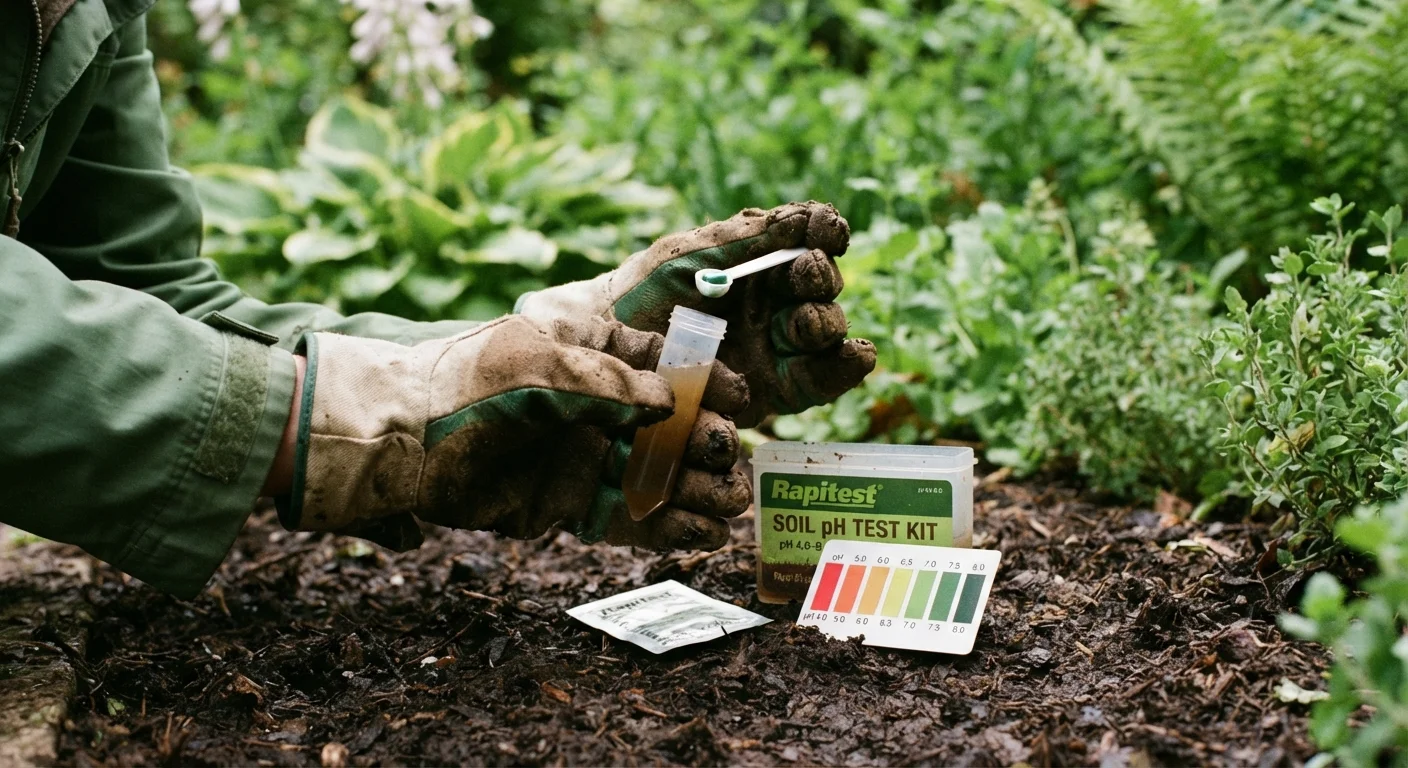
Testing is straightforward and doesn't require special expertise. You have two main options:
- Home test kits: Available at garden centers, these typically use either a chemical indicator solution or a probe-style meter. They're quick and inexpensive - adequate for most home gardeners who want a general reading.
- Cooperative Extension lab tests: Many state universities offer mail-in soil testing through their Cooperative Extension programs for a modest fee. These tests are more precise and usually include recommendations for how much amendment to add based on your specific results and target crop.
To get a reliable sample, collect small amounts of soil from several spots in the garden bed at a depth of four to six inches, then combine them. A single scoop from one corner won't represent the full picture.
Test Before You Amend
Never apply lime or sulfur based on a hunch. Without a baseline test, you risk moving pH in the wrong direction or overshooting your target. Most Cooperative Extension offices offer low-cost testing that includes specific amendment recommendations for your soil type and target plants.
How to Adjust Soil pH
Once you know where your soil stands, correction is achievable - just not instant. Two amendments do most of the work:
- To raise pH (make soil less acidic):
- Apply ground limestone, commonly called garden lime. Calcitic lime adds calcium; dolomitic lime adds both calcium and magnesium. The amount needed depends on your current pH, your target pH, and your soil type - clay soils need more amendment than sandy soils to shift the same amount.
- To lower pH (make soil more acidic):
- Apply elemental sulfur, which soil bacteria convert into sulfuric acid over several weeks. Acidifying fertilizers can also contribute modest, gradual reductions over time.
Work amendments into the top six to eight inches of soil rather than leaving them on the surface. Retest before adding more - overcorrection is a real risk that creates a new set of problems. This long-view thinking also connects to broader garden planning decisions that reward patience.
For those growing in pots and raised beds, pH management is more manageable. See our guidance on container gardening for soil mix recommendations suited to specific plant types.
pH Preferences Vary by Plant
Not every plant wants the same conditions. Knowing your plants' preferences helps you decide whether to amend the whole bed or simply choose plants that suit your existing soil.
| Plant Type | Preferred pH Range |
|---|---|
| Most vegetables | 6.0 - 7.0 |
| Blueberries | 4.5 - 5.5 |
| Roses | 6.0 - 6.5 |
| Azaleas & rhododendrons | 4.5 - 6.0 |
| Lawn grasses | 6.0 - 7.0 |
| Potatoes | 5.0 - 6.0 |
If your soil reads 7.5 and you want to grow blueberries, you're working against a significant gap. In cases like that, a raised bed with a purpose-formulated acidic mix may be a more practical solution than trying to reshape the pH of your entire yard.
Keep in mind that even if pH is correct, other factors like waterlogged roots can mimic nutrient deficiency symptoms. The signs of overwatering are worth ruling out when plants look distressed despite good soil chemistry.