

Key Takeaways
Companion Planting
Companion planting is the practice of growing two or more plant species in close proximity because they're believed to benefit one another - through pest control, pollinator attraction, improved growth, or efficient use of space. It's a centuries-old technique used in vegetable, herb, and ornamental gardens. Some pairings have solid scientific backing; others are garden folklore passed down with more enthusiasm than evidence.
In agricultural research, companion planting overlaps with concepts like intercropping, polyculture, and integrated pest management (IPM) - each describing different strategies for mixing plant species to improve yield or reduce inputs.
The Core Idea and Why It Stuck Around
Companion planting rests on a simple observation: plants don't grow in isolation in nature, and deliberately choosing which plants grow side by side can influence outcomes in your garden. The approach spans cultures and centuries - from Indigenous polyculture farming in the Americas to traditional European cottage gardens that mixed herbs and vegetables out of necessity.
The reason it persists isn't just folklore. Real ecological relationships do exist between plants. Some flowering plants attract predatory insects that feed on common pests. Legumes like beans and clover fix atmospheric nitrogen into the soil, a benefit neighboring plants can use. Tall crops can shade low-growing moisture-sensitive ones. These are functional relationships that gardeners have observed and agricultural scientists have documented.
What often gets lost, however, is the distinction between what's been demonstrated and what's been repeated so many times it sounds like fact. Understanding that difference makes companion planting genuinely useful rather than a source of garden guilt when things don't pan out.
What the Evidence Actually Supports
A few categories of companion planting have meaningful support from horticultural research and long-term agricultural practice.
Beneficial insect attraction
Planting nectar-rich flowers - like dill, yarrow, or phacelia - near vegetable crops can attract parasitic wasps, hoverflies, and other beneficial insects that prey on aphids, caterpillars, and other common pests. This is one of the stronger arguments for mixing ornamentals and edibles in a kitchen garden.
Nitrogen fixation
Legumes genuinely do fix nitrogen through a symbiotic relationship with soil bacteria. Interplanting beans with heavy-feeding crops like corn or squash - as in the traditional Three Sisters method - can reduce the need for added nitrogen over time, though the benefit is gradual and depends on healthy soil biology.
Space and light efficiency
Pairing plants with different canopy heights and growth rates makes productive use of space. A slow-maturing crop beside a quick one, or a tall plant shading a heat-sensitive short one, reflects thoughtful garden planning decisions rather than magic.
Start With a Single Proven Pairing
Rather than redesigning your entire garden around companion planting principles, pick one well-documented pairing to try - such as planting dill or fennel away from vegetables to avoid inhibition, or adding marigolds as a soil nematode deterrent near susceptible crops. Observe results over a full season before expanding. Incremental experimentation gives you real data from your specific garden.
Where the Hype Outpaces the Evidence
Companion planting's biggest stretch is in its pest-repelling claims. You'll often read that basil planted near tomatoes repels aphids, that nasturtiums act as trap crops for whiteflies, or that aromatic herbs confuse insects with their scent. Some of these effects are real but modest; others have very limited controlled evidence behind them.
The core problem is that many repellent claims were established through garden observation rather than controlled trials. Plant volatiles - the aromatic compounds in herbs like basil or mint - do affect insect behavior in laboratory settings. But a garden is not a laboratory. Wind, temperature, planting density, and pest pressure all vary, and the concentration of scent compounds needed to deter insects is rarely achieved at typical garden planting distances.
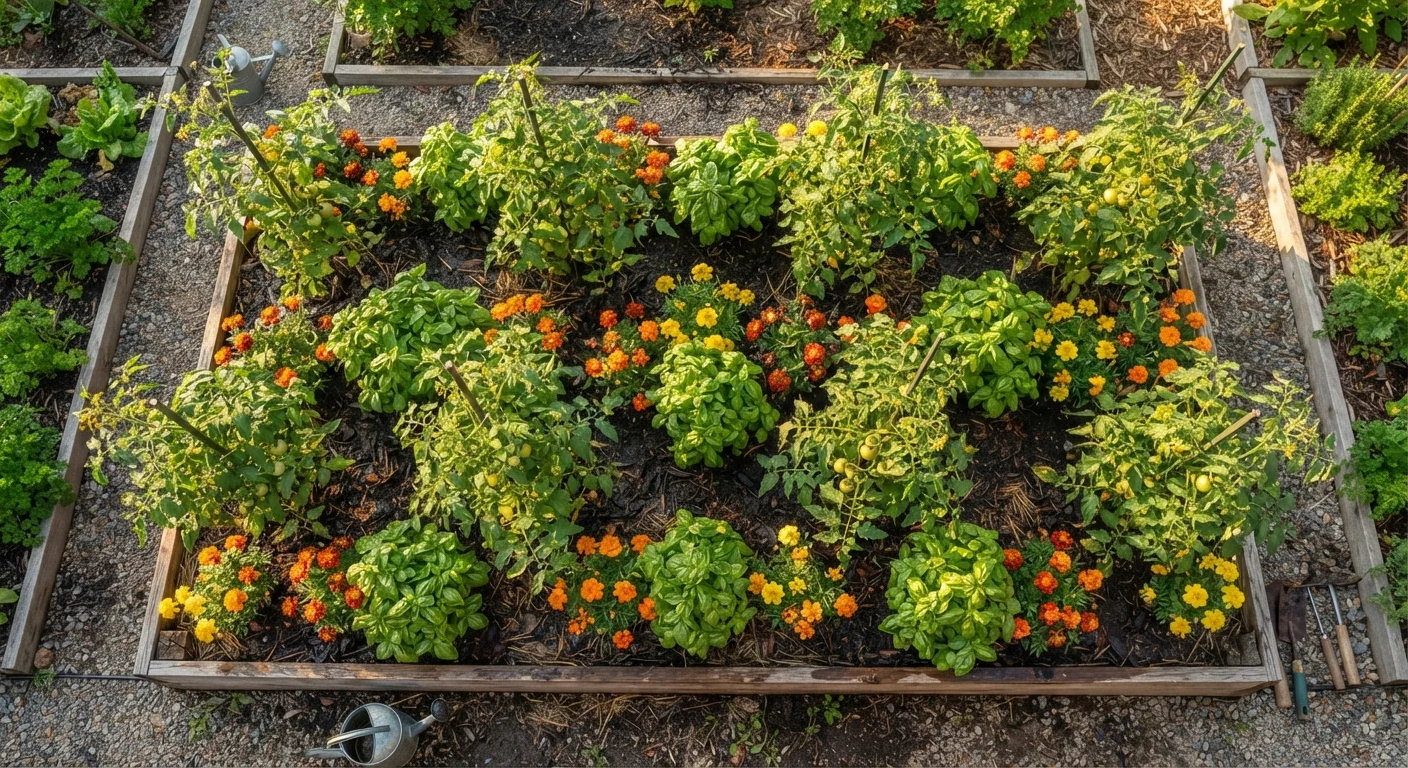
Marigolds are perhaps the most commonly cited example. They do have documented effects on root-knot nematodes in soil - but that's a specific species interaction, not a general pest shield. A border of marigolds around a tomato bed is unlikely to meaningfully deter aphids or hornworms.
Allelopathy: When Plants Inhibit Each Other
Some plants release chemical compounds that suppress the germination or growth of neighboring species - a process called allelopathy. Black walnut trees are a well-known example, releasing juglone that harms many garden plants within root range. Fennel is another commonly noted example in vegetable gardens. These negative relationships are as real as the positive ones, so researching potential incompatibilities before planting is time well spent.
Understanding where companion planting ends and marketing begins is worth the same critical eye you'd bring to lawn care myths - the advice sounds logical, but results depend on far more variables than the simple rule suggests.
How to Use It Practically
Companion planting is most useful when treated as one layer of a thoughtful garden system rather than a cure-all. A few grounded principles help:
- Match resource needs first. Before any pairing, confirm that neighboring plants want similar amounts of water, sunlight, and soil fertility. Mismatched needs cause more problems than any pest relationship can fix.
- Use flowers deliberately. Adding flowering plants to a vegetable bed has well-supported benefits for pollination and beneficial insect habitat. Choose species that bloom across the season for the most consistent impact.
- Treat repellent claims skeptically. Try them if you want, but don't count on them as your primary pest management strategy. Active monitoring and physical barriers are more reliable.
- Consider your setup. Whether you're working with raised beds or in-ground plots, spacing and airflow affect how companion relationships actually play out in practice.
Companion planting fits naturally into a broader, ecologically minded planting approach - one that values diversity, works with local conditions, and doesn't rely on any single solution.
~60%
Pest reduction in some intercropping studies
Research published in agricultural journals has found that certain intercropping arrangements - mixing crops rather than monoculture - can reduce pest populations by up to 60%, though results vary considerably by crop, pest, and region.
3-in-1
Functions of the Three Sisters combination
The Three Sisters (corn, beans, squash) addresses nitrogen fixation, weed suppression, and vertical space use simultaneously - one of the most multi-functional planting systems documented in traditional North American agriculture.
12-18 inches
Typical effective range for scent-based deterrence
Laboratory studies suggest aromatic plant volatiles have limited effectiveness beyond about 12-18 inches under open-air conditions, which is narrower than many garden companion planting guides acknowledge.