

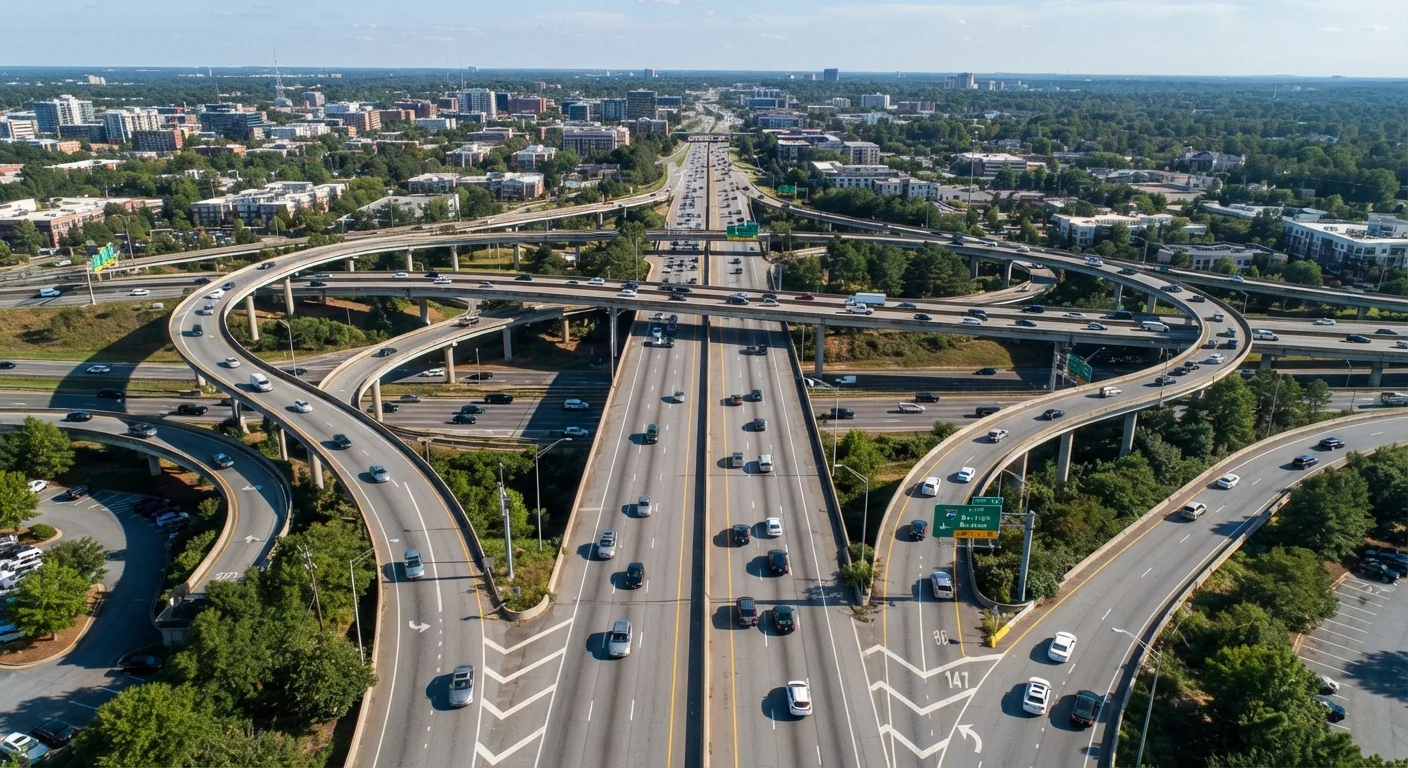
Why Right-of-Way Confusion Is a Crash Risk
Most drivers believe they understand right-of-way rules - until a close call proves otherwise. Many collisions aren't caused by recklessness; they stem from genuine uncertainty about who should yield and when. These gaps in understanding become dangerous precisely because two drivers can each believe they have the right of way simultaneously.
Right-of-way rules are not suggestions - they're traffic law in every U.S. state, and violations are a leading factor in intersection and highway crashes according to federal road safety data. Understanding the specific situations where confusion runs highest is a practical step toward safer driving.
See also: how overconfidence contributes to everyday accidents.
Merging onto the Highway: Who Actually Yields?
A persistent misconception is that highway traffic must make room for merging vehicles. In nearly all U.S. states, drivers entering a highway via an on-ramp are required to yield to vehicles already traveling in the right lane. The merging driver is responsible for finding an acceptable gap and matching highway speed - not the other way around.
That said, experienced drivers often adjust their position or speed to facilitate safe merges when traffic and conditions allow. This courtesy is beneficial but not legally required. Confusing courtesy with obligation is one place where expectations collide.
Right-of-way
The legal right to proceed through a traffic situation before another vehicle. It is granted by traffic law, not taken by assumption - and can be legally required to be yielded.
Zipper merge
A merging technique where drivers use both lanes up to the point where the lane ends, then take turns merging one at a time, similar to teeth on a zipper.
Shoulder check
A brief glance over the driver's shoulder toward the blind spot adjacent to their vehicle, performed before changing lanes or merging to detect vehicles that mirrors may not capture.
Roundabout
A circular intersection where traffic flows in one direction around a central island. Entering vehicles must yield to those already circulating inside.
Blind spot
An area around a vehicle that cannot be seen in the driver's mirrors. Every vehicle has blind spots, and shoulder checks are the primary way to check them before a lane change.
Common mistakes when merging:
- Stopping at the end of an on-ramp instead of accelerating to match traffic speed
- Merging without checking mirrors or performing a shoulder check
- Assuming a gap will open rather than actively identifying one
For more on how highway and city driving demand different habits, see Highway Driving vs. City Driving.
Lane Changes: Signal, Check, Then Move
A lane change may seem simple, but it involves a layered sequence of actions that many drivers compress or skip. The basics are consistent across states: signal your intent, check your mirrors, perform a shoulder check to cover blind spots, confirm the gap is sufficient, and then move gradually into the new lane.
The key right-of-way principle is that the driver changing lanes must yield to vehicles already occupying the target lane. The burden is on the moving driver, not the one holding their lane. This applies whether you're moving left to pass or right to exit.
Blind spots are among the most overlooked hazards in this process. Learn how to minimize blind spots with proper mirror use and shoulder checks before making any lane change.
Also worth noting: following too closely in the destination lane creates a situation where even a correctly signaled lane change leaves no safe margin. Tailgating dramatically reduces reaction time for everyone involved.
Intersections, Zipper Merges, and Other Frequently Misunderstood Scenarios
Beyond highways, several everyday situations generate consistent confusion:
Four-Way Stops
The vehicle that arrives first proceeds first. When two vehicles arrive simultaneously, the driver on the left yields to the driver on the right. When three or four vehicles arrive at once, eye contact and gradual assertion of position are practical tools - but patience prevents the most dangerous standoffs.
Zipper Merging
When a lane ends ahead due to construction or road design, many drivers merge early out of courtesy. However, traffic engineers and safety researchers generally support the zipper merge - using both lanes fully until the merge point, then alternating. This reduces overall congestion and, when practiced consistently, is considered the safer approach.
Roundabouts
Vehicles inside the roundabout have the right of way. Entering drivers must yield until a safe gap opens. Roundabouts have been shown to significantly reduce severe injury crashes compared to traditional intersections, largely because they eliminate high-speed right-angle collisions.
Distractions inside the cabin make all of these situations harder to navigate. Managing in-car distractions is a foundational part of safe driving in complex traffic.
This article provides general driver education information. Always refer to your state's official driver handbook and consult relevant traffic authorities for the rules applicable in your jurisdiction.