

Key Takeaways
Tailgating
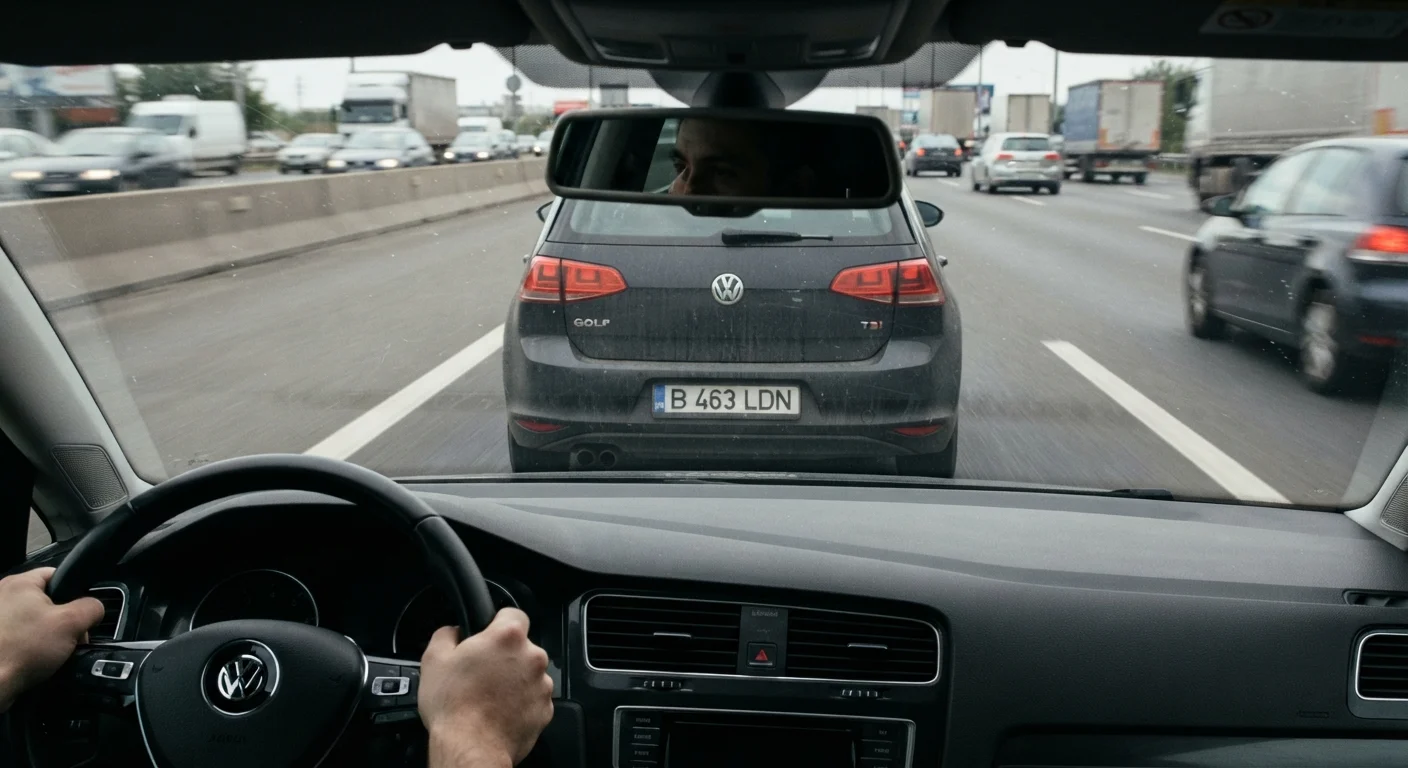
Tailgating means following another vehicle too closely - leaving less stopping distance than you'd need to avoid a collision if the driver ahead brakes suddenly. Most safety guidelines recommend maintaining at least a three-second following gap under normal conditions. When that gap shrinks, your ability to react and stop in time shrinks with it.
Stopping distance is the sum of reaction distance (how far you travel before your foot hits the brake) and braking distance (how far the vehicle slides before stopping). Both increase significantly at higher speeds, making the physics of tailgating worse the faster you go.
The Physics That Make Close Following So Risky
Most drivers understand in principle that following too closely is dangerous. What most underestimate is how quickly physics removes their options when something goes wrong.
At 60 mph, your vehicle is covering approximately 88 feet every second. Average human reaction time - from seeing a hazard to pressing the brake - runs between 1.5 and 2.5 seconds depending on alertness and distraction level. That means before your brakes even engage, you've already traveled 130 to 220 feet. Add braking distance on top of that, and the numbers become sobering fast.
A vehicle following two car lengths behind at highway speed has, in practical terms, almost no margin. The driver ahead doesn't have to stop suddenly - even a moderate, panic-braking event can be enough to cause a rear-end collision when following distances are compressed.
~29%
Of all U.S. crashes that are rear-end collisions
According to the National Highway Traffic Safety Administration (NHTSA), rear-end crashes are one of the most common crash configurations on American roads.
1.5-2.5 sec
Typical human reaction time before braking begins
Driver behavior research consistently places average perception-reaction time in this range, with distraction and fatigue pushing it toward the higher end.
50%+
Increase in stopping distance on wet pavement
Transportation safety organizations note that wet roads significantly extend braking distance, making standard following distances inadequate in rain.
This connects directly to why posted speed limits aren't always a safe target - conditions like rain or heavy traffic require adjustments to both speed and following distance together.
Why Drivers Underestimate Following Distance
One of the more consistent findings in driver behavior research is that people are poor judges of their own following distance, particularly at speed. At 70 mph, a three-second gap looks - and feels - much closer than it is. That mismatch between perception and reality is a persistent hazard.
Several factors make it worse. Drivers who tailgate frequently often normalize the behavior, interpreting the absence of a crash as proof that the distance is acceptable. Familiarity with a route or vehicle can create a false sense of control. And distraction - even a brief glance at a dashboard - erases a significant portion of reaction time.
Use the Three-Second Rule as Your Default
To check your following distance, find a fixed object on the roadside - a sign, a bridge, or a painted line. When the car ahead passes it, start counting. If you pass that same point before you reach 'three,' you're following too closely. In adverse conditions, extend your count to five or six seconds.
This pattern is part of a broader set of cognitive habits that contribute to everyday crashes. As explored in our piece on overconfidence and inattention behind accidents, familiarity with driving conditions tends to reduce vigilance at exactly the moments it matters most.
When Tailgating Becomes a Trigger for Road Rage
Close following isn't only a physical risk - it's one of the most commonly cited triggers for aggressive driving escalation. When a driver experiences someone following tightly behind them, it registers as threatening and coercive, even if the tailgating driver sees themselves as simply in a hurry.
That dynamic can rapidly escalate. The driver being tailgated may brake-check, slow down deliberately, or respond with aggression. The tailgating driver, frustrated, may retaliate. What began as impatience becomes a confrontation. Understanding the triggers and costs of road rage helps put tailgating in its full context - it's not just a solo risk, it affects everyone around you.
Building a Safer Habit: The Three-Second Rule and Beyond
The three-second following gap is the standard starting point recommended by driver safety educators. It's practical, easy to measure, and scalable: pick a fixed point on the road, watch when the car ahead passes it, and count until you pass the same point. If you reach three before counting to three, you're too close.
But three seconds is a minimum for dry roads and alert driving. Add a second or two for rain, low light, or when driving a heavier vehicle. If you're fatigued - which has a similar effect on reaction time as mild alcohol impairment, according to traffic safety research - increase your gap further.
Nighttime driving compounds the challenge. After dark, visibility and reaction windows shrink, making adequate following distance even more critical. Similarly, understanding what's happening around the full perimeter of your car - including blind spots and mirror coverage - contributes to the situational awareness that makes safe following distance effective rather than just theoretical.
The goal isn't perfection - it's building a reliable default that gives you time to respond when something unexpected happens. That buffer is the difference between a near-miss and a collision.
This article is for general informational purposes. For specific safety regulations in your state, consult your state's department of motor vehicles or transportation authority.