

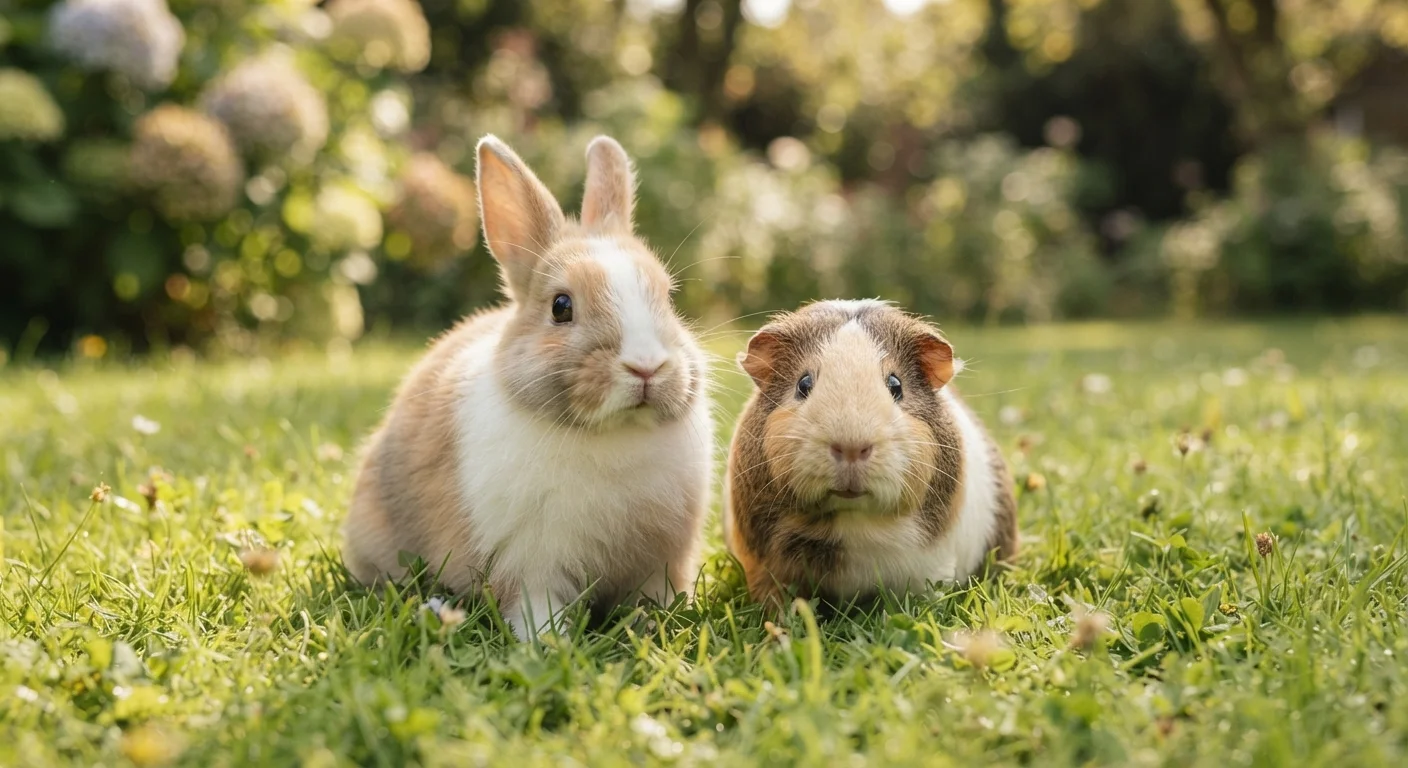
Key Takeaways
Option A
Rabbit
The active, space-demanding companion with a longer lifespan.
Best for: Households with dedicated floor space, experience handling prey animals, and a long-term commitment of up to 10-12 years.
Option B
Guinea Pig
The social, vocal, and relatively forgiving first-time pet.
Best for: Families or first-time owners who can house at least two animals and appreciate an interactive, communicative pet with a moderate lifespan.
If you have limited living space such as an apartment
Guinea Pig
Guinea pigs require a smaller habitat footprint and do not need the large roaming areas that rabbits demand. A well-sized cage with daily handling is more manageable in compact spaces.
If you want a longer-term animal companion
Rabbit
Domestic rabbits commonly live 8-12 years with proper care, offering a longer bonding period for owners ready to make that commitment.
If you are a first-time small-pet owner or have young children
Guinea Pig
Guinea pigs tend to be more tolerant of gentle handling, vocalize their moods clearly, and are less likely to scratch or kick defensively compared to rabbits.
If you want a pet that bonds deeply with a single owner
Rabbit
Rabbits can form strong individual bonds with their primary caretaker and often learn to come when called, making them rewarding for dedicated owners willing to invest time in trust-building.
If you cannot commit to housing multiple animals
Rabbit
While rabbits do benefit from companionship, they can live contentedly as sole pets when given ample human interaction. Guinea pigs kept alone are at much higher risk of loneliness-related stress.
Space and Housing Requirements
One of the clearest distinctions between rabbits and guinea pigs is how much space each genuinely needs. Rabbits are naturally active animals that run, jump, and binky (a joyful leaping behavior) regularly. Veterinary and welfare organizations generally recommend a minimum enclosure size well beyond what standard pet-store cages provide - and daily access to a rabbit-proofed area for free roaming is considered essential, not optional. Learn what adequate rabbit housing actually looks like before committing to this species.
Guinea pigs also need more space than many people expect, but their requirements are more achievable in smaller homes. A same-sex pair - the minimum recommended social unit - can be comfortably housed in a spacious C&C (cubes and coroplast) style enclosure. They do not climb or jump with the same intensity as rabbits, which simplifies setup. Floor time outside the enclosure is still beneficial but less critical to their physical wellbeing.
Both animals should be kept indoors or in climate-controlled environments, as extremes of heat or cold pose real health risks to each species.
| Criterion | Rabbit | Guinea Pig |
|---|---|---|
| Typical lifespan | 8-12 years | 4-7 years |
| Minimum housing space | Very large; daily free roaming required | Large enclosure; floor time beneficial |
| Social housing needs | Flexible; can live alone with human interaction | Requires at least one companion |
| Vitamin C requirement | Self-produced; not a dietary concern | Must be provided daily through food |
| Handling temperament | Can scratch or kick if startled | Generally tolerant; vocalizes stress |
| Vocalization | Mostly silent; uses body language | Highly vocal with varied sounds |
| Spay/neuter recommendation | Strongly recommended | Situational; less routine |
| Exotic vet requirement | Yes | Yes |
Social Needs and Behavior
Guinea pigs are highly social herd animals. Housing a single guinea pig is widely discouraged by exotic-animal veterinarians because isolation can lead to chronic stress and associated health problems. At minimum, a bonded same-sex pair is recommended. If you're considering adding a second guinea pig, the introduction process matters more than most owners realize.
Rabbits have more flexible social arrangements. They can bond closely with another rabbit, but unlike guinea pigs, a well-socialized rabbit with regular human interaction can live contentedly as the sole animal in a household. Rabbits communicate through body language - thumping, flopped postures, and ear positions - which takes time to learn but becomes intuitive with experience.
Guinea pigs are notably vocal, producing a range of sounds including purring, wheeking, and teeth chattering, each carrying distinct meaning. Understanding these behavioral signals is key to supporting their wellbeing. This expressiveness makes them particularly engaging for families with children.
Diet, Nutrition, and Daily Feeding
Hay is the dietary cornerstone for both species and should make up the majority of their daily intake. Unlimited timothy hay (or other grass hays) supports healthy gut motility and keeps constantly growing teeth worn down - a critical function in both rabbits and guinea pigs.
The most significant nutritional difference is vitamin C. Guinea pigs, like humans, cannot synthesize vitamin C internally and must obtain it through food daily. Fresh leafy greens such as romaine lettuce, bell pepper, and parsley are practical sources. Vitamin C degrades rapidly in water, so supplementing via water bottles is generally considered unreliable by veterinary nutritionists. Rabbits, by contrast, produce their own vitamin C and do not share this vulnerability.
Both species benefit from species-appropriate pellets in measured amounts and a variety of safe fresh vegetables. For a deeper look at dietary foundations for each, this species-by-species nutrition guide is a helpful reference. Rabbit-specific dietary guidance covers which common foods can quietly cause harm.
80%+
Proportion of diet that should be hay
Veterinary guidelines for both rabbits and guinea pigs consistently identify unlimited grass hay as the essential dietary foundation for digestive and dental health.
4-7 yrs
Average guinea pig lifespan
Guinea pigs generally live 4-7 years, roughly half the lifespan of a well-cared-for domestic rabbit, which affects long-term planning for prospective owners.
10-12 yrs
Upper lifespan range for domestic rabbits
Indoor rabbits with appropriate diet, veterinary care, and enrichment can reach 10-12 years, making them a longer commitment than many owners initially anticipate.
Lifespan, Health, and Veterinary Costs
Rabbits typically live 8-12 years with proper care, while guinea pigs generally live 4-7 years. This difference has real implications: a rabbit is a longer financial and emotional commitment, and potential owners should weigh that seriously. Both animals hide signs of illness instinctively - a survival trait inherited from prey species - which means subtle symptoms can escalate quickly. Knowing the early warning signs is especially important for both species.
Both rabbits and guinea pigs require veterinary care from a practitioner experienced with exotic or small mammals - not all general veterinary clinics have this expertise. Spaying or neutering rabbits is strongly recommended for health and behavioral reasons, and represents an upfront cost that prospective owners should factor in. Dental disease is common in both species and can become expensive to manage if caught late.
Annual wellness exams, even for apparently healthy animals, are considered good practice. As the editorial team notes elsewhere, the idea that small pets are low-maintenance is one of the most damaging misconceptions in pet ownership.
This article provides general educational information about rabbit and guinea pig care. It is not a substitute for advice from a qualified exotic-animal veterinarian familiar with your specific pet's health and circumstances.