

Key Takeaways
Why Species-Specific Nutrition Matters
Small animals are often grouped together in care guides, but their digestive systems, metabolic needs, and dietary requirements differ dramatically. A feeding approach suited to a rabbit can be harmful to a hamster, and what sustains a budgie is entirely inadequate for a cockatiel. Understanding each animal's biological baseline - herbivore, omnivore, or granivore - is the starting point for sound nutrition.
Many health problems seen by exotic veterinarians stem not from rare diseases but from everyday feeding mistakes: the wrong food types, inappropriate proportions, or a complete misunderstanding of what a species actually needs. Getting nutrition right from the start is one of the most impactful things an owner can do. For broader context on what adequate small-pet care involves, see why 'low-maintenance' is the wrong framework for small pets.
80%
Recommended hay proportion in rabbit diets
Veterinary nutritionists consistently recommend that grass hay make up roughly 80% or more of an adult rabbit's daily food intake.
~10 mg
Daily vitamin C needed by an average guinea pig
According to published small animal veterinary guidelines, guinea pigs require approximately 10-30 mg of vitamin C per day, with higher amounts needed during illness or pregnancy.
Rabbits: Fiber Is the Foundation
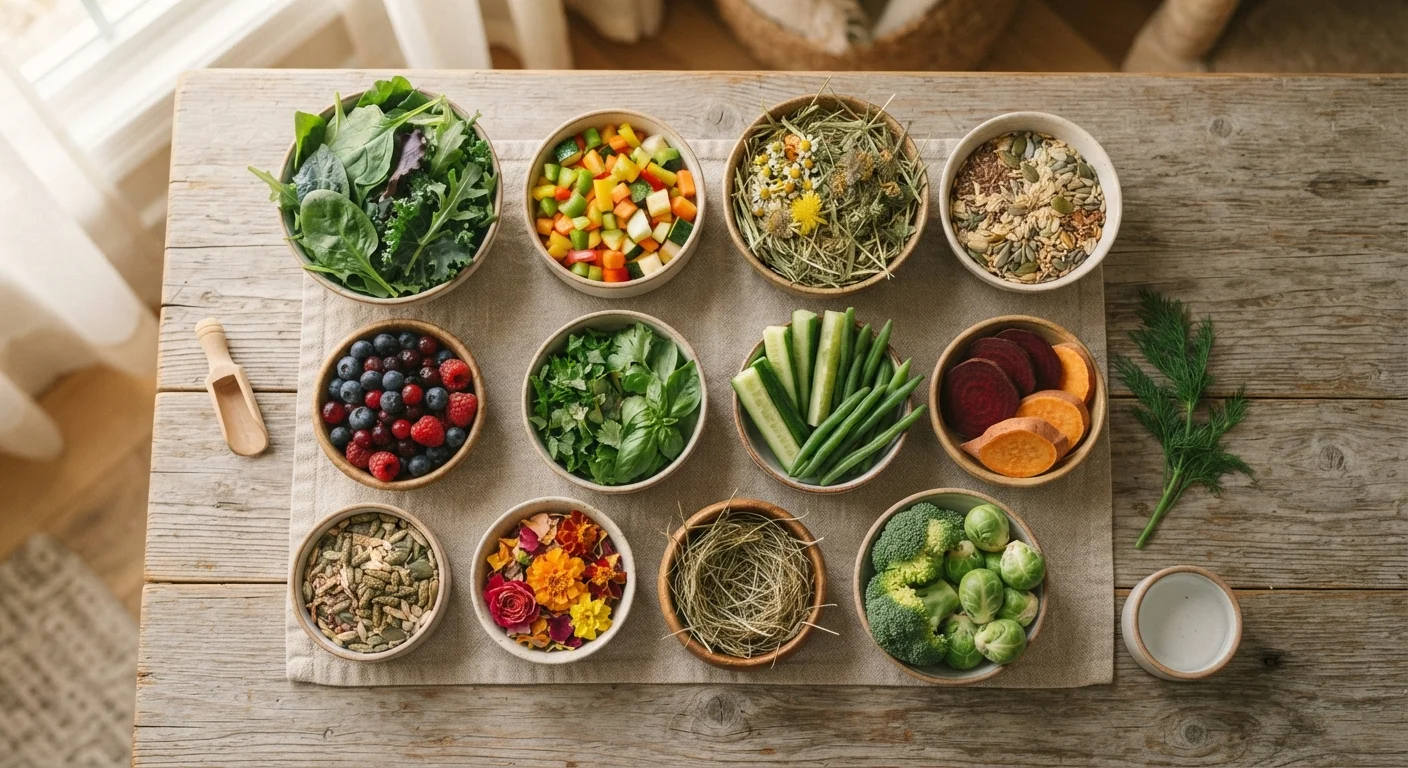
Rabbits are strict herbivores with a hindgut fermentation system that depends on continuous, high-fiber intake to function correctly. Unlimited grass hay - timothy, orchard grass, or meadow hay - should make up approximately 80% of an adult rabbit's diet. This fiber level keeps gut motility healthy and prevents life-threatening conditions like gastrointestinal stasis.
Fresh leafy greens (romaine lettuce, cilantro, kale in moderation) provide supplemental nutrients and water content. Commercial pellets, when offered, should be plain, hay-based, and limited - roughly a quarter cup per five pounds of body weight per day for adults. Fruits and starchy vegetables are treats, not staples. Foods high in sugar, such as carrots, are often overfed based on cultural familiarity rather than nutritional appropriateness.
Fresh, clean water must always be available. Rabbits that eat primarily hay benefit from a water bowl rather than a sipper bottle, as they tend to drink more. For more on creating an environment that supports rabbit health overall, see rabbit housing essentials.
Provide unlimited grass hay as the dietary base for rabbits and guinea pigs every day.
Hay supplies the high-fiber roughage these hindgut fermenters need to maintain gut motility and dental wear. Insufficient hay is the leading dietary cause of GI stasis in rabbits and dental disease in both species.
Deliver vitamin C to guinea pigs through fresh food rather than relying solely on fortified pellets.
Vitamin C in commercial pellets degrades after opening, making fresh produce a more dependable daily source. Scurvy can develop within weeks of inadequate intake.
Introduce any new food gradually over one to two weeks to avoid digestive upset.
Abrupt dietary changes can disrupt gut flora in herbivores, leading to soft cecotropes, diarrhea, or appetite loss. Slow transitions give the digestive system time to adjust.
Treat seeds as a supplement, not a staple, for pet birds.
Seed-heavy diets are high in fat and low in essential nutrients including vitamin A, which is critical for immune and respiratory health in most parrot species. Pellets provide a more complete nutritional profile.
Learn and strictly avoid species-specific toxic foods.
Many common household foods are harmful or lethal to small animals. Avocado, chocolate, onions, and caffeine can kill birds; high-oxalate foods in excess harm guinea pigs; iceberg lettuce causes digestive issues in rabbits.
Guinea Pigs: The Vitamin C Imperative
Guinea pigs share much of the rabbit's herbivore dietary framework - unlimited grass hay, fresh leafy greens, and limited pellets - but they have one critical distinction: like humans, they cannot synthesize their own vitamin C. A deficiency causes scurvy, which presents as lethargy, rough coat, swollen joints, and reluctance to move.
Fresh bell pepper (especially red), leafy greens like parsley and kale, and small amounts of citrus provide dietary vitamin C. Pellets formulated for guinea pigs are often vitamin C-fortified, but the nutrient degrades quickly once packaging is opened. Relying on pellets alone to meet this need is risky; fresh produce is more reliable. Vitamin C added to water also degrades rapidly with light and air exposure, making it a poor primary delivery method.
Owners deciding between rabbits and guinea pigs as companions can find a detailed comparison in our rabbit vs. guinea pig comparison.
“The single most common nutritional mistake I see with herbivorous small animals is treating hay as optional background material rather than the centerpiece of the diet. Without adequate long-stem fiber, the entire digestive system is compromised.”
— Exotic Animal Veterinary Practitioner, Board-certified exotic animal specialist, published in small mammal veterinary care
Hamsters and Pet Birds: Nutritional Complexity in Small Packages
Hamsters are opportunistic omnivores in the wild, consuming seeds, grains, insects, and plant matter. A good hamster diet combines a quality commercial hamster mix with small amounts of fresh vegetables and occasional protein sources such as cooked egg or mealworms. Avoid high-sugar fruits and processed human foods, which can contribute to diabetes - particularly in dwarf species, which are genetically predisposed to the condition.
Pet birds present the greatest nutritional diversity of the small-pet category. Budgerigars (parakeets), cockatiels, conures, and parrots each have different natural diets, and all suffer when kept on seed-only regimens. Seeds are high in fat and nutritionally incomplete. Avian veterinarians generally recommend a nutritionally balanced pelleted diet as the base, supplemented with fresh vegetables, some fruits, and species-appropriate whole foods. Foods toxic to birds - including avocado, onion, chocolate, and caffeine - must be kept strictly out of reach.
Transitioning birds from seeds to pellets often requires patience and gradual introduction supervised by an avian vet. Never abruptly remove seeds from a bird's diet, as food refusal can occur quickly and lead to serious decline.
This article provides general educational information about small animal nutrition and is not a substitute for advice from a qualified veterinarian familiar with your specific pet's health and history. Always consult an exotic or small-animal vet for individualized dietary guidance.