

| Hay as proportion of diet | ~80-85% of daily intake (Veterinary small animal nutrition guidelines) |
| Recommended daily greens | 1-2 packed cups per 4 lbs body weight (General veterinary guidance; confirm with your vet) |
| Pellet guideline (adult rabbit) | ~¼ cup per 5 lbs body weight/day (Commonly cited small animal nutrition guidance) |
| Best hay type for adults | Timothy, orchard grass, or meadow hay |
| Foods to avoid | Onion, garlic, avocado, rhubarb, iceberg lettuce |
| Water access | Fresh, clean water at all times |
Hay: The Non-Negotiable Foundation
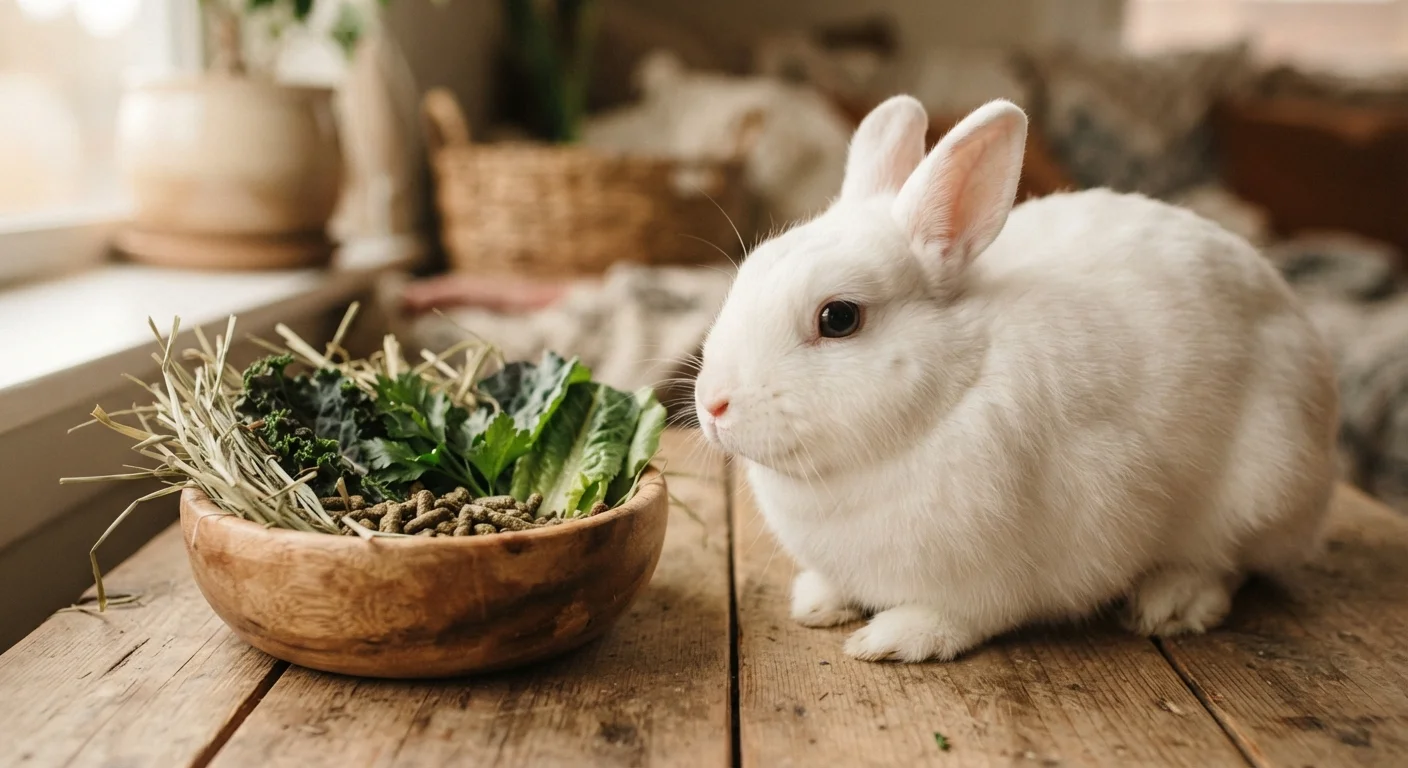
For a domestic rabbit, hay is not a supplement - it is the diet. Veterinary nutritionists consistently recommend that hay make up approximately 80-85% of a rabbit's daily food intake. The high fiber content supports healthy gut motility, which is critical for rabbits because their digestive systems must remain constantly active. A slowdown - known as GI stasis - can become life-threatening within hours.
Timothy hay is the most widely recommended variety for adult rabbits. Orchard grass and meadow hay are suitable alternatives and can help prevent boredom through variety. Alfalfa hay is higher in calcium and protein, making it appropriate for young rabbits under seven months but generally unsuitable as a primary hay for healthy adults.
Hay should be fresh, smell sweet, and be free of mold or dust. Rabbits should have unlimited access at all times, not just measured portions. If you notice your rabbit eating significantly less hay than usual, treat it as an early health signal. See our guide to recognizing illness in small pets for what signs warrant a prompt veterinary visit.
GI Stasis
A dangerous condition in rabbits where the digestive system slows or stops moving. It can develop quickly and requires prompt veterinary attention, as it is often fatal if left untreated.
Timothy Hay
A grass hay commonly recommended as the dietary staple for adult rabbits. It is high in fiber and relatively low in calcium and protein, making it appropriate for long-term daily feeding.
Alfalfa Hay
A legume-based hay that is higher in calcium, protein, and calories than grass hays. It is generally recommended only for young or underweight rabbits, not healthy adults.
Gut Motility
The movement of food through the digestive tract. In rabbits, maintaining constant gut motility through high fiber intake is essential for health, as their systems are not designed to rest.
Fresh Greens, Vegetables, and What to Limit
Fresh leafy greens add moisture, micronutrients, and enrichment to a rabbit's diet. A general guideline is to offer roughly one to two packed cups of fresh greens per day for every four pounds of body weight, though your veterinarian can provide guidance tailored to your rabbit's specific health profile.
Safe, commonly recommended options include:
- Romaine lettuce (avoid iceberg - it is very low in nutrition)
- Cilantro and parsley
- Kale and bok choy (in moderation due to calcium content)
- Basil and mint
- Bell pepper (without seeds)
Introduce new vegetables gradually - one at a time - so you can identify any that cause soft stools or digestive upset. Foods to avoid include onions, garlic, avocado, rhubarb, potato, and any fruit seeds or pits. Fruits can be offered in very small quantities as occasional treats due to their sugar content.
| Hay as proportion of diet | ~80-85% of daily intake (Veterinary small animal nutrition guidelines) |
| Recommended daily greens | 1-2 packed cups per 4 lbs body weight (General veterinary guidance; confirm with your vet) |
| Pellet guideline (adult rabbit) | ~¼ cup per 5 lbs body weight/day (Commonly cited small animal nutrition guidance) |
| Best hay type for adults | Timothy, orchard grass, or meadow hay |
| Foods to avoid | Onion, garlic, avocado, rhubarb, iceberg lettuce |
| Water access | Fresh, clean water at all times |
Pellets: Useful but Easy to Overfeed
Commercial rabbit pellets were originally developed for rapid weight gain in meat rabbits - a goal that does not align with keeping a healthy companion animal. That said, a small measured portion of quality plain pellets (not a seed-and-pellet mix) can fill nutritional gaps, particularly for rabbits who may not consume a wide variety of greens.
For most adult rabbits, roughly one quarter cup of plain pellets per five pounds of body weight per day is a commonly cited guideline, though individual needs vary. Pellets should be timothy-hay-based, high in fiber, and low in protein and fat. Avoid pellets with added seeds, dried fruit, or colorful bits - these are marketing additions that add sugar and reduce the incentive to eat hay.
As part of a broader look at nutrition across species, our article on feeding small animals well covers how dietary principles differ between rabbits, guinea pigs, and other small pets.
Water, Treats, and Common Feeding Mistakes
Fresh, clean water must be available at all times. Both water bottles and heavy ceramic bowls work; bowls may encourage more drinking but require daily cleaning. Monitor intake - a sudden change in water consumption can signal a health issue.
Common feeding mistakes include:
- Relying too heavily on pellets while limiting hay access - this is a leading cause of dental problems and GI issues.
- Offering commercial "treat" products marketed for rabbits, many of which contain sugars and fillers that are not appropriate.
- Feeding foods associated with rabbits in popular culture - carrots are high in sugar and should be given only sparingly.
Good nutrition pairs with appropriate housing and enrichment. Our rabbit housing guide explains how environment affects overall welfare. And if you are still deciding whether a rabbit is the right companion, comparing rabbits and guinea pigs side by side can help you make a well-informed choice.
This article is intended as general educational information and is not a substitute for personalized veterinary advice. Consult a rabbit-savvy veterinarian for guidance specific to your pet's health, age, and condition.