

Key Takeaways
Guinea Pig Hiding Behavior
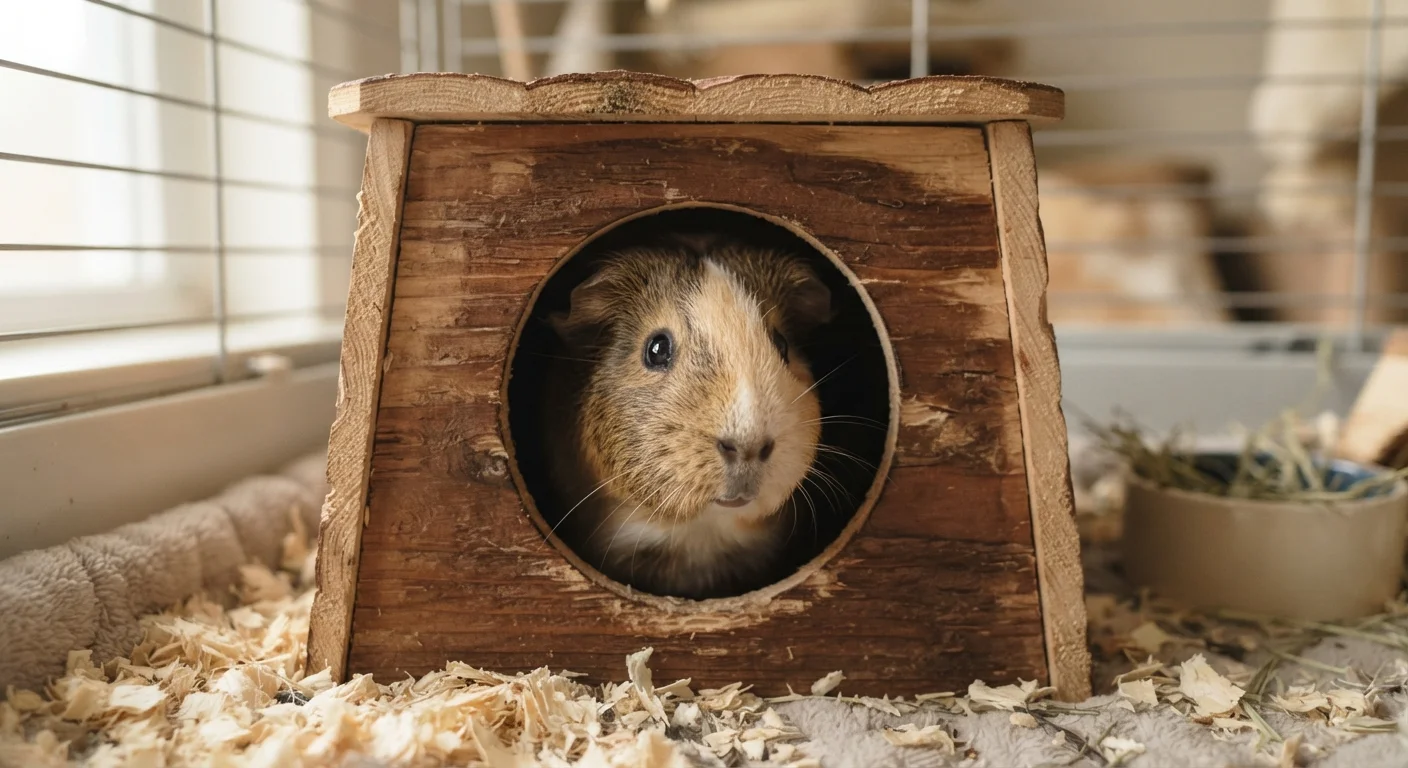
Hiding is a natural, instinct-driven behavior in guinea pigs rooted in their identity as prey animals. In the wild, cavies (the family to which domestic guinea pigs belong) rely on concealment to survive. In a home setting, hiding can signal anything from normal resting behavior to stress, illness, or a need for more social connection. Understanding the context is key to knowing when it's harmless and when it warrants attention.
Domestic guinea pigs (Cavia porcellus) retain strong prey-animal instincts even after generations of domestication, which means concealment behavior is hardwired - not a sign of poor bonding alone.
The Prey Animal Instinct Behind the Behavior
Guinea pigs did not evolve as predators - they evolved as prey. In the grasslands and rocky terrain of South America, survival depended on staying hidden, staying still, and detecting threats early. That evolutionary history doesn't disappear in a domestic setting. Even a well-cared-for guinea pig in a safe living room retains the neurological wiring of an animal that must always watch for danger.
This is why hiding should never be interpreted as antisocial or broken behavior. It is the animal doing exactly what its biology tells it to do. What changes the calculus for owners is frequency, context, and accompanying symptoms. A guinea pig that hides for a few hours and then emerges to forage, vocalize, and interact is expressing normal behavior. One that stays hidden for days, stops eating, or is unresponsive when approached is communicating something more serious.
For a broader foundation on understanding what your guinea pig needs day to day, see our complete first-time guinea pig care guide.
Hiding Differs From Freezing
Hiding (choosing to rest inside a shelter) and freezing (tonic immobility - becoming completely rigid in place) are distinct responses with different implications. Hiding is often a chosen, relaxed state; freezing is an acute fear response triggered by a perceived immediate threat. If your guinea pig frequently freezes rather than simply retreating to its hideout, the environment likely contains a persistent stressor that hasn't been identified yet.
Common Triggers for Increased Hiding
When hiding escalates beyond baseline, there is almost always a trigger. The most frequent causes fall into three categories:
- Environmental stressors: Loud noises, other pets, a recently moved enclosure, or bright overhead lighting can all push a guinea pig toward its hideout. Guinea pigs have sensitive hearing and are easily startled by sounds humans may not register as loud.
- Social stress: A guinea pig that has lost a bonded cage companion or is being bullied by another animal in the enclosure will often hide more. Guinea pigs are herd animals; isolation or conflict within the group is a significant stressor. If you are considering adding a companion, our guide to introducing a second guinea pig covers how to do it safely.
- Illness or pain: As prey animals, guinea pigs instinctively mask vulnerability. Increased hiding paired with reduced appetite, labored breathing, a hunched posture, or an unkempt coat is a combination that should prompt a veterinary visit - not a wait-and-see approach.
Build Trust Before You Reach In
Rather than lifting a hiding guinea pig out of its shelter, try sitting quietly near the enclosure for 10-15 minutes each day while talking softly. Offer a small piece of leafy green vegetable near the hideout entrance. Repeated low-pressure positive associations build confidence far more effectively than forced handling, particularly with a newly adopted or stress-triggered animal.
Reading the Signals Alongside Hiding
Hiding rarely communicates anything useful in isolation. The behavior gains meaning when you observe what accompanies it:
~24 hrs
Typical acclimation hiding after rehoming
Veterinary behavior resources consistently note that newly rehomed guinea pigs may hide for 24-72 hours or more as they adjust to a new environment.
2+
Recommended hideouts per pair of guinea pigs
Small animal husbandry guidelines generally recommend at least one hideout per animal plus one additional to reduce competition and stress in group enclosures.
65-95 dB
Frequency range most sensitive to guinea pigs
Guinea pigs can hear frequencies up to approximately 33,000 Hz, making them sensitive to sounds and vibrations that humans may not perceive as disruptive.
- Teeth chattering is a clear warning sign - it signals fear or agitation and is often directed at a perceived threat, including a human hand reaching into the enclosure.
- Freezing (tonic immobility) is a fear response in which the guinea pig becomes completely still. It is not calm or relaxed behavior; it is the animal's version of playing dead.
- Rumblestrutting (a low vibrating sound paired with a swaying walk) from a cage companion indicates dominance tension that may be driving the other animal to hide.
- Wheeking (the high-pitched squeal most owners recognize) in a hiding guinea pig that perks up when food appears is a good sign - it suggests the animal is alert and responsive despite its chosen location.
Understanding these signals as a system - not in isolation - gives a far more accurate picture of your animal's wellbeing. The same hiding behavior can mean "I'm resting" in one context and "I'm in pain" in another. Our guide on recognizing illness in small pets details the specific warning signs that distinguish normal behavior from a veterinary concern.
What a Well-Set-Up Enclosure Actually Provides
One of the most overlooked contributors to chronic hiding is an enclosure that doesn't meet the animal's psychological needs. A guinea pig kept in a bare cage with no hideout has no appropriate outlet for its concealment instinct - and that translates directly into chronic stress, even if the animal appears physically healthy.
A properly enriched habitat should include at least one hideout per guinea pig (plus one extra for groups), enough floor space for the animals to move freely, and environmental variety such as hay piles that double as cover. Hideouts should have two openings wherever possible so the animal doesn't feel cornered - a single-entrance shelter can itself become a source of anxiety if the animal fears being trapped.
Hiding behavior that disappears after improving the enclosure setup is a strong signal that the original environment was the problem, not the animal's temperament.
This article is for general informational purposes only and is not a substitute for professional veterinary advice. If you are concerned about your guinea pig's health or behavior, consult a licensed veterinarian experienced with small animals.