

Key Takeaways
The Deceptive Overlap Between Too Much and Too Little Water
When a plant wilts, turns yellow, or drops leaves, most gardeners reach instinctively for the hose. It's a reasonable response - drought stress is well-publicized, and the instinct to water a struggling plant is deeply ingrained. But this reflex can backfire badly when the real culprit is excess moisture.
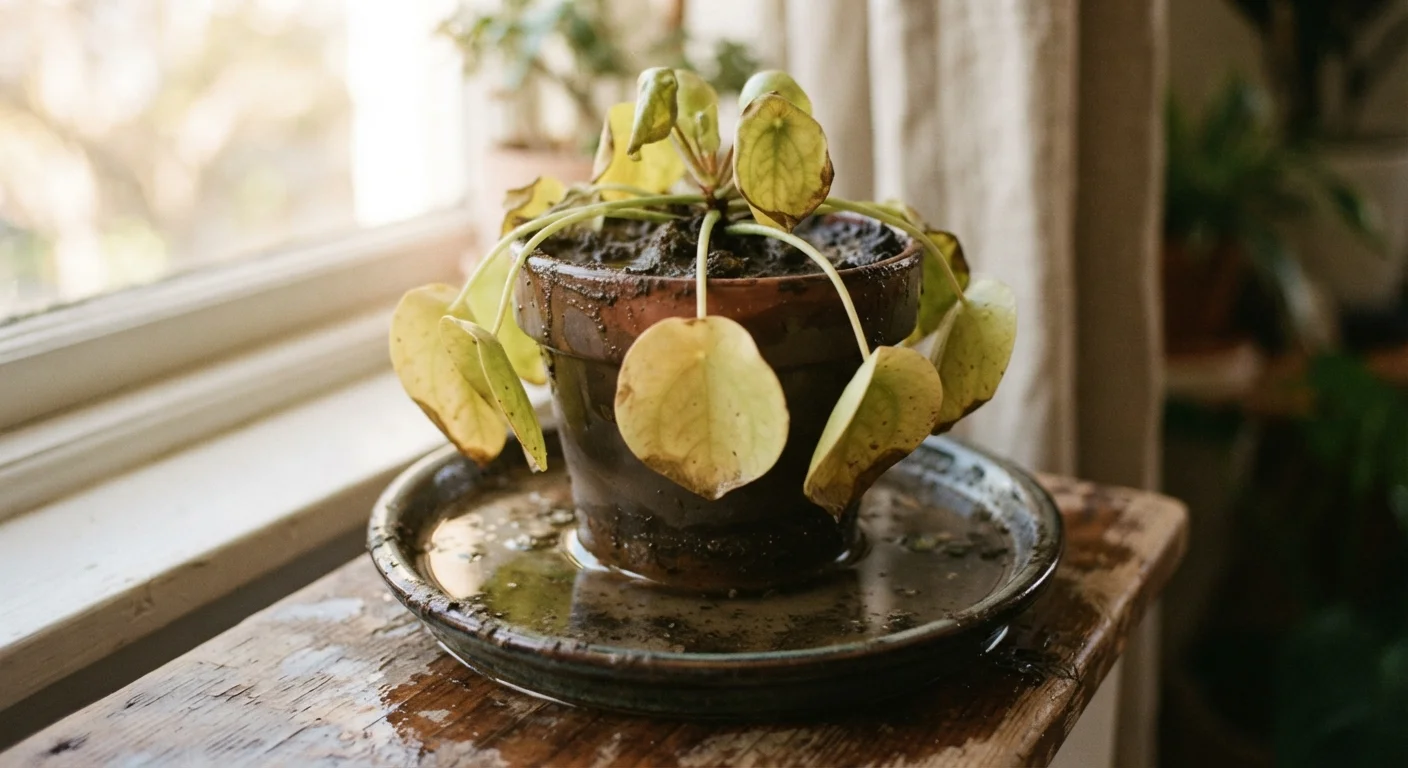
Overwatering is genuinely harder to diagnose than underwatering because both conditions produce almost the same set of symptoms. A plant deprived of water wilts because its cells lose turgor pressure. A plant that's been overwatered wilts for a different but visually identical reason: its roots, suffocated in waterlogged soil, can no longer transport water and nutrients up the stem. The plant is sitting in water it cannot use.
This is the core paradox of overwatering - the soil looks and feels moist, yet the plant behaves as though it's thirsty. When gardeners see wilting and add more water in response, they deepen the problem rather than solve it.
Adding Water to a Wilting Plant Can Cause More Harm
If a plant is wilting due to overwatered, oxygen-deprived roots, adding more water accelerates root damage. Always confirm soil moisture levels before watering a wilting plant. When the soil is already damp, the best action is usually to stop watering and improve drainage rather than increase it.
Common Overwatering Mistakes and How to Avoid Them
Understanding where these errors originate makes them much easier to interrupt. The mistakes below are among the most frequent causes of overwatered plants in home gardens and containers.
Watering on a fixed daily or weekly schedule regardless of conditions.
Why it happens: Routines feel responsible, and the idea of 'forgetting' to water creates anxiety - especially with new plants or after a dry summer.
Responding to wilting by immediately adding more water without checking the soil.
Why it happens: Wilting is so strongly associated with drought that the link between wilting and overwatering isn't intuitive for most gardeners.
Using pots or garden beds with poor drainage.
Why it happens: Decorative containers often lack drainage holes, and garden beds in low-lying areas or heavy clay soil drain slowly - both are easy to overlook at planting time.
Treating all plants as if they have the same water requirements.
Why it happens: General gardening advice often defaults to 'water regularly,' which obscures meaningful differences between drought-tolerant succulents and moisture-loving ferns.
Ignoring the role of seasonal change in watering needs.
Why it happens: A schedule that worked well in summer often continues unchanged into fall, when cooler temperatures and shorter days mean plants use water much more slowly.
Getting watering right also connects to broader soil health. If your plants keep struggling despite adjusting your watering habits, it may be worth exploring how soil pH affects nutrient uptake, since poorly draining or compacted soil compounds overwatering damage significantly.
How to Actually Check Whether Your Plant Needs Water
The most reliable method is also the simplest: use your finger. Press it into the soil about one to two inches deep. If the soil feels moist at that depth, the plant almost certainly does not need water yet. Surface dryness alone is not a sufficient reason to water - the top inch of soil can dry out quickly even when moisture is adequate below.
For container plants, lift the pot before and after watering. Over time, you'll develop a feel for what a dry pot weighs versus a well-watered one. A pot that still feels heavy likely retains adequate moisture. Similarly, terracotta pots offer a useful visual cue - they darken when wet and lighten as they dry.
~90%
Houseplant deaths attributed to overwatering
Horticulture educators commonly estimate the majority of houseplant losses stem from overwatering rather than drought, though precise figures vary by study and plant type.
1-2 inches
Soil depth to check before watering
University extension services generally recommend checking soil moisture at least one inch below the surface before deciding whether to water container or garden plants.
Outdoor garden beds benefit from a simple screwdriver test: drive a long screwdriver into the soil. If it slides in easily, moisture is present. If you meet significant resistance, the soil is likely dry and watering is appropriate. This is especially useful before setting a sprinkler schedule, which is one area where many homeowners overcorrect. For broader yard-care strategies that save effort without sacrificing plant health, a low-maintenance lawn approach can reframe how often intervention is actually needed.
When to Suspect Root Rot and What to Do
Root rot - typically caused by soil fungi that thrive in persistently wet conditions - is the most serious consequence of chronic overwatering. It's insidious because it develops underground, out of sight. By the time above-ground symptoms appear (severe wilting, blackened stems near the soil line, a foul odor from the pot), the root system may already be significantly compromised.
If you suspect root rot in a container plant, gently remove it from its pot and inspect the roots. Healthy roots are firm and white or light tan. Rotted roots are brown, mushy, and may fall apart when touched. At that stage, trimming away affected roots, treating with a diluted hydrogen peroxide solution, and repotting in fresh, well-draining mix gives the plant its best recovery chance - though outcomes vary and there are no guarantees of full recovery.
Prevention is far more effective than treatment. Ensure containers always have drainage holes, choose potting mixes appropriate to the plant type, and resist the urge to water on a rigid schedule. Plants' needs shift with seasons, indoor temperature, light levels, and growth stage. Good garden planning from the start - including choosing well-draining planting sites - dramatically reduces the risk of chronic overwatering problems.