

What Routine Maintenance Actually Covers
Routine maintenance refers to the scheduled, preventive service tasks outlined in your vehicle's owner's manual. These are not emergency repairs - they are planned interventions designed to keep mechanical systems functioning safely and efficiently over time. Understanding what falls into this category helps you budget with intention rather than react to unexpected bills.
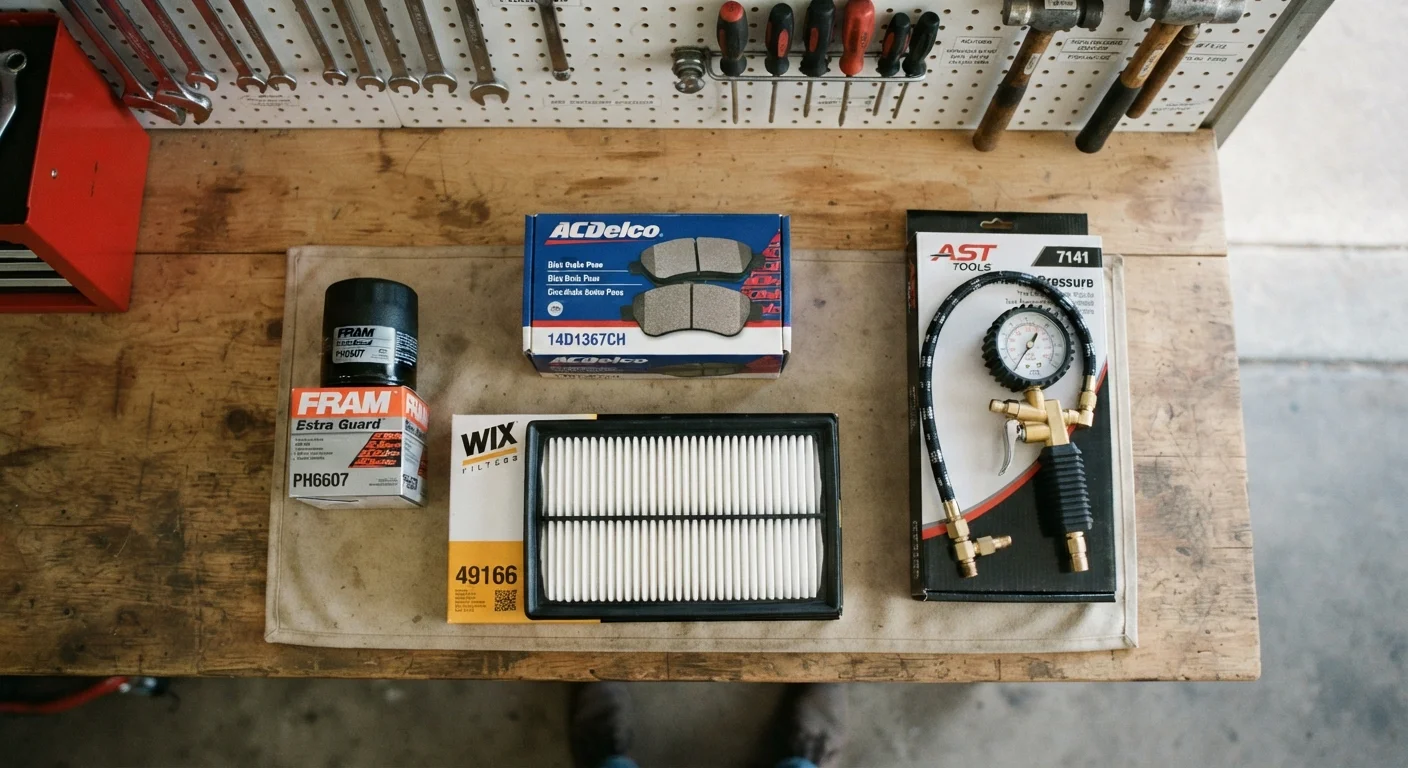
The core maintenance items most vehicles share include oil and filter changes, tire rotations, air filter replacements, brake inspections and pad replacements, battery testing, coolant flushes, transmission fluid service, and cabin filter swaps. Some tasks recur every few thousand miles; others happen every few years. Together, they represent the majority of what you'll spend keeping a car road-ready.
For a broader picture of ownership spending beyond these tasks, see the Annual Vehicle Budget Checklist to make sure nothing gets overlooked.
Realistic Cost Ranges by Service Type
Costs vary by vehicle make, model, location, and service provider, but industry data from sources like AAA and the Bureau of Labor Statistics offer reasonable reference ranges for common services.
Preventive maintenance
Scheduled service performed before a component fails, intended to extend vehicle life and prevent more costly repairs. Examples include oil changes and tire rotations.
Synthetic oil
A refined, engineered motor oil that typically provides better protection and longer change intervals than conventional oil. It generally costs more per service but may reduce frequency.
Brake rotor
The metal disc that brake pads clamp against to slow the vehicle. Rotors wear over time and may need resurfacing or replacement, often alongside pad changes.
Coolant flush
A service that drains and replaces the engine's coolant (antifreeze), which prevents overheating and corrosion. Degraded coolant loses effectiveness over time.
Cabin air filter
A replaceable filter that cleans air entering the passenger compartment through the HVAC system. A clogged filter reduces airflow and can affect air quality inside the vehicle.
- Oil change (conventional): $35-$75. Synthetic oil changes typically run $65-$125. Most vehicles need this every 5,000-10,000 miles, depending on oil type and manufacturer guidance.
- Tire rotation: $20-$50 per service, typically recommended every 5,000-8,000 miles. Often bundled with an oil change at no additional charge by some shops.
- Brake pad replacement (per axle): $150-$300 for parts and labor. Rotors may add $200-$400 if replacement is needed. Expect this every 25,000-65,000 miles depending on driving habits.
- Air filter (engine): $20-$60 for the part; straightforward enough that many drivers handle it themselves. See tasks you can realistically handle yourself for guidance.
- Cabin air filter: $15-$50 for the part, replaced every 15,000-25,000 miles.
- Battery replacement: $100-$250 installed. Most batteries last 3-5 years.
- Coolant flush: $100-$175, typically needed every 30,000-50,000 miles or as specified by the manufacturer.
- Transmission fluid service: $80-$250, with intervals ranging from 30,000 to 100,000 miles depending on vehicle type and fluid used.
$500-$900
Typical annual routine maintenance cost per vehicle
According to AAA's Your Driving Costs study, this range reflects average spending for a standard passenger car in the U.S.
$150-$300
Average brake pad replacement cost per axle
Industry labor and parts estimates; rotor replacement can add $200-$400 if needed at the same service.
3-5 years
Typical car battery lifespan
A widely cited industry general estimate; extreme temperatures and usage patterns can shorten or lengthen this range.
These figures assume independent or dealership service. DIY-capable drivers can reduce labor costs significantly on certain tasks. Tires are a separate major expense - understanding tire care basics helps extend their lifespan and delay replacement.
Estimating Your Annual Maintenance Budget
A reasonable planning estimate for routine maintenance on a typical passenger vehicle averages between $500 and $900 per year, according to AAA's annual "Your Driving Costs" study. Higher-mileage drivers, owners of European luxury vehicles, and those operating in extreme climates may land toward the higher end or beyond it.
A practical approach is to divide expected costs into annual buckets:
- Frequent, low-cost items (oil changes, tire rotations): Budget $200-$400 annually for most drivers doing 12,000-15,000 miles per year.
- Periodic mid-range items (filters, battery, brake pads): Average roughly $150-$300 per year when spread across a typical ownership period.
- Less frequent, higher-cost services (coolant flush, transmission service): These may cost $100-$250 every few years - dividing by the interval gives you an annualized figure to set aside.
Skipping these services rarely saves money in the long run. Deferring routine upkeep often leads to significantly higher repair bills - an oil-starved engine or worn-through brake pads are expensive lessons. Similarly, costs that aren't typically labeled "maintenance" can add up fast; see the hidden costs of car ownership for a fuller picture.
If your budget is tight, managing car ownership costs on a tight budget offers practical strategies that don't sacrifice safety or reliability.