

Key Takeaways
Why Tire Care Is the Foundation of Vehicle Safety
Every contact point between your vehicle and the road runs through four palm-sized patches of rubber. Tires influence braking distance, cornering grip, fuel economy, and ride comfort - yet they're among the most neglected components on the average car. Keeping tires in good shape doesn't require special tools or mechanical experience. It requires three consistent habits: monitoring pressure, checking tread, and rotating on schedule.
For a broader introduction to routine upkeep, our beginner's guide to car maintenance walks through the essential tasks every driver should understand. Tire care belongs at the top of that list.
Getting Tire Pressure Right
Tire pressure is measured in PSI. Running at the wrong PSI - too high or too low - causes uneven tread wear, reduces handling responsiveness, and can increase the risk of a blowout. Under-inflated tires also increase rolling resistance, which lowers fuel efficiency.
Sidewall PSI Is Not Your Target Pressure
The maximum PSI stamped on a tire's sidewall tells you the tire's structural limit - not the pressure your vehicle should run. Inflating to that number will likely over-inflate your tires, reducing the contact patch and creating a harsher, less controlled ride. Always use the vehicle placard in the driver's door jamb as your reference.
Where to find your correct PSI: Look at the sticker inside the driver's door jamb or consult your owner's manual. The number molded into the tire sidewall is the tire's maximum rated pressure, not the recommended operating pressure for your vehicle - these are different values.
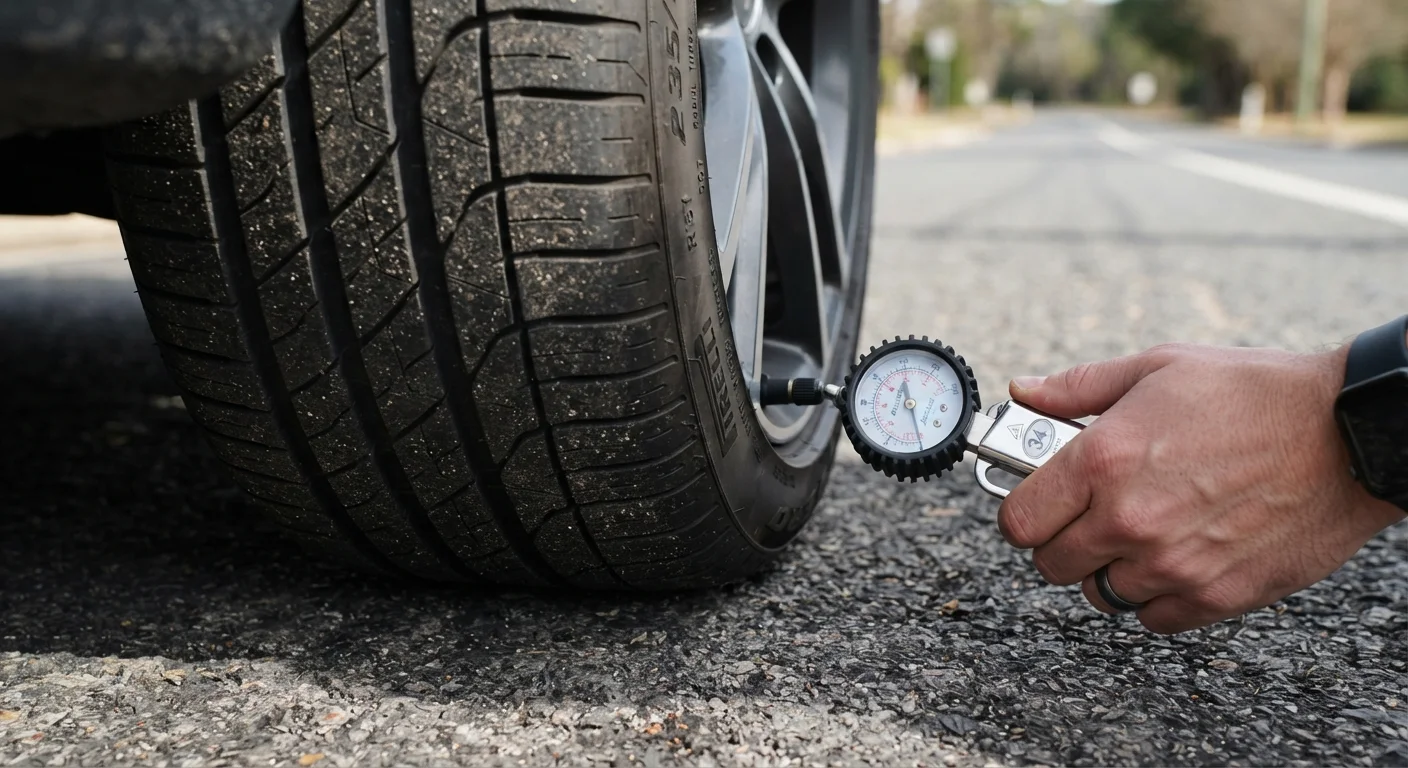
Check pressure when tires are cold - meaning the car has been parked for at least three hours or driven fewer than one mile. Driving heats the air inside tires and temporarily raises readings. A simple digital gauge costs a few dollars and removes any guesswork.
Always check tire pressure before a long drive, not during - heat from highway driving can add 4-6 PSI and give you a falsely optimistic reading.
Cold-inflation readings are the only accurate baseline for comparing against the manufacturer's recommended PSI, and highway heat consistently inflates the number.
If one tire consistently loses pressure faster than the others, don't just keep topping it off - have it inspected for a slow leak or valve stem issue before it becomes a roadside problem.
Persistent pressure loss rarely resolves on its own and often indicates a repairable issue that, if ignored, can lead to sudden failure.
Seasonal temperature changes matter more than many drivers realize. A 30°F overnight drop in autumn can reduce pressure by roughly 3 PSI across all four tires - enough to trigger a dashboard warning light on vehicles with a TPMS. Build a monthly pressure check into your routine, and always check before a long road trip.
Understanding Tread Depth
Tread channels water away from the contact patch, maintaining grip on wet roads. As tread wears down, that ability diminishes. Most states set the legal minimum tread depth at 2/32 of an inch, but safety research consistently shows that handling degrades noticeably before tires reach that limit.
A quick field test: insert a penny into a tread groove with Lincoln's head pointing down. If you can see the top of Lincoln's head, the tread is at or below 2/32 inch - time to replace. A quarter provides an earlier warning: if Washington's head is fully visible, you're approaching 4/32 inch, which is when wet-weather performance begins to suffer meaningfully.
2/32"
Legal minimum tread depth in most U.S. states
The National Highway Traffic Safety Administration uses this threshold as the standard replacement indicator.
1 PSI
Pressure drop per 10°F temperature decrease
This relationship is consistent across standard passenger tires and explains seasonal pressure loss without any leak present.
5,000-7,500 mi
Typical tire rotation interval
Most vehicle manufacturers specify this range in owner's manuals; always defer to your specific vehicle's recommendation.
Inspect tread across the full width of each tire, not just the center. Uneven wear patterns - more wear on one edge than the other - often signal an alignment or inflation problem worth addressing. If you notice feathering, cupping, or patchy wear, have a qualified mechanic evaluate the underlying cause before purchasing new tires.
A quick pre-trip safety check is a practical habit that naturally incorporates a visual tread scan before every significant drive.
Tire Rotation: When and Why
Front and rear tires wear at different rates. On front-wheel-drive vehicles, the front tires handle acceleration, steering, and a large share of braking - they typically wear faster. Rear-wheel-drive vehicles shift that stress differently. Rotation moves tires to different positions on the vehicle so wear distributes more evenly across all four, extending the overall usable life of a set.
Most manufacturers recommend rotation every 5,000 to 7,500 miles, though your owner's manual specifies the interval for your vehicle. A convenient approach is to rotate tires at every other oil change if you're on a 3,000-4,000 mile oil change schedule, or with each change if you're at 5,000-7,500 miles.
The rotation pattern itself depends on your drivetrain and whether your tires are directional (designed to roll in only one direction) or non-directional. A qualified tire shop or mechanic will select the right pattern. Rotation is typically low-cost when bundled with other services, and it can meaningfully reduce how often you need to replace a full set. For a realistic picture of what tire-related upkeep costs over time, see routine maintenance costs every car owner should plan for.
Putting It All Together
Healthy tires don't demand much - just attention at regular intervals. Check pressure monthly and before trips. Run the penny or quarter test if you haven't replaced tires in a few years. Schedule rotation on a consistent mileage interval. These three steps work together: proper pressure slows uneven wear, rotation distributes what wear occurs, and tread monitoring tells you when it's time to replace regardless of age.
Drivers maintaining high-mileage vehicles should pay extra attention to tire condition, as rubber compounds age over time even when tread appears adequate. Keeping a car healthy past 150,000 miles covers how maintenance priorities shift as vehicles age. And if you want to understand exactly what intervals your specific vehicle requires, reading the maintenance sections of your owner's manual is the most reliable place to start.