

Automotive Basics

Annual Vehicle Budget Checklist: Accounting for Every Ownership Expense

Share
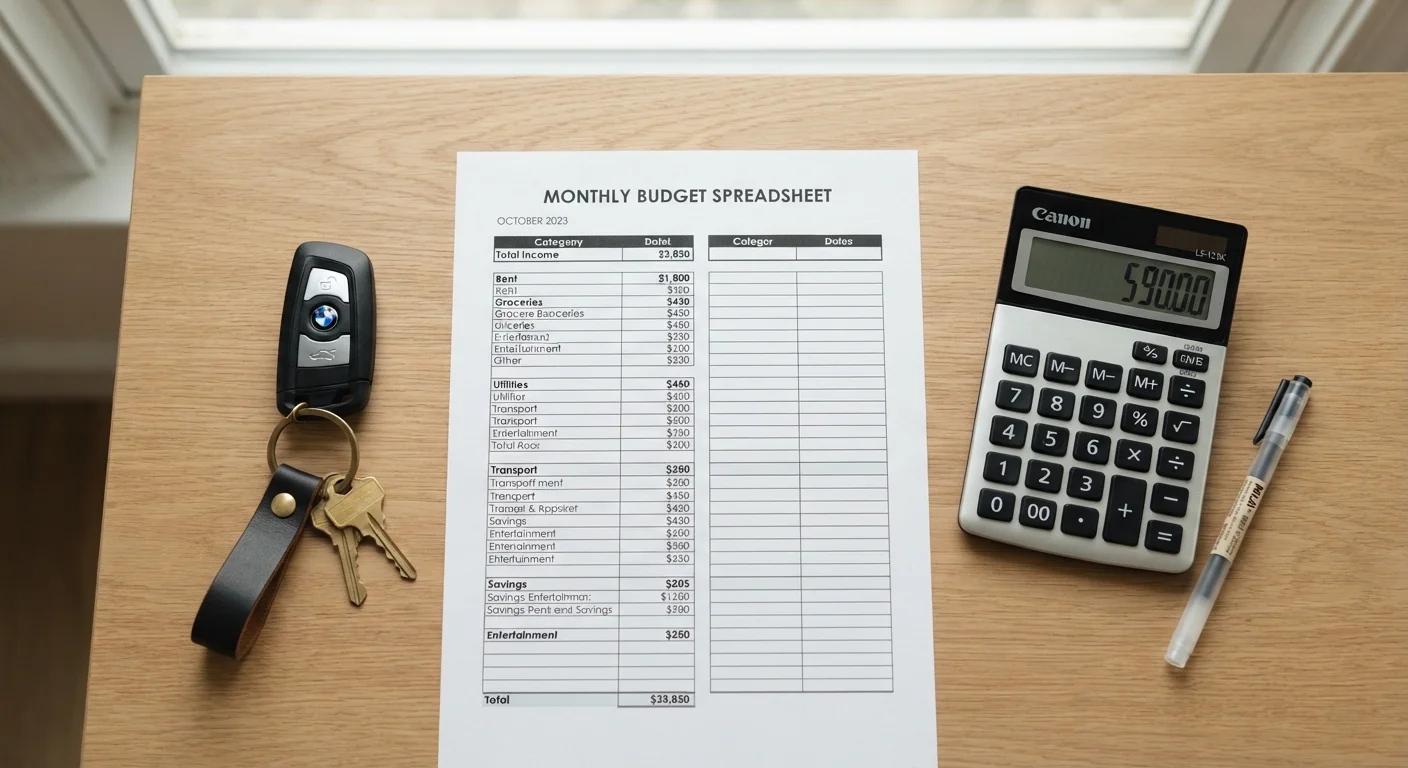
Car key, budget spreadsheet, calculator, and pen arranged neatly on a desk surface

Key Takeaways

Vehicle ownership involves at least six distinct cost categories beyond a car payment or purchase price.
Insurance, fuel, and routine maintenance together typically represent the largest recurring annual expenses.
Many ownership costs vary by vehicle type, location, driving habits, and age of the vehicle.
Building a realistic annual budget requires gathering actual figures, not relying on estimates alone.
Unexpected repairs are a normal part of ownership — a dedicated reserve fund reduces financial stress.
30–60 min

Summary

22 items · 30–60 minutes

Why a Vehicle Budget Needs Its Own Annual Review

Most drivers think of car costs in terms of one number: the monthly payment. But vehicle ownership is a multi-layered financial commitment that extends well beyond financing. Insurance premiums renew. Registration fees come due. Tires wear down. Fuel costs shift with driving patterns and prices. Without an annual review that captures all of these categories, it's easy to be caught off guard by expenses that were entirely predictable.

This checklist is designed to help you account for every significant cost of owning and operating a vehicle over the course of a year. Work through each category using your own records, insurer statements, and maintenance history. For a deeper look at costs that often go unnoticed, see the hidden costs of car ownership.

Financing and Depreciation

Record your total annual loan or lease payments, including any amounts paid toward principal and interest separately. Must
Note your vehicle's estimated current market value so you can track depreciation from year to year. Should
Review your lease agreement for mileage limits, wear-and-tear standards, and end-of-term fees if applicable. Must

Insurance

Pull your current declarations page and record your total annual premium across all coverage types. Must
Document your deductible amounts for comprehensive and collision coverage so you can plan for a potential out-of-pocket cost. Must
Note any changes to your driving situation — new commute, added driver, address change — that may affect your rate at renewal. Should

Fuel

Estimate your annual mileage based on recent odometer readings or monthly averages. Must
Calculate annual fuel cost using your vehicle's EPA-rated or observed fuel economy and a realistic average price per gallon or kilowatt-hour. Must
Account for any significant driving pattern changes in the coming year, such as a new job location or planned road trips. Should

Routine Maintenance

List all scheduled maintenance items due within the next 12 months using your owner's manual or maintenance log. Must
Budget for oil changes at the interval recommended by your manufacturer — typically every 5,000 to 10,000 miles depending on oil type. Must
Check tire tread depth and age; budget for replacement if tires are approaching the end of their service life. Must
Include costs for filters, fluid top-offs, wiper blades, and other minor service items that are easy to overlook. Should

Registration, Taxes, and Fees

Record your vehicle registration renewal fee, which varies significantly by state and sometimes by vehicle value or weight. Must
Check whether your state or locality assesses an annual personal property tax on vehicles and include that amount. Must
Note any emissions or safety inspection fees required in your state for the coming year. Should

Unexpected Repairs Reserve

Set aside a dedicated repair reserve — a commonly cited general guideline is saving roughly one to two percent of your vehicle's value annually, though actual needs vary. Must
Review any outstanding mechanical issues or warning signs from your last inspection and budget accordingly. Must
Check your vehicle's warranty coverage status so you know which repairs may remain covered versus fully out-of-pocket. Should

Incidental and Recurring Costs

Add up parking costs, including monthly permits, garage fees, or regular metered parking expenses. Should
Tally toll costs if you use toll roads regularly, including any transponder subscription fees. Should
Include roadside assistance membership fees if you carry a separate plan outside your insurance policy. Nice to have

Tools to Complete This Checklist Accurately

Before working through the checklist, gather the documents and resources listed below. Using actual figures — not rough guesses — will make your budget significantly more reliable.

Required

Insurance declarations page

Provides your exact annual premium, coverage types, and deductible amounts for accurate budgeting.

Required

Vehicle owner's manual

Lists manufacturer-recommended maintenance intervals to identify service items due in the coming year.

Required

Maintenance service records

Confirms what work has already been done so you can accurately project upcoming needs.

Required

State DMV website

Allows you to look up current registration renewal fees and inspection requirements for your location.

Optional

Spreadsheet or budgeting app

Organizes cost categories and running totals so you can track actuals against your annual budget throughout the year.

Optional

Fuel tracking app or mileage log

Provides observed fuel economy and mileage data for a more accurate fuel cost projection.

If you're building or resetting a broader household budget at the same time, the monthly budget setup checklist covers income, expenses, and financial goals in a complementary format.

Estimates Can Lead to Significant Budget Gaps

Relying on national averages instead of your actual figures is one of the most common budgeting mistakes. Insurance premiums, registration fees, and fuel costs all vary substantially by location, vehicle, and driving history. Pull your own documents for each category rather than using general estimates as a substitute.

Understanding Cost Variation by Vehicle

Not every vehicle costs the same to own. A full-size pickup truck typically carries higher insurance premiums, lower fuel economy, and costlier tire replacements than a compact sedan. An older vehicle may save on financing but cost more in repairs. An electric vehicle eliminates fuel costs but introduces charging infrastructure and battery considerations.

Once you've worked through this checklist for your current vehicle, it can also serve as a comparison framework when evaluating a different vehicle. Ownership costs by vehicle type breaks down how expenses differ across common categories including sedans, trucks, and SUVs.

For owners looking to reduce pressure on any of these budget categories, managing car ownership costs on a tight budget offers practical strategies without compromising safety or reliability.

Routine Maintenance Is Not Optional

Deferring scheduled maintenance to save money in the short term routinely leads to larger, costlier repairs later. Oil changes, brake inspections, and fluid services are designed to prevent component failures — skipping them can turn a modest expense into a significant one. See routine maintenance costs every car owner should plan for for a realistic breakdown of what regular upkeep involves over time.

Automotive Basics Editorial Team is the collective byline for our editorial team and contributor network. Articles published under this byline or an editorial pen name are researched, written, and reviewed according to our editorial standards for clarity, consistency, and independence before publication.

View all articles by Automotive Basics Editorial Team →
Disclaimer: The content provided on our blog site traverses numerous categories, offering readers valuable and practical information. Readers can use the editorial team’s research and data to gain more insights into their topics of interest. However, they are requested not to treat the articles as conclusive. The website team cannot be held responsible for differences in data or inaccuracies found across other platforms. Please also note that the site might also miss out on various schemes and offers available that the readers may find more beneficial than the ones we cover.