

Key Takeaways
Our Verdict
Sedans remain the most cost-efficient choice for everyday commuters focused on minimizing total ownership expenses. Trucks and large SUVs offer genuine utility but come with meaningfully higher fuel, insurance, and maintenance bills. Minivans and crossovers occupy a practical middle ground, balancing space and efficiency better than their larger counterparts.
| Best for | Recommended |
|---|---|
| Cost-conscious commuters and city drivers | Sedan |
| Families needing passenger space with moderate costs | Minivan or Crossover SUV |
| Those with towing, hauling, or off-road work needs | Pickup Truck or Full-Size SUV |
| Drivers prioritizing lowest possible fuel spend | Hybrid Sedan or Compact Car |
Why Vehicle Type Shapes Your Annual Budget
When most drivers estimate what a car will cost them, they focus on the sticker price and monthly payment. But the vehicle category itself - sedan, truck, SUV, or minivan - has an outsized effect on what you'll spend year after year on fuel, insurance, and upkeep.
These recurring costs can easily outweigh any initial savings from a lower purchase price. A full-size truck bought at a discount may still cost significantly more to operate annually than a modestly priced sedan. Understanding these dynamics is essential for making an informed ownership decision. See our guide to hidden ownership costs for expenses that often don't appear in standard estimates.
Cost Breakdown by Vehicle Category
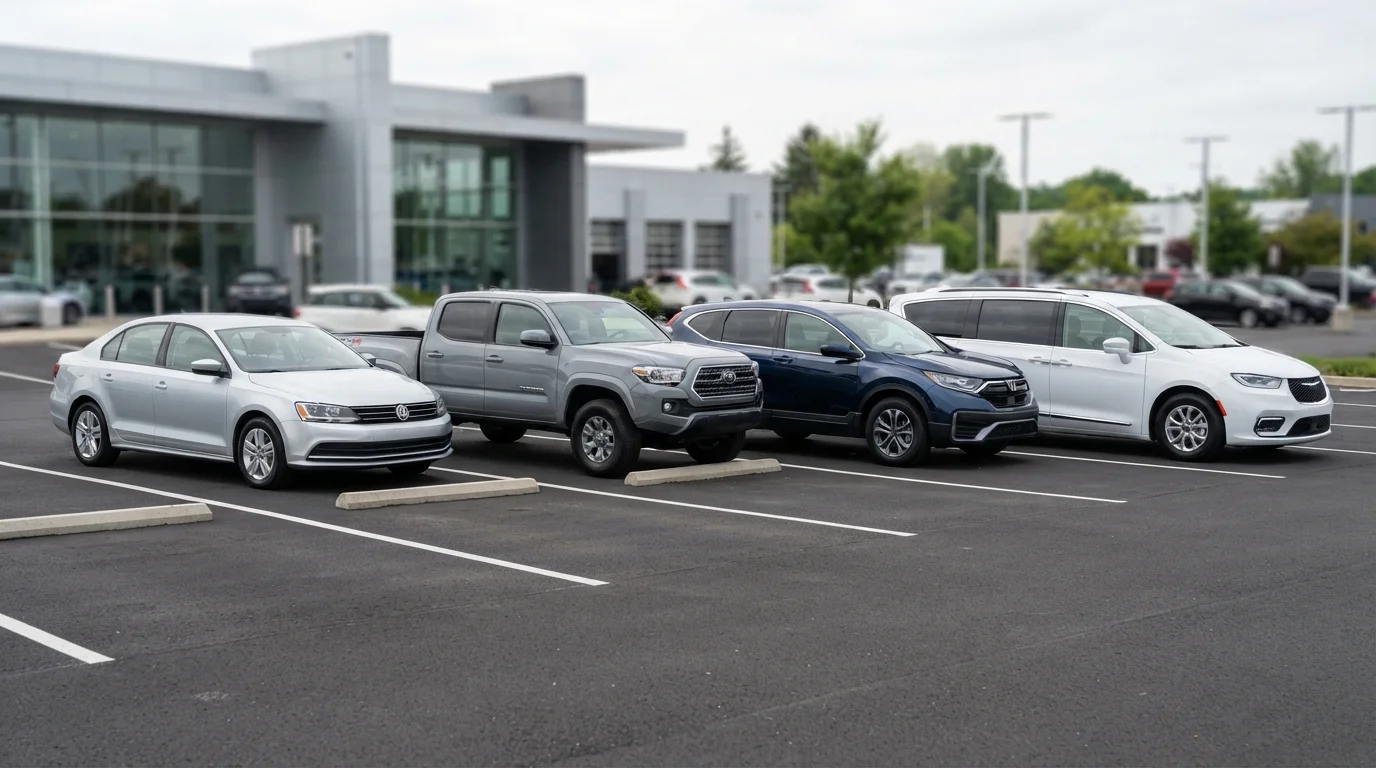
The five categories most commonly owned by American households - sedans, crossover SUVs, full-size SUVs, pickup trucks, and minivans - each carry a distinct cost profile. Here's how the major expense areas compare.
| Sedan | Crossover SUV | Full-Size SUV | Pickup Truck | Minivan | |
|---|---|---|---|---|---|
| Avg. fuel economy (MPG) | 28-35 | 24-30 | 16-22 | 16-22 | 22-28 |
| Annual fuel cost (est.) | Lower | Moderate | Higher | Higher | Moderate |
| Typical insurance cost | Lower | Moderate | Higher | Moderate-High | Lower-Moderate |
| Routine maintenance cost | Lower | Moderate | Higher | Moderate-High | Moderate |
| Tire replacement cost | Lower | Moderate | Higher | Higher | Moderate |
| Towing/hauling capability | Minimal | Light-Moderate | Moderate-High | High | Light |
| Passenger capacity | 5 | 5-7 | 7-8 | 5 (crew cab) | 7-8 |
| Overall ownership cost | Lowest | Moderate | Highest | High | Moderate |
These figures represent general ranges derived from industry cost-of-ownership data and are intended as directional guidance, not precise predictions. Your actual costs will vary based on model, location, driving habits, and insurer.
Fuel: Where the Gaps Are Widest
Fuel cost is the most visible ongoing expense and also the area where vehicle type creates the largest dollar difference. A mid-size sedan averaging 32 MPG and a full-size pickup averaging 18 MPG will have a gap of several hundred dollars per year at typical U.S. fuel prices, assuming similar annual mileage. Over five years, that difference compounds significantly.
Crossover SUVs have closed some of this gap compared to body-on-frame full-size SUVs, particularly with available hybrid powertrains. Minivans, despite their size, tend to be more fuel-efficient than full-size SUVs due to their lighter weight and more aerodynamic profiles. If fuel economy is a primary concern, the type of oil used and general maintenance habits also influence real-world efficiency.
Calculate Your Own Annual Fuel Cost
Divide your annual mileage by a vehicle's EPA-estimated MPG, then multiply by your local average fuel price. This simple calculation makes cost differences between categories concrete and personal. The U.S. Department of Energy's fueleconomy.gov provides EPA estimates for nearly every vehicle on the market.
Insurance and Maintenance Realities
Insurance premiums reflect repair costs, theft rates, and injury liability - all of which vary by vehicle type. Full-size trucks and large SUVs can cause more damage in collisions, which affects liability rates. Performance-oriented sedans often carry higher premiums than economy sedans despite being in the same category. The factors behind your insurance premium go well beyond just the vehicle class.
Maintenance costs follow a similar pattern. Larger engines, more complex four-wheel-drive systems, and higher ride heights all introduce additional service points. Trucks and full-size SUVs may require more frequent or more expensive brake, tire, and drivetrain service than smaller vehicles. Sedans and crossovers typically have lower per-visit service costs, though high-trim or performance models can be exceptions. For a complete view of recurring expenses, the annual vehicle budget checklist provides a useful framework.
Making a Category Decision That Fits Your Budget
Choosing a vehicle type should start with an honest assessment of what you genuinely need the vehicle to do. Drivers who rarely haul cargo or tow trailers often find that a crossover or sedan meets their practical needs at considerably lower annual cost than a truck or full-size SUV.
If you're weighing total cost of ownership, it helps to look beyond the purchase price and model assumptions that common ownership myths often reinforce. Once you've identified your category, strategies for managing costs on a tight budget can help you stay financially comfortable regardless of what you drive.