

Key Takeaways
Our Verdict
No single oil type wins for every driver. Conventional oil remains viable for older, low-mileage vehicles driven under routine conditions. Full synthetic is worth the higher cost for newer engines, performance vehicles, or extreme climates. Synthetic blends suit drivers who want better protection than conventional without paying full synthetic prices.
| Best for | Recommended |
|---|---|
| Older vehicles with straightforward maintenance needs | Conventional Oil |
| Newer engines, turbocharged vehicles, or extreme-temperature climates | Full Synthetic Oil |
| Drivers seeking improved protection on a moderate budget | Synthetic Blend Oil |
| High-mileage vehicles over 75,000 miles | High-Mileage Synthetic or Synthetic Blend |
What Makes Engine Oils Different
Motor oil does more than lubricate moving parts. It also helps regulate engine temperature, carries away contaminants, and reduces wear on metal surfaces. The differences between oil types come down to their base composition and how they're refined.
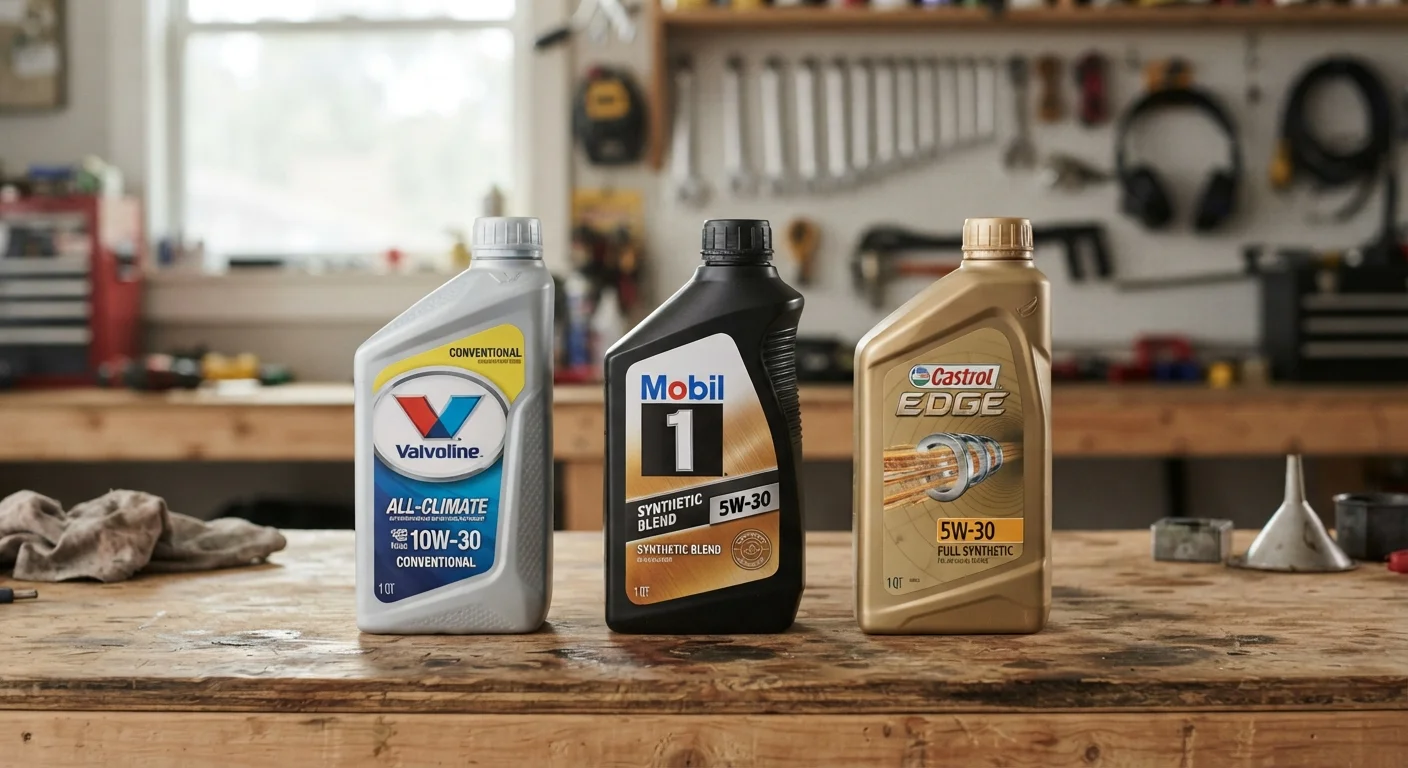
Conventional oil is derived directly from crude oil and processed through standard refining. It contains natural impurities that can't be removed entirely, which limits its stability under heat and cold.
Full synthetic oil is either highly refined from crude or chemically engineered from scratch. The result is a more uniform molecular structure that resists breakdown, flows better in cold starts, and holds up longer under heat stress.
Synthetic blend oil mixes conventional base oil with synthetic components. It offers some of the performance benefits of full synthetic at a lower price point than going fully synthetic.
All three types also carry a viscosity rating - such as 5W-30 or 10W-40 - that describes how the oil flows at cold and operating temperatures. Your vehicle's required viscosity is set by the manufacturer, regardless of which oil type you choose. For a broader look at what regular oil changes cost over time, see routine maintenance costs every car owner should plan for.
Conventional vs. Synthetic vs. Synthetic Blend: Side-by-Side
The table below compares the three oil types across the criteria that matter most to everyday drivers.
| Conventional | Synthetic Blend | Full Synthetic | |
|---|---|---|---|
| Base composition | Refined crude oil | Crude oil + synthetic additives | Chemically engineered or highly refined |
| Typical cost (5 qt) | ~$5-$10 | ~$10-$20 | ~$20-$35 |
| Recommended change interval | 3,000-5,000 miles | 5,000-7,500 miles | 7,500-10,000+ miles |
| Cold-weather performance | Moderate | Good | Excellent |
| Heat and stress resistance | Lower | Moderate | High |
| Best suited for | Older, low-demand engines | Mixed driving, moderate climates | New engines, turbos, extreme conditions |
Keep in mind that cost figures vary by region and retailer. The ranges above reflect typical retail pricing for a standard 5-quart quantity and are meant to give a general sense of scale, not a precise shopping guide.
Which Oil Type Does Your Engine Actually Need?
The clearest answer comes from your owner's manual. Manufacturers test their engines extensively and specify the oil type and viscosity that provides the correct protection. Following that specification protects your engine and, in some cases, your warranty coverage.
A few practical guidelines:
- Newer vehicles and turbocharged engines are frequently designed for full synthetic oil, which handles the higher heat generated by forced induction and tighter tolerances in modern engines.
- Older, simpler engines that have run on conventional oil for years can generally continue doing so without issue, provided change intervals are followed.
- High-mileage vehicles - typically those over 75,000 miles - may benefit from oils formulated for older engines, which often contain seal conditioners to address minor wear. These are available in both synthetic and conventional formulations. See tips for keeping a car healthy past 150,000 miles for a broader look at aging-engine care.
Always Check Your Owner's Manual First
Oil type and viscosity recommendations in your owner's manual are based on the actual engineering of your engine - not general guidelines. If your manual specifies full synthetic, using conventional oil may not provide adequate protection, even if it carries the right viscosity rating. When in doubt, a qualified mechanic can confirm what's appropriate for your vehicle.
One common concern is switching oil types mid-ownership. Modern engines are generally tolerant of switching between synthetic and conventional, provided the viscosity stays the same. However, confirm with your manual before making any change.
Change Intervals and Real-World Cost
Oil type directly affects how often you need to change it. Conventional oil typically requires changes every 3,000 to 5,000 miles under normal driving conditions. Full synthetic oil can often go 7,500 to 10,000 miles or more between changes, depending on the vehicle and manufacturer guidance - though some automakers specify even longer intervals for certain engines.
The longer interval for synthetic partially offsets its higher upfront price. A driver changing conventional oil every 4,000 miles and a driver changing full synthetic every 8,000 miles may end up spending similar amounts over the course of a year, depending on whether they use a shop or do it themselves. For more context on how interval guidance has evolved, the article oil change intervals: the 3,000-mile rule is mostly outdated walks through what current recommendations actually say.
If you're weighing the option of changing your own oil, the DIY oil change vs. taking it to a shop comparison covers the trade-offs in time, cost, and convenience. Either way, understanding your oil type first makes the rest of the decision easier.