

Key Takeaways
Summary
22 items · 30-60 minutes
Why Small Pets Face Greater Household Risks
Rabbits, guinea pigs, parrots, finches, hamsters, chinchillas, and reptiles share one significant disadvantage: they are physiologically more sensitive to environmental hazards than dogs or cats, and they typically lack the veterinary infrastructure those species enjoy. A toxin that causes mild stomach upset in a Labrador can be fatal to a 2-pound rabbit within hours.
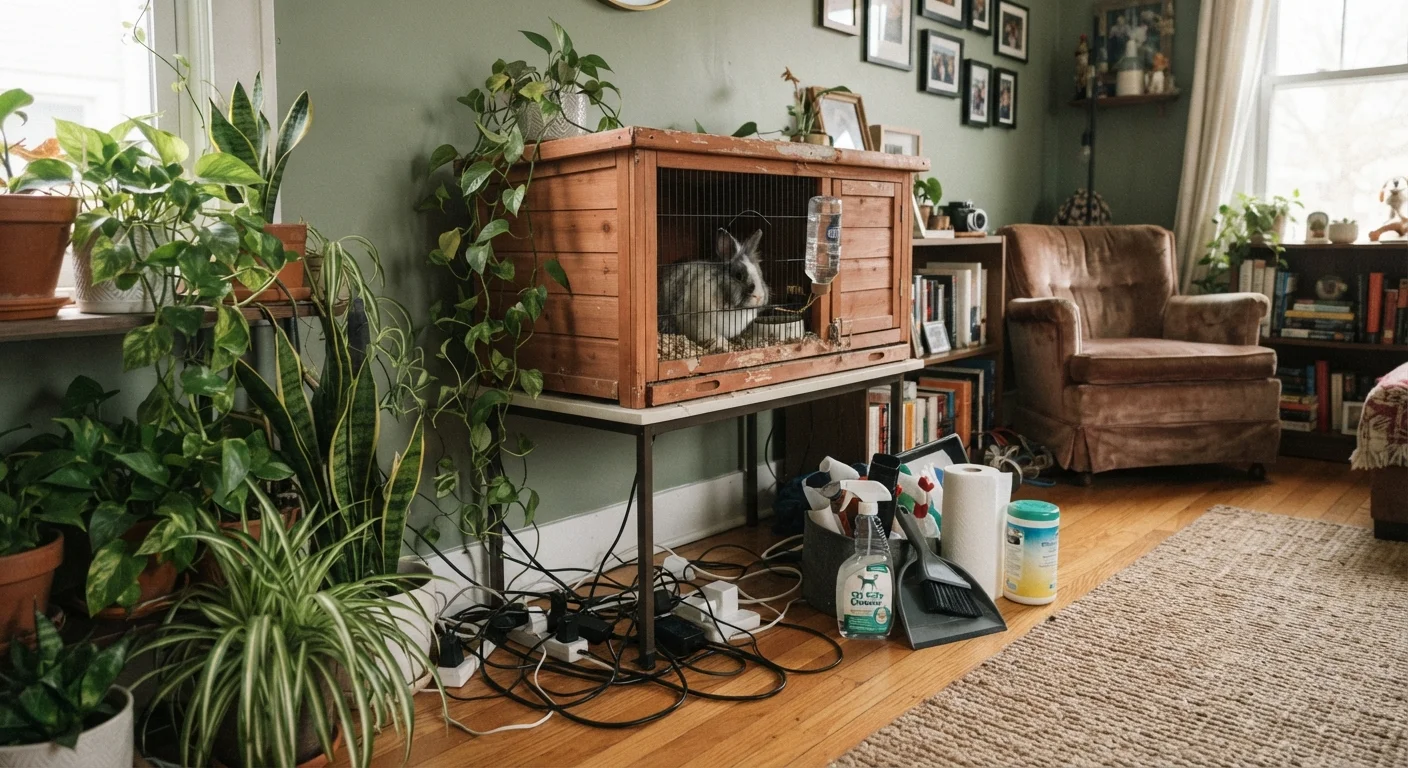
The challenge for owners is that most homes are designed around human comfort - not around the respiratory, metabolic, and behavioral needs of small animals. That mismatch creates hazards that are easy to overlook precisely because they're so ordinary. Scented candles. A trailing pothos. An open gap behind the dryer. These are unremarkable features of most living spaces, and dangerous ones for the animals we bring into them.
This checklist is intended as a practical room-by-room audit. Work through each group before your pet arrives, and revisit it any time you redecorate, rearrange, or introduce new household products. If you're also preparing for a cat, our cat-friendly home setup guide addresses overlapping but distinct concerns worth reviewing separately.
Non-Stick Cookware Is Acutely Lethal to Birds
Fumes released when PTFE-coated (non-stick) cookware is overheated are odorless and can kill a bird within minutes. This is not an exaggeration or a rare edge case - it is a well-documented veterinary emergency. If you keep birds, use stainless steel, cast iron, or ceramic cookware and ensure kitchen ventilation is completely separate from bird spaces.
Symptoms of Toxin Exposure Can Appear Suddenly
Small animals often mask illness until they are critically compromised. By the time you notice labored breathing, lethargy, or loss of coordination, a toxic exposure may already be severe. Contact an exotic-animal veterinarian immediately if you suspect your pet has been exposed to a toxin - do not wait to see if symptoms improve.
How to Use This Checklist
Work through each category below methodically. Items marked must represent non-negotiable safety steps - do not skip them. Items marked should are strongly recommended and address risks that, while less immediately catastrophic, accumulate over time into serious welfare problems. Nice-to-have items represent meaningful upgrades once the essentials are covered.
Gather the tools listed below before you begin - a thermometer, cord covers, and safety gates are inexpensive investments relative to the cost of an emergency veterinary visit. For bird owners especially, we recommend reading our bird habitat setup guide alongside this audit, as avian-specific hazards go beyond what a general checklist can fully address.
Cord Protector / PVC Split Tubing
Covers exposed electrical cords to prevent chewing hazards in small pet roaming areas.
Digital Thermometer / Hygrometer
Monitors room temperature and humidity to keep them within a safe range for your specific species.
Carbon Monoxide Detector
Provides early warning of dangerous gas buildup near your pet's habitat.
HEPA Air Purifier
Reduces airborne particulates, dust, and residual fumes in rooms where birds or respiratory-sensitive pets are housed.
Baby/Pet Safety Gates
Blocks access to stairways and restricted zones during supervised free-roaming sessions.
Plants & Toxic Substances
Air Quality & Fumes
Electrical & Physical Hazards
Temperature & Environment
Food & Water Safety
Other Household Occupants
After the Audit: Ongoing Vigilance
A one-time home audit is a necessary starting point, but household hazards shift. New furniture arrives with chemical off-gassing. Seasonal plants come inside. Renovation projects introduce dust, paint fumes, and exposed wiring. Build a habit of reassessing your pet's environment whenever anything significant changes in your home.
Small animals also benefit enormously from environments that are not merely safe but actively stimulating. Once the hazards are addressed, consider how you'll support your pet's mental and physical wellbeing - our enrichment ideas for small pets covers species-appropriate approaches that complement a safe habitat setup.
Finally, it's worth examining the assumptions you may carry into small-pet ownership. Many common beliefs - about how much space animals need, how social they are, how resilient they are - turn out to be inaccurate in ways that cause real harm. Our piece on myths vets wish small-pet owners would stop believing is a useful companion read.
Always Verify Hazards for Your Specific Species
Toxicity varies significantly across species. A plant harmless to a chinchilla may be lethal to a parrot, and a food safe for a rabbit may pose risks to a hedgehog. Before completing this audit, confirm species-specific hazard lists with a veterinarian experienced in exotic or small-animal care. General lists are a starting point, not a complete reference.
This article provides general educational information for pet owners and is not a substitute for veterinary advice. Always consult a veterinarian experienced in exotic or small-animal care for guidance specific to your pet's species, age, and health status.