

Key Takeaways
Summary
28 items · 45-90 minutes
Why Your Home Setup Matters More Than You Think
Cats are highly sensitive to their environment. Unlike dogs, who adapt more readily to their owner's routine, cats rely on their territory for a sense of safety and control. A home that hasn't been set up with feline needs in mind can lead to stress-related behaviors - litter box avoidance, destructive scratching, hiding, or aggression - that many owners mistake for personality flaws.
This checklist walks through every major zone of a typical home, covering safety, enrichment, and comfort. Whether you're preparing for a new cat or doing a long-overdue audit of your current setup, work through each section methodically. Check off items as you go - the goal isn't perfection on day one, but a clear picture of where gaps exist.
For households with more than one cat, many of these items multiply: what works for one cat may not be adequate for two or three. See our guidance on managing multi-cat households for resource-specific advice.
Hazard Removal
Litter Box Setup
Feeding and Water
Scratching and Climbing
Rest and Hiding Spaces
Enrichment and Stimulation
Tools and Supplies for the Setup Process
Before you begin working through the checklist, gather the core supplies you'll need. Some items are essential from day one; others can be phased in over the first few weeks as you learn your cat's preferences and habits.
Scratching posts (vertical and horizontal)
Provides appropriate surfaces for claw maintenance and territorial marking, protecting furniture.
Litter boxes
Required for elimination - quantity should follow the one-per-cat-plus-one rule.
Cat water fountain or wide bowls
Encourages adequate hydration, which is especially important for cats on dry food diets.
Cat tree or wall-mounted shelving
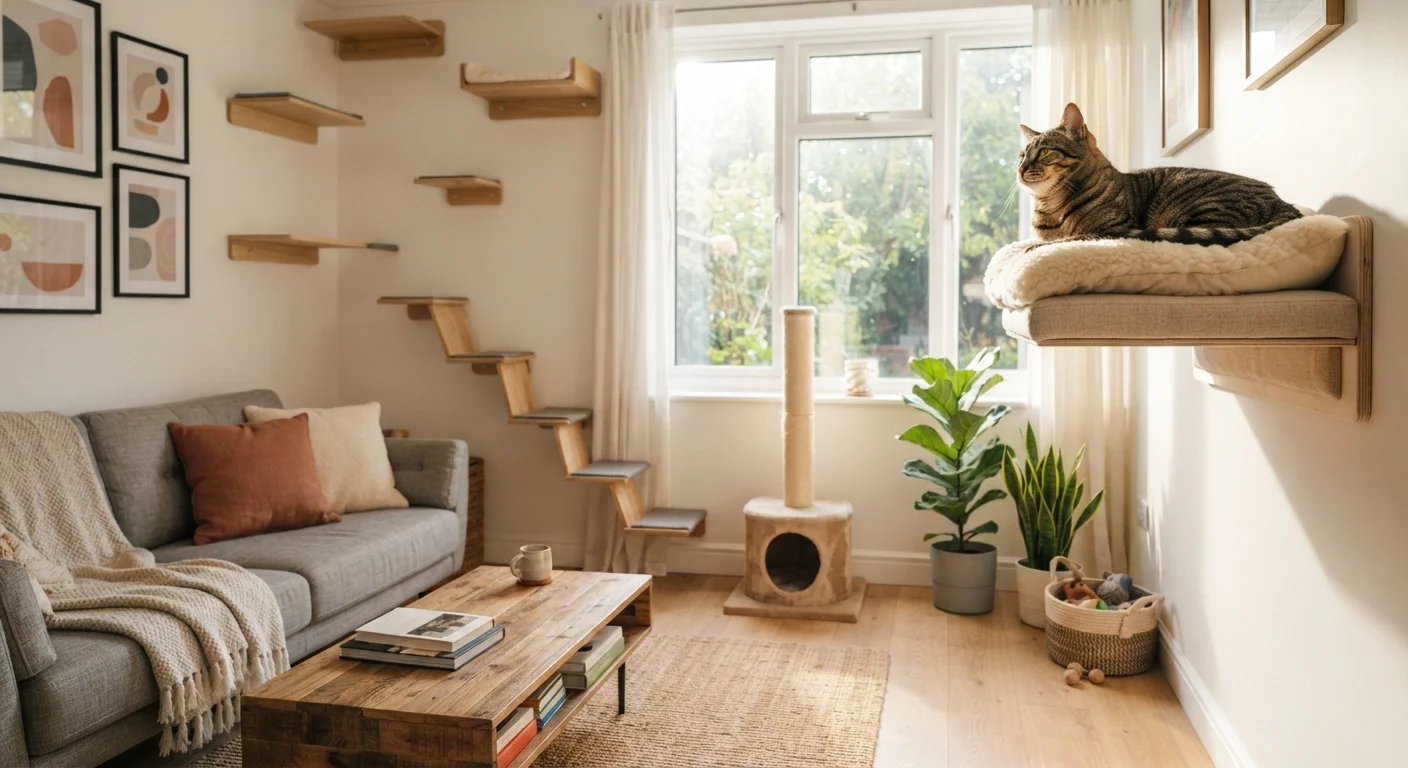
Creates vertical territory that helps cats feel secure and supports natural climbing behavior.
Enclosed or covered cat bed
Gives cats a private retreat for rest and stress recovery.
Window screen or balcony barrier
Prevents falls from open windows or unsecured balconies without blocking airflow.
Cord management covers or channels
Protects electrical cords from chewing and reduces electrocution risk.
Puzzle feeder or food-dispensing toy
Provides mental stimulation at mealtimes, reducing boredom and slowing fast eaters.
Lilies Are a Medical Emergency for Cats
All parts of true lilies - including Easter lilies, tiger lilies, and daylilies - are severely toxic to cats. Even small amounts of pollen, water from the vase, or leaf fragments can cause acute kidney failure. If you have lilies in your home or receive them as cut flowers, remove them entirely before bringing a cat into the space. If you suspect ingestion, contact your veterinarian or an emergency animal poison control line immediately.
Enrichment: The Often-Overlooked Half of Cat-Proofing
Safety removes hazards - but enrichment addresses a cat's behavioral and psychological needs. Cats that lack adequate mental stimulation often develop problems that look behavioral but are rooted in boredom or frustration. Understimulation is a genuine welfare concern, particularly for indoor cats.
Vertical space is one of the highest-impact additions you can make. Cats feel more secure when they can observe their environment from height, and wall-mounted shelves or multi-level cat trees give them that option without consuming floor space. Window access - even a single sill with a clear view of bird feeders or outdoor movement - provides hours of passive enrichment.
Rotate toys periodically rather than leaving everything out permanently. Novelty sustains interest; a toy ignored for two weeks often becomes engaging again when reintroduced. Puzzle feeders and food-dispensing toys turn mealtime into a cognitive activity, which is particularly valuable for cats fed dry food. Learn more about what enrichment actually looks like in practice to go deeper on this topic.
If you're weighing whether to allow outdoor access as part of your enrichment strategy, the decision involves real trade-offs around safety and health - our article on indoor vs. outdoor cat life covers the evidence-based considerations in detail.
Litter Box Problems Are Often Environmental
If a cat stops using the litter box reliably, the most common causes are box cleanliness, placement, quantity, or litter type - not spite or stubbornness. Before assuming a behavioral issue, systematically audit your litter box setup against the checklist items above. Our article on litter box problems most owners misread walks through the most common root causes and how to address them. Persistent elimination outside the box also warrants a veterinary check to rule out a medical cause.