

Key Takeaways
Option A
Recessed Lighting
The clean, built-in solution for a seamless ceiling.
Best for: Homeowners who want unobtrusive, evenly distributed ambient light without visible fixtures.
Option B
Track Lighting
The flexible, adjustable option for targeted illumination.
Best for: Spaces that need directional or accent lighting, or where cutting into the ceiling isn't practical.
If you want a clean, minimalist ceiling aesthetic
Recessed Lighting
Recessed fixtures sit flush with the ceiling, leaving no hardware visible and keeping the eye focused on the room rather than the light source.
If you need to highlight artwork, countertops, or specific zones
Track Lighting
Adjustable track heads can be aimed precisely at focal points, making this system the stronger choice for accent and task lighting.
If your ceiling is already finished and you want minimal disruption
Track Lighting
Surface-mount track systems require only a single electrical box connection, avoiding the extensive ceiling work that recessed cans demand.
If you're building or completing a major renovation
Recessed Lighting
With open ceilings and accessible wiring, the added effort of recessed installation is manageable and delivers a polished long-term result.
If your layout or displayed objects change frequently
Track Lighting
Track heads slide and pivot, letting you redirect light without any new wiring or ceiling modifications.
What Each System Actually Does
Before comparing costs and installation, it helps to understand what each lighting type is genuinely designed to accomplish. Good lighting decisions start with reading the room - something we cover in depth in our guide on assessing what a space needs before you start.
Recessed lighting - sometimes called can lights or pot lights - consists of cylindrical fixtures installed directly into ceiling cavities. Light is directed downward in a cone pattern. Because the hardware disappears into the ceiling plane, the effect is tidy and architectural. These fixtures are well-suited for general ambient illumination across a room, particularly in spaces where a clean sightline matters: living rooms, hallways, and kitchens with low ceilings.
Track lighting consists of an electrified rail mounted on the ceiling surface, with individual light heads attached at any point along it. Heads can be repositioned, swiveled, and angled as needed. This makes track lighting inherently more versatile for directing light toward specific objects, zones, or work surfaces - rather than simply washing a room in downward light.
Understanding these roles is important because neither system does everything well on its own. As our article on ambient, task, and accent lighting layers explains, most rooms benefit from combining several light sources rather than relying on a single overhead solution.
Installation: Effort, Access, and Ceiling Requirements
Installation requirements are often the deciding factor for homeowners - and the differences here are significant.
Recessed lighting demands ceiling depth - typically at least 5 to 6 inches of clearance above the drywall to accommodate the housing canister. Installers must cut circular holes, run new wiring between fixtures, and connect each can to a circuit. In an unfinished basement ceiling or an active renovation, this is straightforward. In a finished room with insulation and no attic access above, it becomes considerably more involved and typically warrants hiring a licensed electrician. Always verify local permit requirements before beginning any electrical work.
Track lighting, by contrast, needs only a single ceiling electrical box - the same connection point you'd use for any ceiling fixture. The track mounts directly to the surface, and the heads simply clip into the rail. A competent DIYer comfortable with basic electrical connections may manage this without professional help, though any uncertainty about wiring should be referred to a licensed professional.
| Criterion | Recessed Lighting | Track Lighting |
|---|---|---|
| Installation complexity | High - ceiling cutouts, new wiring | Lower - single electrical box |
| Best ceiling type | Standard flat, with adequate depth | Flat, sloped, or vaulted |
| Light direction | Fixed downward cone | Adjustable, multi-directional |
| Aesthetic | Minimalist, flush, invisible | Visible hardware, can be decorative |
| Flexibility over time | Low - fixed position | High - heads reposition easily |
| Best primary use | Ambient, general illumination | Task, accent, directional light |
| DIY-friendliness | Limited - often needs electrician | More accessible for capable DIYers |
One practical note: neither system suits every ceiling type equally. Sloped or vaulted ceilings complicate recessed installations but can accommodate angled track systems. Very high ceilings may make recessed fixtures feel dim and distant, while track lighting with adjustable arms can still direct light effectively.
Cost, Flexibility, and Long-Term Considerations
Costs vary widely depending on the number of fixtures, labor rates in your area, and whether electrical upgrades are needed. As a general pattern, recessed lighting installations tend to cost more per fixture when accounting for cutting, wiring, and patching - especially in finished spaces. Track systems typically have lower installation costs, though high-specification track hardware and heads can add up quickly.
75%+
Energy savings with LED vs. halogen equivalents
The U.S. Department of Energy notes that LED lighting typically uses at least 75% less energy than incandescent or halogen sources across comparable lumen output.
5-6 in.
Minimum ceiling depth for standard recessed cans
Most standard recessed housing units require at least 5 to 6 inches of clearance above the drywall - a common constraint in older homes with shallow ceiling cavities.
15-25 yrs
Typical LED bulb lifespan
Quality LED sources used in either track or recessed fixtures are generally rated for 15,000 to 25,000 hours of use, significantly reducing replacement frequency.
Flexibility over time is where track lighting holds a clear advantage. If you rearrange furniture, add shelving, or change how you use a room, you can redirect track heads in minutes. Recessed lights are fixed where they were cut - repositioning them means patching old holes and cutting new ones.
Energy efficiency depends more on the bulbs chosen than on the fixture type itself. Both systems are now widely available with LED-compatible or integrated LED options, which deliver meaningful reductions in operating costs compared to older incandescent or halogen sources.
Aesthetically, recessed lighting has become so common that it risks reading as generic. If you're working to avoid the decorating habits that leave rooms feeling unfinished, consider whether the fixture style itself contributes to the room's character - track lighting, particularly in exposed or industrial-style spaces, can be a deliberate design statement rather than merely a utility.
Choosing Based on Your Room
No single lighting system is universally superior. The right choice emerges from the specifics of the space, the ceiling, and how the room is used.
- Kitchens: Recessed lighting works well over countertops for task lighting, but track systems offer easier adjustment when work zones shift or a kitchen island is added.
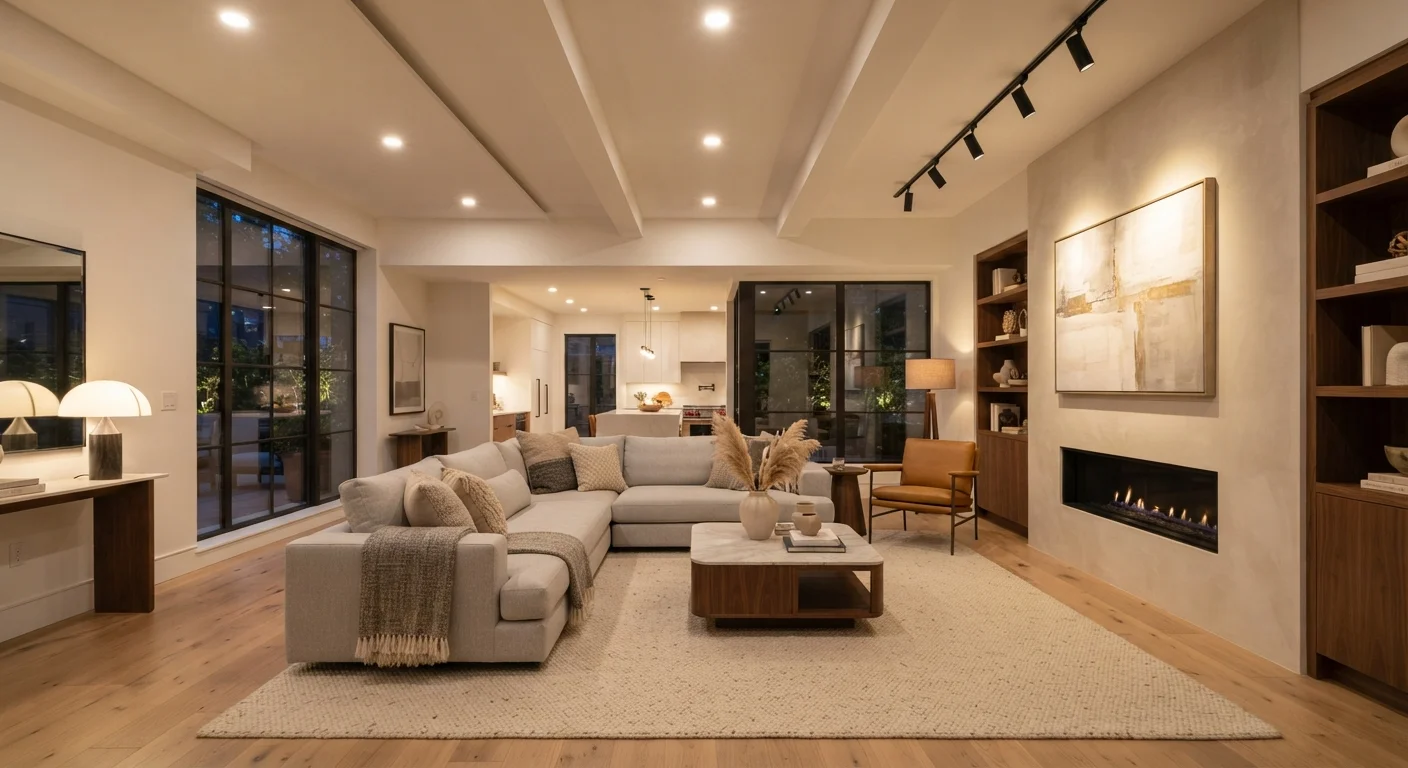
- Living rooms: Recessed cans provide clean ambient light, but without directional flexibility. A hybrid approach - recessed for general light, a track or pendant for accent zones - often performs best.
- Home offices and studios: Track lighting's directional control makes it easier to eliminate shadows over a desk or easel.
- Galleries and display spaces: Track lighting is the standard choice precisely because it can be adjusted to follow changing displays.
Before committing to either system, conduct a honest audit of your current lighting. Our room-by-room décor audit offers a useful framework for identifying what's working, what's missing, and what changes will have the most impact before you spend a dollar on hardware.
When in doubt about the electrical scope of a project, consult a licensed electrician before purchasing fixtures. Proper planning prevents costly reversals - and ensures the work meets your local building code.