

Key Takeaways
Why Eclectic Interiors Work - When Done with Intention
The word "eclectic" in interior design doesn't mean random. It means deliberately drawing from multiple periods, movements, and styles to create something that feels personal and layered. When it works, an eclectic room reads as curated and confident. When it doesn't, it feels unresolved - and most of the time, the difference comes down to a handful of foundational decisions made early in the process.
The good news is that mixing old and new is one of the most forgiving approaches to decorating, because the rules are flexible. You're not locked into a single aesthetic. But flexibility without structure leads to chaos, so understanding the underlying principles gives you a framework to work within - one that leaves room for personality while keeping visual coherence intact. Before making any additions, it's worth doing a room-by-room décor audit to understand what you're working with first.
Core Principles for Blending Eras Successfully
These practices form the foundation of eclectic design done well - from the big decisions down to the finishing details.
Anchor every room with a consistent color palette drawn from both old and new pieces.
Color is the fastest way the human eye establishes order in a room. When a vintage oil painting shares two or three colors with a modern throw pillow, the brain reads them as part of the same conversation - even if they're 80 years apart in origin. Without a shared palette, even beautiful individual pieces fight each other.
Repeat at least one material or finish across multiple pieces from different eras.
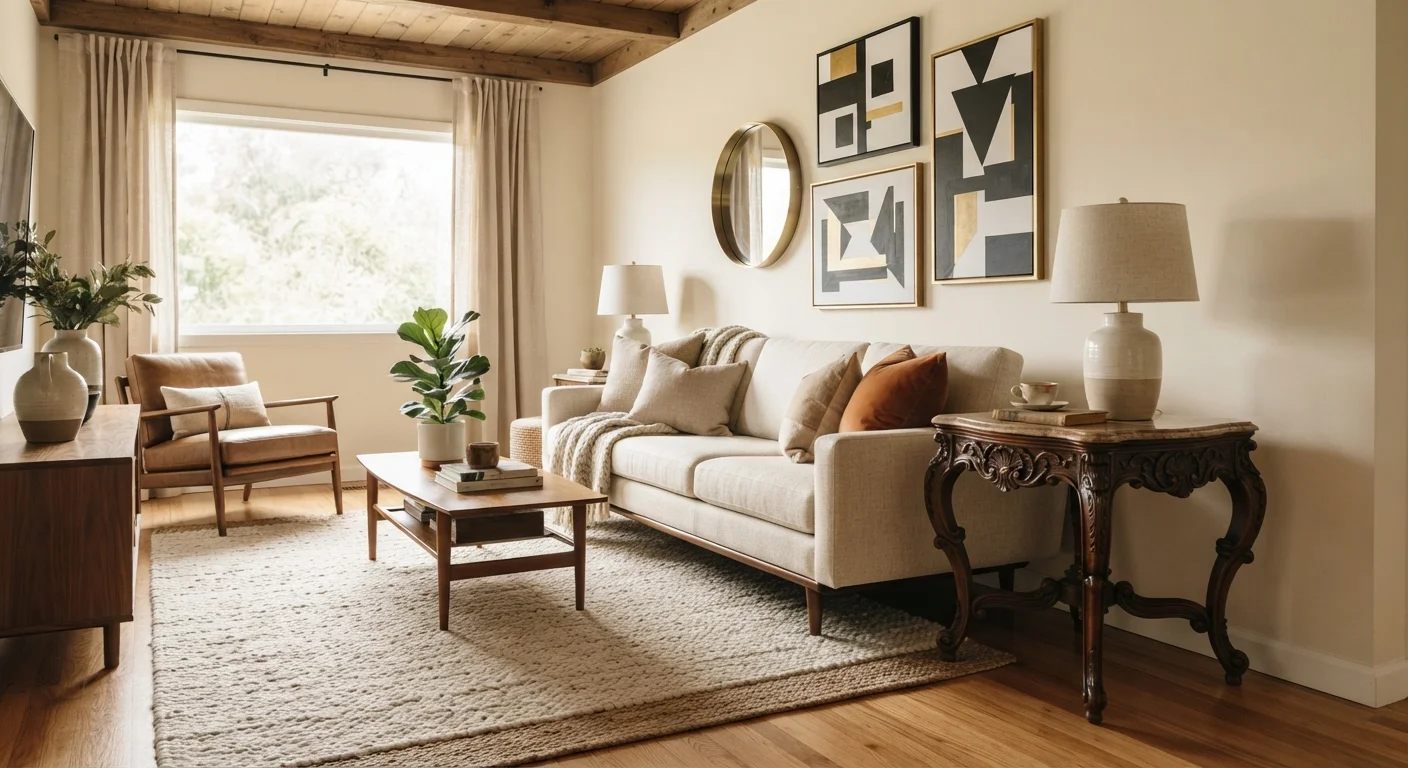
Material repetition creates visual rhythm without requiring matched sets. Brass hardware on a Victorian dresser echoes a brass-finished modern floor lamp; both sit comfortably together because the eye catches the shared finish before it registers the stylistic difference. This works with wood tones, stone surfaces, woven textures, and matte versus glossy finishes.
Establish one dominant focal point that sets the room's design tone.
Eclectic rooms need a visual anchor - one piece that signals the design intent and gives the eye somewhere to land first. Without it, the room can feel like a jumble of equally weighted elements competing for attention. The focal point doesn't have to be the largest piece; it just needs to be the most clearly intentional one.
Balance visual weight across the room rather than clustering all heavy or all light pieces together.
Visual weight - the sense of mass, density, and presence a piece projects - needs to be distributed across a room for the space to feel balanced. Stacking all the heavy, dark, or ornate pieces on one side makes the room feel lopsided, while scattering them evenly creates a stable, considered composition.
Edit ruthlessly - not every beloved piece belongs in the same room at the same time.
Restraint is what separates a curated eclectic space from a cluttered one. Rotating pieces in and out, storing items that don't contribute to the current composition, and resisting the urge to display everything at once are habits that keep a room feeling intentional. Editing also makes the pieces you do display more visible and more impactful.
Common Missteps and How to Sidestep Them
Even experienced decorators run into trouble when mixing styles. The most common pitfall is treating "eclectic" as a license to include everything you love without filtering for visual weight, proportion, or tonal consistency. A room can be full of beautiful individual pieces and still feel unresolved if nothing speaks to anything else.
72%
Homeowners who mix furniture styles from different eras
According to Houzz's annual home design survey, a strong majority of homeowners report combining furniture from multiple periods rather than adhering to a single style.
3-5
Recommended number of displayed objects per open shelf vignette
Interior design educators commonly suggest limiting open-shelf groupings to three to five items varied in height to maintain visual clarity without overcrowding.
Another frequent mistake is ignoring scale. A delicate Victorian chair beside a hulking industrial steel shelving unit creates tension that reads as accidental rather than artistic. The fix isn't always removing one - sometimes reupholstering in a shared fabric or painting the shelf to echo a warm wood tone bridges the gap. Many common decorating assumptions - like always matching your metals - actually work against you in eclectic spaces. The decorating misconceptions that keep rooms looking unfinished are worth revisiting before you second-guess a bold mix.
Finally, layering without editing is the fastest route to visual noise. Give each piece room to breathe, and periodically step back to assess the whole rather than individual components.
Quick Ways to Start Mixing Today
You don't need a full room overhaul to test these principles. Even small, deliberate additions can shift a space's tone and help you develop an eye for what works in your home.
For a more structured approach to layering textures and patterns - a natural extension of mixing eras - the guidance on layering rugs effectively applies the same logic of intentional pairing to one of a room's most impactful elements. Similarly, if you're building a display wall that combines vintage frames with contemporary prints, gallery walls done right walks through the spacing and arrangement decisions that make mixed-frame displays look planned rather than piecemeal.