

Key Takeaways
Why Layering Rugs Works - and Why It Sometimes Doesn't
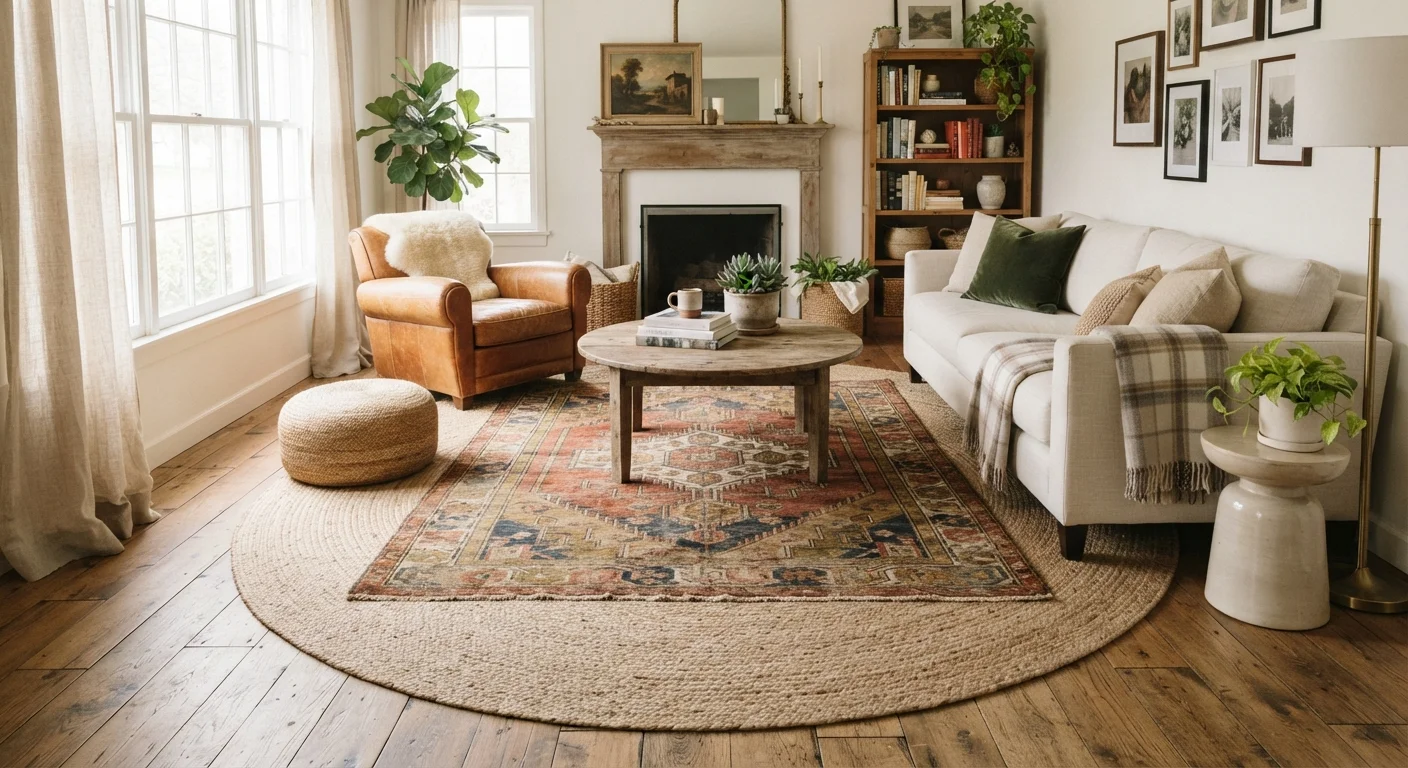
Layering rugs became popular as a way to add depth, warmth, and personality to a room without committing to a single expensive statement piece. The idea is straightforward: place a larger, simpler rug as the foundation, then layer a smaller, more detailed one on top to create visual interest. Done well, it reads as intentional and collected. Done poorly, it looks like two rugs that happened to land in the same room.
The technique has real design merit. It allows you to introduce pattern, color, or texture incrementally - useful if you already own a rug you like but feel the space needs more warmth. It also lets you experiment with scale and proportion without permanently altering the room. But layering has limits. In small rooms, it can shrink perceived floor space. In high-traffic areas, it creates a trip hazard. Understanding when to use it - and when to skip it - is the more useful skill. For a broader look at common missteps like this, see decorating misconceptions that keep rooms looking unfinished.
The Core Rules for Layering Rugs Successfully
These principles aren't rigid laws, but they reflect what tends to work in real American homes across a range of styles and budgets.
Size the base rug to anchor the full furniture grouping before layering anything on top.
A base rug that's too small will look overwhelmed by a second rug and destabilize the furniture arrangement visually. The foundation needs to do its primary job - grounding the seating area - before any layering adds complexity.
Contrast textures between the two rugs rather than doubling up on the same weave type.
Two flat-weave rugs or two plush rugs layered together create a muddled effect because there's no visual relief between them. Textural contrast gives the eye somewhere to travel and makes each rug legible on its own terms.
Let one rug lead in pattern and keep the other quiet or organic.
Two bold patterns fight for attention and produce visual noise rather than interest. One rug should function as a backdrop so the other can be the focal element.
Offset the top rug at an angle only when the room's layout supports asymmetry.
Angling the top rug at 45 degrees is a common styling technique that works in larger, casually furnished rooms but looks awkward in tight or formally arranged spaces where clean lines dominate.
Secure both rugs with a non-slip pad or rug tape to prevent shifting and tripping hazards.
Layered rugs are more prone to movement than single rugs, creating a safety risk - particularly for older adults and children. Stability is a functional requirement, not just a housekeeping detail.
Exceptions Worth Knowing
Design rules exist to give you a reliable starting point, not a ceiling. Some combinations that appear to break the rules actually work because of compensating factors.
When the Usual Rules Don't Apply
Layering guidelines are based on what tends to work in typical room configurations, but individual rooms vary in lighting, ceiling height, furniture scale, and personal style. A combination that looks wrong on paper may look intentional and cohesive in your actual space. Always evaluate the result in the room itself - in natural and artificial light - before making a final call. Good design is ultimately what works in context, not what follows the template.
Layering two patterned rugs can succeed if the patterns operate at very different scales - a large geometric under a small floral, for instance - and share at least one color. Similarly, layering on carpet (usually discouraged) can work in a bedroom where the carpet is very low-pile and the layered rug is used as a purely decorative accent rather than a functional floor covering. If you're already mixing design elements that don't follow conventional rules, the guidance in mixing old and new in eclectic interiors applies equally to rugs.
When a Single Rug Is the Smarter Call
Layering gets enough attention in home décor content that it can start to feel like the default expectation. It isn't. A single, well-sized, well-chosen rug is a complete design decision - and in many rooms, it's the better one.
Before adding a second rug, run through a quick assessment of what the room actually needs. If the issue is more about layout, lighting, or clutter than it is about floor texture, layering won't solve it. That kind of honest audit is covered in depth in a room-by-room décor audit. Layering works best as an intentional design choice, not as a remedy for a room that feels off for unrelated reasons.
“The most successful interiors are ones where every decision looks chosen, not defaulted to. A single great rug, placed with purpose, will always outperform two mediocre ones layered in hope.”
— A widely shared principle in residential interior design, Core tenet in professional interior styling practice