

Key Takeaways
Start here
What Biophilic Design Actually Means
Build your foundation
The Core Principles at Work
Take action
Starting Simple: Plants, Light, and Texture
Apply it
Applying Biophilic Ideas Room by Room
Refine your approach
Common Missteps and How to Avoid Them
What Biophilic Design Actually Means
The word biophilic comes from the Greek for "love of living things." As a design concept, it describes the deliberate effort to create indoor environments that reflect and connect to the natural world - not as decoration, but as a fundamental organizing principle. The underlying idea is that humans evolved in natural settings and, on some level, still respond positively to environments that echo those settings.
This is distinct from simply buying houseplants or hanging a landscape painting. Biophilic design considers how light moves through a space, what materials surfaces are made from, whether patterns echo organic forms, and how outdoor views are framed by windows. It's a holistic philosophy that shows up across architecture, interior design, and workplace planning - and it translates remarkably well to ordinary American homes.
For a broader look at where biophilic design fits among other popular aesthetics, see every major decorating style defined.
Biophilic design
An approach to interior and architectural design that deliberately incorporates natural elements - light, plants, materials, organic patterns - to create spaces that feel connected to the natural world.
Prospect and refuge
A design concept describing the balance between open, expansive views (prospect) and sheltered, enclosed areas (refuge). Well-designed biophilic spaces offer both, mimicking how humans naturally experience outdoor environments.
Indirect nature contact
The use of natural materials, textures, colors, and patterns to evoke nature's qualities without requiring living organisms. Wood grain, stone surfaces, and earth-tone palettes are common examples.
Sensory variability
The quality of changing subtly over time - like shifting sunlight or moving plant leaves - that makes a space feel alive and dynamic rather than static.
Organic form
Shapes and patterns found in nature - curves, irregular edges, branching structures - as opposed to the rigid geometry common in manufactured environments.
The Core Principles at Work
Researchers and designers generally organize biophilic design around a few recurring principles. Understanding them helps you make intentional choices rather than random nature-themed purchases.
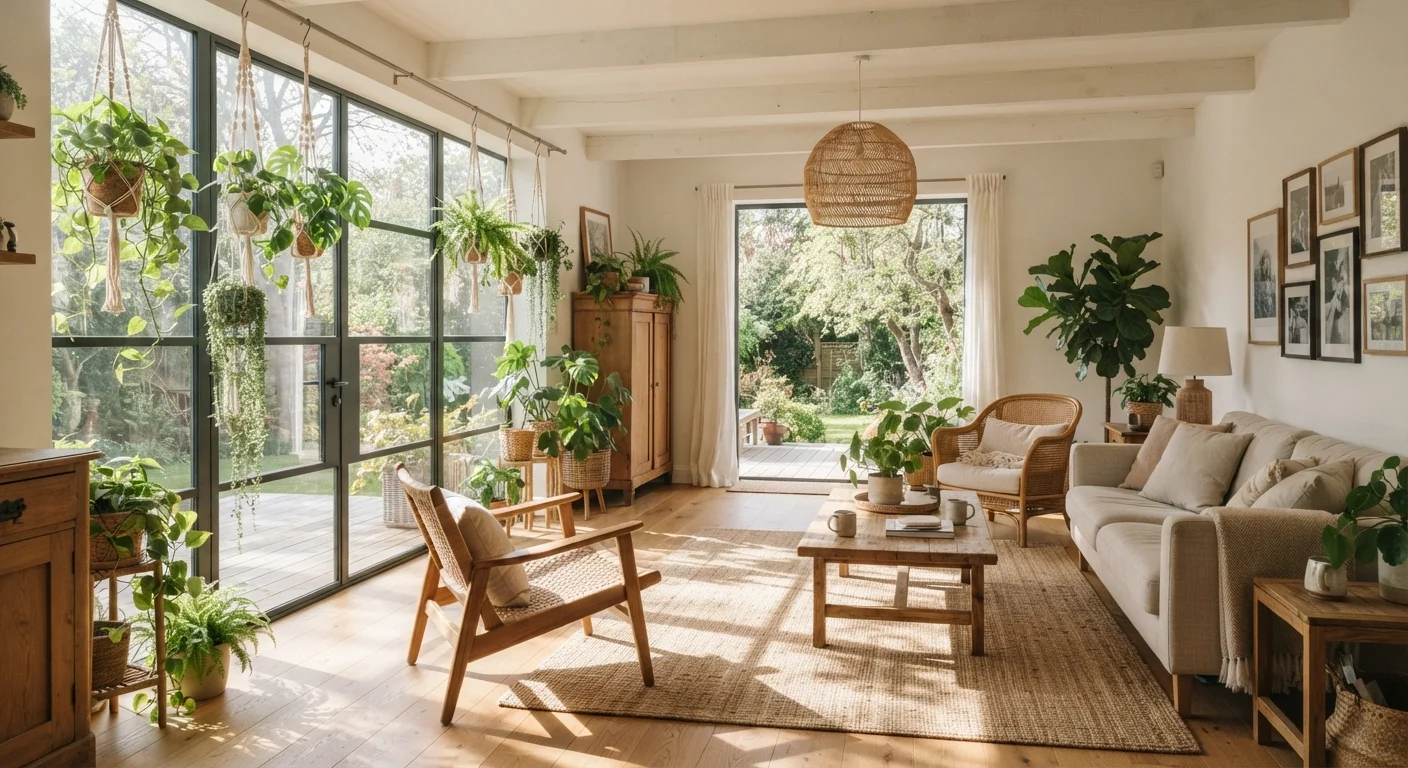
- Direct nature contact: Living plants, water features, natural light, and fresh air constitute the most literal form of biophilic connection. Even a single healthy plant introduces biological presence into a room.
- Indirect nature contact: Materials like wood, stone, wool, and cotton; colors drawn from earth and sky; patterns that echo leaves, water, or grain - these provide nature's qualities without living organisms.
- Space and refuge: Biophilic spaces often balance openness (prospect - the sense of being able to see far) with shelter (refuge - a cozy nook, a chair tucked beside a bookcase). This push-pull mirrors how humans naturally navigate outdoor environments.
- Sensory variability: Nature is never static. Introducing elements that change - dappled light shifting across a wall, the movement of plant leaves in airflow - adds a subtle dynamism that static interiors lack.
Starting Simple: Plants, Light, and Texture
If you're beginning from scratch, three categories offer the most accessible entry points.
Natural Light
Before buying anything, audit your windows. Remove heavy window treatments that block daylight, clean glass panes, and reposition furniture so seating faces or is adjacent to light sources. Mirrors placed opposite windows can distribute light further into a room. Natural light is free and is among the most powerful biophilic tools available.
Living Plants
Match plants to your actual light and maintenance capacity - a struggling, yellowed plant undermines the effect entirely. A single thriving specimen in a well-chosen spot reads more intentional than a dozen neglected ones. If you have outdoor space, container gardening on a balcony or patio can extend the biophilic experience outward as well.
Texture and Natural Materials
Swap or supplement synthetic surfaces with natural ones where practical: a jute rug, a linen throw, a solid wood side table, a rattan basket. These materials carry tactile warmth and visual complexity that manufactured alternatives typically don't replicate. You don't need to replace everything - even one or two well-placed natural-material pieces shift a room's sensory register noticeably.
Start With What You Already Own
Before purchasing anything, walk through your home and identify natural materials already present - wood furniture, ceramic pots, wool blankets, cotton curtains. Rearranging and highlighting what you have is the most cost-effective biophilic move. Often, the issue isn't absence of natural elements but that they're competing with too many synthetic ones.
Applying Biophilic Ideas Room by Room
Biophilic principles work in every room, but their expression changes based on function.
Living Areas
Prioritize natural light and varied greenery. A floor plant, a trailing vine on a shelf, and a low bowl of stones or driftwood together create layered nature references without visual clutter. Choose upholstery in earthy or muted tones - terracotta, ochre, sage, warm gray - rather than colors with no reference in the natural world.
Kitchens
Herbs on a windowsill serve a functional and aesthetic purpose. Wooden cutting boards, ceramic vessels, and stone or butcher-block countertops (where budget allows) all contribute. Even the sound of running water from a faucet is a minor but real biophilic element.
Bedrooms and Home Offices
These spaces benefit particularly from the refuge principle: creating corners that feel sheltered and calm. A bedroom with soft linen bedding, a bedside plant, and blackout curtains that open to let in morning light strikes a biophilic balance. In a home office, views of greenery - even through a window - are associated in research literature with reduced mental fatigue, though individual results vary. The home learning environment guide explores how physical space affects focus, which overlaps with these ideas.
Common Missteps and How to Avoid Them
Biophilic design is one of the easier trends to overdo or misapply. A few pitfalls to watch for:
- Choosing plants for aesthetics over suitability: A plant that can't survive your light conditions will look worse than no plant at all. Always verify light and humidity requirements before purchasing.
- Mixing too many textures without cohesion: Natural materials work together when they share a tonal family. Rough linen, matte wood, and smooth stone coexist well; add glossy chrome and sharp-edged glass and the natural warmth starts to dissolve.
- Treating it as a single-room project: A biophilic living room surrounded by sterile, fluorescent-lit hallways creates an incongruent experience. Consistency - even through small repeated gestures like a plant on each floor or natural-fiber mats throughout - matters more than any single showpiece room.
- Ignoring maintenance: Dead leaves, dry soil, and dusty dried flowers do the opposite of what biophilic design intends. Build realistic care routines into whatever living elements you introduce.
Biophilic design fits naturally alongside other renovation and décor projects. When you're ready to take on a more hands-on weekend project, see how a well-run home improvement project comes together for practical planning guidance.
Biophilic Design Is Not a Single Style
It's easy to conflate biophilic design with a specific look - jungle-themed rooms, for instance, or Japandi minimalism. In practice, biophilic principles can be expressed across virtually any aesthetic. A farmhouse kitchen with wooden beams and herb pots, a mid-century living room with a fiddle-leaf fig and warm wool rugs, or a contemporary home office with a view of a tree - all of these can qualify. The philosophy is about connection to nature, not adherence to a particular visual trend.