

Key Takeaways
Option A
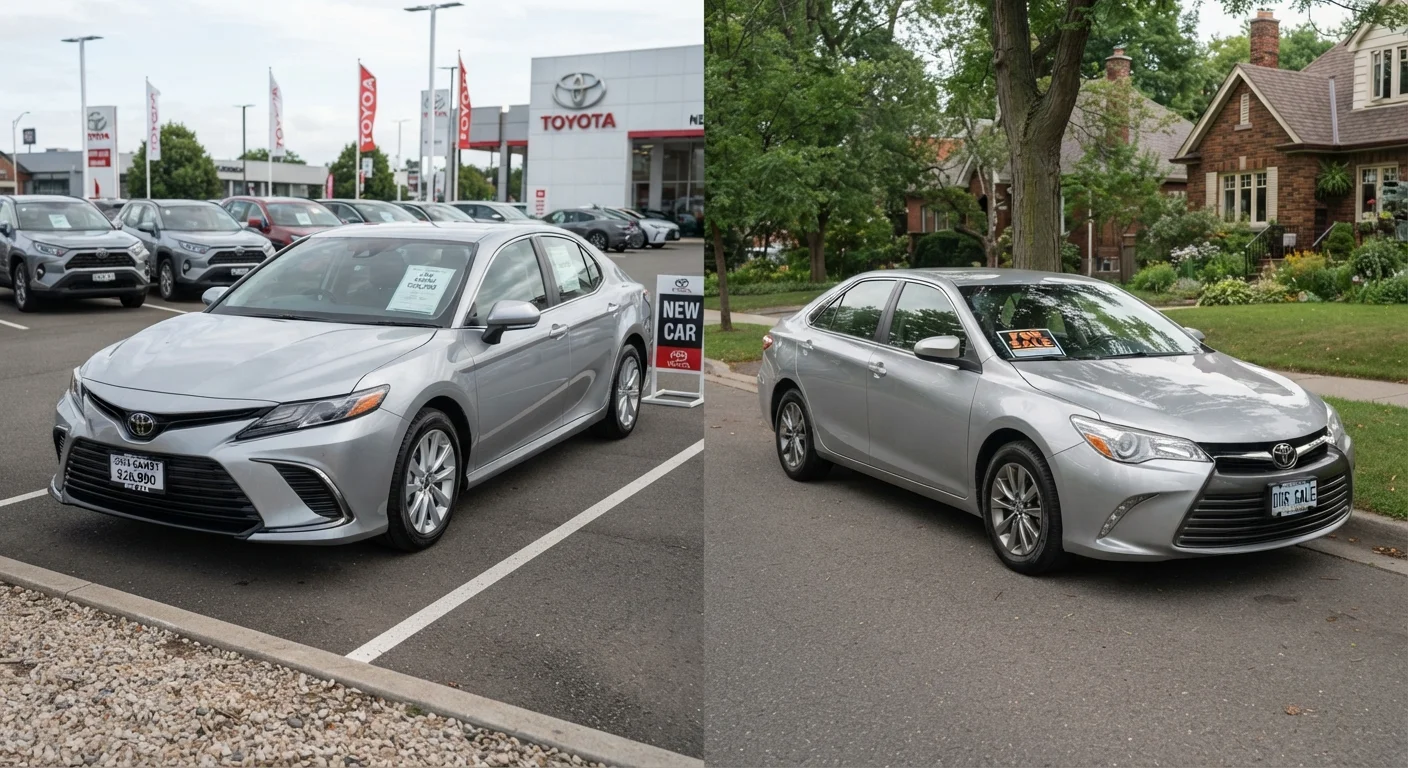
New Car
The factory-fresh, fully warranted choice.
Best for: Buyers who prioritize reliability guarantees, the latest safety features, and predictable near-term maintenance costs.
Option B
Used Car
The depreciation-absorbed, lower-entry-cost alternative.
Best for: Budget-conscious buyers willing to accept some uncertainty in exchange for a significantly lower purchase price and slower value loss.
If you want the lowest possible out-of-pocket purchase price
Used Car
A used vehicle's sticker price is substantially lower, and the steepest depreciation has already been absorbed by the first owner.
If predictable repair costs and comprehensive warranty coverage matter most
New Car
Factory warranties cover most mechanical failures for the first several years, reducing the risk of unexpected large repair bills.
If you plan to drive the vehicle for many years and want the latest safety technology
New Car
Modern vehicles increasingly include standard advanced driver-assistance features that older used models may lack entirely.
If you want to minimize total depreciation loss over a 3-5 year ownership window
Used Car
Buying a vehicle that is 2-3 years old means someone else absorbed the steepest part of the depreciation curve.
If you want a balance of warranty protection and lower initial cost
Used Car
A certified pre-owned (CPO) vehicle typically includes a manufacturer-backed inspection and limited warranty at a price well below new.
Where the Real Cost Difference Lives
The purchase price gap between new and used vehicles can be dramatic - sometimes tens of thousands of dollars for the same model year range. But that number alone doesn't tell the full ownership story. The true financial comparison requires looking at depreciation, insurance, financing, and maintenance together. As our article on the full price of owning a car explains, monthly payments are just the starting point.
Depreciation is almost always the dominant cost for new-car buyers. Industry data consistently shows that a new vehicle loses a significant portion of its value in the first 12 months - estimates commonly fall in the 15-20% range - and continues declining steeply through years two and three. A used vehicle that is already two or three years old has passed through that steep drop, meaning its rate of value loss is slower going forward.
| Criterion | New Car | Used Car |
|---|---|---|
| Purchase Price | Higher | Lower |
| First-Year Depreciation | Steep (15-20% typical) | Slower; steep drop already absorbed |
| Warranty Coverage | Full factory warranty | Varies; often none or limited |
| Financing APR | Generally lower | Generally higher |
| Insurance Cost | Usually higher | Often lower, vehicle-dependent |
| Near-Term Maintenance Risk | Low (warranty covers most) | Moderate to higher |
| Safety Technology | Latest standard features | Depends on model year |
| Registration Fees | Higher in most states | Lower in most states |
That said, a lower purchase price doesn't automatically mean a lower total cost. Understanding each individual cost category is essential before drawing conclusions.
Financing, Insurance, and the Costs That Offset the Sticker Price
Buyers often assume that a lower purchase price means a smaller financial burden overall. The reality is more nuanced. Lenders frequently offer lower annual percentage rates (APRs) on new vehicle loans than on used ones, partly because a new car is considered less risky collateral. If you finance a used car at a meaningfully higher rate, the interest savings of a lower balance can erode. Our comparison of financing vs. paying cash for a car walks through how loan terms affect the true cost of a vehicle purchase.
Insurance is another area where the math is less straightforward than it first appears. Comprehensive and collision coverage costs are generally tied to a vehicle's replacement value - so a newer, pricier car will often carry higher premiums. However, some older vehicles also attract higher rates due to parts availability, theft statistics, or safety ratings. It's worth getting actual quotes for any vehicle you're seriously evaluating rather than assuming used always means cheaper to insure.
~20%
Average new car value lost in year one
Industry analyses and automotive research organizations consistently estimate new vehicles lose roughly 15-20% of value within the first 12 months of ownership.
1-2%
Typical APR difference: new vs. used loans
Federal Reserve consumer credit data and lender disclosures frequently show used vehicle loan rates running one to two percentage points above comparable new vehicle rates.
3 yrs / 36K mi
Typical new car bumper-to-bumper warranty
Most major automakers selling in the U.S. market offer a three-year or 36,000-mile bumper-to-bumper warranty as a baseline on new vehicles.
Registration fees in many states are also calculated based on a vehicle's value and model year, meaning new cars typically cost more to register annually - another line item that compounds over time.
Maintenance, Reliability, and the Warranty Factor
One of the clearest advantages of buying new is warranty coverage. Most new vehicles come with a bumper-to-bumper warranty covering the first three years or 36,000 miles, and a separate powertrain warranty typically extending to five years or 60,000 miles. During this window, major mechanical failures are generally covered, which limits exposure to large, unexpected repair costs.
Used vehicles beyond the original warranty period shift that repair risk entirely to the owner. Depending on the vehicle's age, mileage, and maintenance history, that risk can be modest or significant. A certified pre-owned vehicle - one that has passed a manufacturer-approved inspection and carries a limited extended warranty - can reduce this uncertainty, though CPO vehicles are priced above comparable non-certified used cars to reflect that benefit.
Routine maintenance costs on older vehicles also tend to climb. Wear items like tires, brakes, belts, and coolant systems have finite service lives. A used vehicle may be approaching several of these intervals simultaneously, which can create a cluster of maintenance expenses in the first year of ownership. Our guidance on car maintenance basics can help you understand what to inspect before buying used and what to budget for afterward.
For buyers whose primary goal is keeping total expenditure predictable, a new car with warranty coverage often delivers that, while a used car demands more active financial planning. Learn more about what gets missed in hidden car ownership costs most drivers overlook.
Making the Decision That Fits Your Financial Situation
There is no universally correct answer to the new-vs-used question. The right choice depends on how long you plan to keep the vehicle, how much financial uncertainty you can absorb, what financing terms you qualify for, and how you value features like the latest safety technology. Our article on how vehicle depreciation works provides a deeper look at one of the most consequential factors in this decision.
If your household is working with a constrained budget, a used vehicle purchased at a lower price may free up cash flow even if it requires more active maintenance management. Our piece on managing car ownership costs on a tight budget offers practical strategies for keeping expenses in check regardless of which path you choose.
Whichever direction you go, the goal is the same: understand the full cost picture before committing. A vehicle that fits your budget in year one should still fit it in year three, accounting for expected depreciation, insurance, maintenance, and any financing costs. Running those numbers - not just comparing sticker prices - is what separates an informed purchase from an expensive surprise.
Certified Pre-Owned: A Middle Path
Certified pre-owned (CPO) programs, offered by most major automakers, require used vehicles to pass a multi-point inspection and typically include a limited extended warranty backed by the manufacturer. CPO vehicles are priced above non-certified used cars of the same age and mileage, but they can offer a meaningful reduction in uncertainty compared to buying a standard used vehicle. If you're drawn to the lower price of used but concerned about repair risk, a CPO vehicle is worth evaluating as part of your comparison.