

Key Takeaways
Why Desert Driving Demands Special Preparation
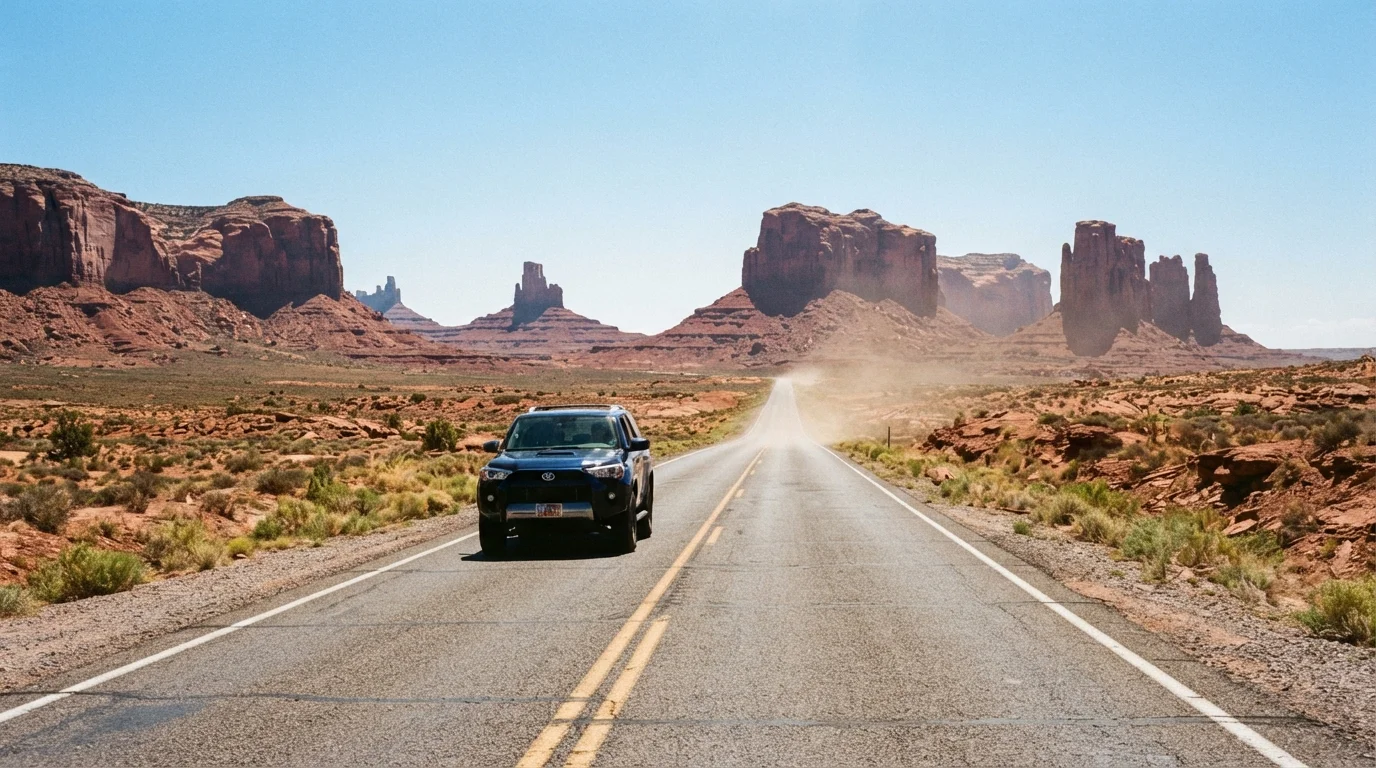
The American Southwest — spanning Utah, Arizona, Nevada, New Mexico, and parts of California — contains some of the most spectacular driving roads on the continent. But those same wide-open stretches that make the region so exhilarating also make it uniquely hazardous. Temperatures routinely exceed 110°F in summer, gas stations may be 80 miles apart, and cell coverage can vanish entirely for hours at a time.
As our guide to roads that catch travelers off guard explains, many of these drives are far more remote than they appear on a standard map. What looks like a manageable afternoon route can turn into a serious situation if your vehicle isn't prepared or you've underestimated conditions. This guide walks you through exactly how to get ready — vehicle, supplies, and strategy — so your desert adventure stays on the right side of memorable.
What you will need
What You'll Need Before You Go
Desert driving isn't the place to improvise your gear list. The tools and supplies below are grouped by function — vehicle readiness, safety, and navigation. Check each one before leaving the driveway. For a broader pre-departure checklist, see our road trip readiness checklist.
Water supply (minimum 1 gallon per person per day, plus extra for the vehicle)
Prevents dehydration during breakdowns or unexpected delays in extreme heat.
Portable tire inflator and tire plug kit
Allows temporary repair and inflation of a flat tire when no roadside assistance is available.
Jumper cables or portable jump starter battery pack
Restarts a vehicle with a dead battery in locations where no other car may stop for hours.
Coolant/antifreeze and engine oil (one quart each)
Tops off fluids if levels drop dangerously during a long, hot drive.
Paper road map or printed route directions
Provides navigation backup if your phone loses signal or battery in a remote area.
Offline GPS maps downloaded to your phone (e.g., Google Maps or Maps.me offline mode)
Enables turn-by-turn navigation without a cellular data connection.
Emergency mylar blanket, first-aid kit, and flashlight
Covers basic safety needs during unexpected roadside stops, especially after dark.
Sunshade for windshield
Reduces interior cabin temperature significantly when the vehicle is parked in direct sun.
Step-by-Step: Preparing for a Desert Drive
Follow these steps in order. Several are best done one to two days before departure so you have time to address anything unexpected.
Inspect your tires thoroughly
Check tread depth and look for sidewall cracks, bubbling, or embedded debris. Verify your spare tire is properly inflated and that you have the tools to change it. Desert heat dramatically accelerates tire wear and increases blowout risk, particularly on older tires or those already at the edge of their tread life.
Check your cooling system and all fluid levels
Inspect coolant level (when the engine is cold), engine oil, transmission fluid, and power steering fluid. Look for signs of leaks under the car. A cooling system failure in the desert can happen quickly and leave you stranded far from help. If your coolant hasn't been flushed recently, this is the time to address it.
Test your battery and electrical system
Extreme heat is harder on car batteries than cold. Have your battery tested at an auto parts store if it's more than three years old. Check that terminals are clean and connections are tight. A failing battery that starts fine in mild weather may not perform reliably above 100°F.
Plan your fuel and water stops in detail
Research your specific route and identify every open gas station along the way, including hours of operation — some rural Southwest stations close early or on certain days. Map out exactly how far apart they are relative to your vehicle's fuel range. Do the same for water resupply if you're on a multi-day route.
Download offline maps and share your itinerary
Before you leave cell range, download offline maps for your entire route. Text or email your full route plan — including specific highways, planned stops, and your expected arrival time — to a trusted contact. Let them know when to expect to hear from you and what to do if they don't.
Pack your emergency and comfort supplies
Load your vehicle with the full supply list before departure — water, emergency kit, jumper cables, tire tools, coolant, and a phone charger or portable battery bank. Add sun protection (hat, sunscreen, sunglasses) and extra food. In a breakdown scenario in the desert, your car's supplies are all you have until help arrives.
Drive Smarter, Not Harder in the Heat
Running your air conditioning at maximum in extreme heat puts significant strain on your engine. On long uphill grades in particular, consider briefly turning the AC down or off to give the cooling system a break. If your temperature gauge climbs at all above its normal position, act immediately — don't wait to see if it corrects itself.
On the Road: Habits That Keep You Safe
Preparation before departure matters enormously, but so does how you drive once you're out there. The desert is not forgiving of complacency.
Fuel discipline: Never pass a gas station in the desert with less than half a tank. Fill up every time — even if it feels unnecessary. Some stretches between towns in Nevada and Utah stretch well beyond 100 miles with nothing in between.
Time your drive: If possible, cover the most exposed, remote sections of your route in the early morning, before heat peaks. Parked vehicles in direct desert sun can reach dangerous interior temperatures within minutes. If you must stop mid-day, find shade.
Watch your dashboard: If your temperature gauge climbs above its normal range, pull over immediately. Turn off the AC, pull to a safe spot, and let the engine idle or cool. Do not open the radiator cap when the engine is hot. For more on managing vehicle health across conditions, see our seasonal car care guide.
Respect flash floods: Desert washes and low-water crossings can fill with fast-moving water within minutes during monsoon season (typically July through September in the Southwest), even when skies above you look clear. Never drive into a flooded crossing. The ground beneath may be unstable, and the water far deeper than it appears.
Never Depend on Cell Service for Navigation
Vast sections of the Southwest — including parts of US-93 in Nevada, Highway 163 in Utah, and stretches of US-180 in New Mexico — have little to no cellular coverage. Do not assume you can call for help or load a map in an emergency. Always carry a physical backup and pre-download offline maps before you lose signal.