

Key Takeaways
Our Verdict
Both routes rank among North America's finest autumn drives, but they deliver genuinely different experiences. New England rewards travelers who want village charm and vibrant, close-in color, while the Blue Ridge Parkway suits those who prefer uninterrupted ridge-top scenery and a longer seasonal window. Neither is objectively superior — the right pick hinges on your pace, geography, and what you want to feel at the wheel.
| Best for | Recommended |
|---|---|
| Travelers who want charming towns alongside fall color | New England |
| Those seeking a longer foliage season and sweeping ridge views | Blue Ridge Parkway |
| Drivers based on the East Coast mid-Atlantic or Southeast | Blue Ridge Parkway |
| First-time fall foliage road trippers wanting peak color intensity | New England |
Color Timing and Peak Windows
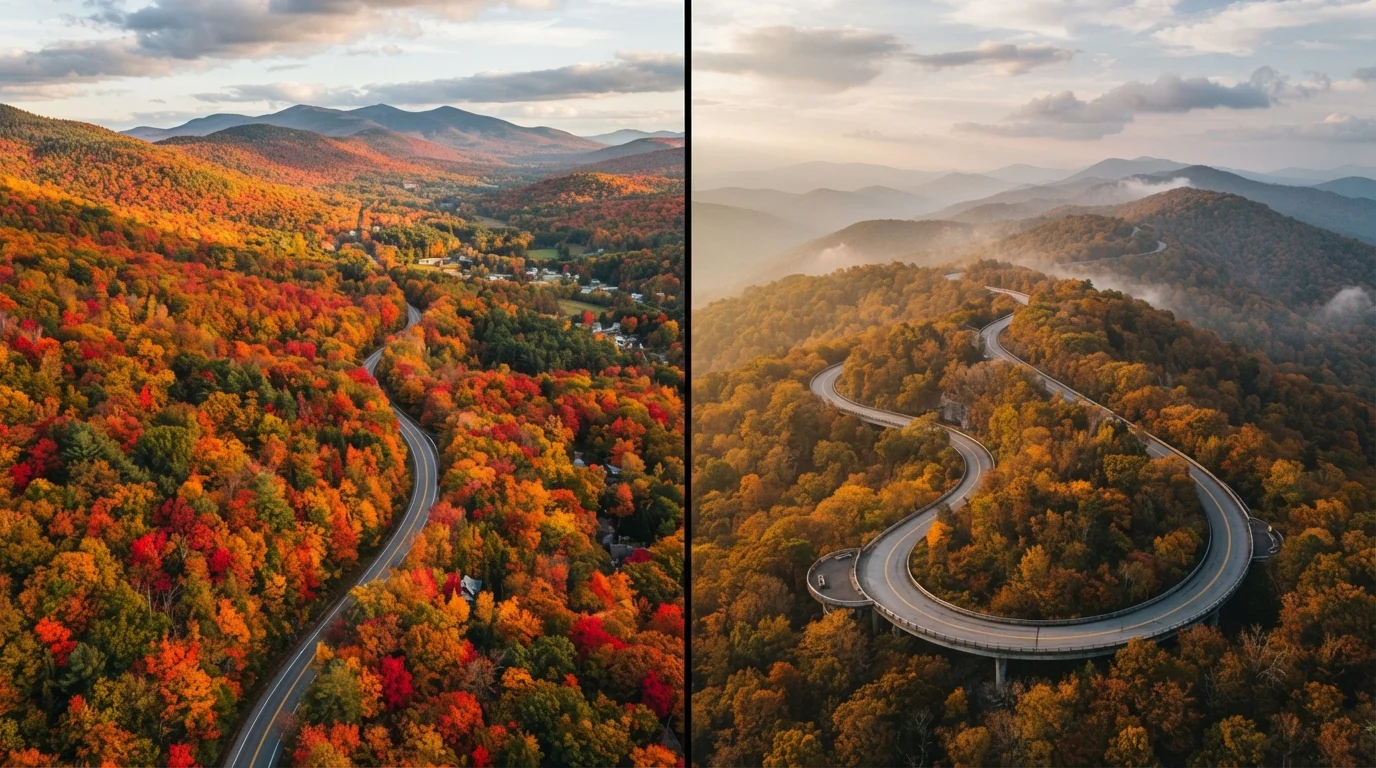
Fall color in New England typically ignites across Vermont, New Hampshire, and Maine between late September and mid-October — earlier at elevation, a week or two later in the valleys. The show is fast, vivid, and relatively brief. Sugar maples dominate the canopy and deliver that signature scarlet-and-orange intensity most people associate with autumn in America.
The Blue Ridge Parkway's 469-mile corridor runs through the Appalachian highlands from Virginia to North Carolina, giving it an unusually drawn-out color window. High-elevation stretches near Mount Mitchell can pop in early October, while lower sections closer to the Smokies often hold color into early November. That stagger gives flexible travelers more scheduling room — a meaningful advantage if your trip dates aren't fixed.
| New England | Blue Ridge Parkway | |
|---|---|---|
| Peak color timing | Late September – mid-October | Early October – early November |
| Color intensity | Vivid reds and oranges (sugar maple) | Warm golds, ambers, and russets |
| Route character | Valley roads through towns and villages | Ridge-top scenic corridor, no traffic lights |
| Amenity access | Frequent towns with services | Sparse — requires advance planning |
| Lodging options | Many inns and B&Bs; books fast in peak weeks | Campgrounds plus gateway towns off Parkway |
| Crowd density | Heavy on popular corridors and weekends | Spread across 469 miles; busy at overlooks |
| Ideal traveler | Culture + color seekers, town browsers | Scenic-drive purists, flexible schedulers |
Terrain, Scale, and Driving Experience
New England foliage drives feel intimate. Routes like Vermont's Route 100 or the Kancamagus Highway in New Hampshire snake through valleys and hillsides, placing you inside the color rather than above it. Towns appear frequently — white-steepled churches, covered bridges, farm stands — so the drive is as much about culture as landscape.
The Blue Ridge Parkway operates on a different visual register. Engineered as a scenic corridor with no commercial vehicles and no traffic lights, it feels purpose-built for contemplation. Long ridge-top stretches offer layered mountain views stretching dozens of miles into the haze. The trade-off is isolation: services are sparse along the Parkway itself, so fuel and food require planning. First-time Parkway drivers are sometimes caught off guard by the gaps between amenities — our guide on drives that catch travelers off guard covers this dynamic well.
Logistics: Crowds, Lodging, and Access
Both routes see significant autumn congestion — don't expect solitude on peak weekends. In New England, leaf-peeping weekend traffic on popular corridors like Route 100 can back up at scenic pull-offs. Inns and B&Bs in Vermont and New Hampshire book months ahead for prime October weekends.
The Parkway draws similarly large crowds at overlooks like Craggy Gardens and Rough Ridge, though its sheer length spreads visitors more thinly than compact New England towns do. Campgrounds along the Parkway are a solid alternative to pricey inns — but reservations are advisable, not optional, during peak color.
Time Your Drive for Mid-Week
Peak foliage weekends on both routes are among the most congested driving days of the year in their respective regions. Shifting your drive to Tuesday through Thursday can dramatically change the experience — less traffic at overlooks, quieter roadside stops, and more accommodation availability. If your schedule allows any flexibility, mid-week timing is one of the highest-impact adjustments you can make.
Both regions reward mid-week travel. Arriving Tuesday through Thursday dramatically reduces congestion and often unlocks better lodging availability at more reasonable prices. If you're weighing road trip formats more broadly, our piece on national parks vs. city-to-city road trips puts these planning trade-offs in useful context.
Which Route Fits Your Trip?
If you're flying into Boston or Burlington and have five to seven days, a New England loop is exceptionally efficient — you'll cover multiple states, diverse landscapes, and memorable small towns without long transit stretches. The region's density of interesting stops means slower days feel rewarding rather than empty.
If you're driving from the Mid-Atlantic or Southeast and prefer a single, sustained scenic corridor, the Blue Ridge Parkway is hard to match. You can enter near Waynesboro, Virginia and exit near Cherokee, North Carolina — or simply drive a portion. There's no pressure to complete the whole route in one go.
Travelers bitten by the scenic byway bug may also find value in exploring lesser-known alternatives covered in our look at underrated American scenic byways. Fall color isn't exclusive to the two marquee routes — it's a reminder that discovery is always available to drivers willing to look a little further off the map.