

Key Takeaways
Childhood Memory Formation
Children encode and recall experiences differently than adults because their brains are still developing the systems that organize, store, and retrieve long-term memories. What a child remembers — and what they forget — is shaped by emotional intensity, novelty, and sensory detail rather than by the logical sequence of events adults tend to focus on. This means a family trip's most lasting impression on a child may come from an unexpected moment rather than the planned highlight.
Developmental researchers distinguish between episodic memory (recalling specific events) and semantic memory (general knowledge). Young children's episodic memory systems mature gradually through middle childhood, which partly explains why most people have very few clear memories from before age three or four — a phenomenon known as childhood amnesia.
The Science Behind Why Kids Remember What They Do
When parents spend months planning a family vacation — booking the national park permits, mapping out the museum itinerary, researching the best local spots — it can feel deflating when a child's most vivid recollection is the hotel elevator or a gas station snack. But that's not ingratitude or inattention. It's developmental biology at work.
Children's brains are still building the neural architecture required for organized, story-like long-term memories. The hippocampus, a brain region central to forming and retrieving episodic memories, matures gradually through childhood and into adolescence. In very young children especially, memories tend to be fragmentary — tied to strong emotion or sensation rather than sequential events.
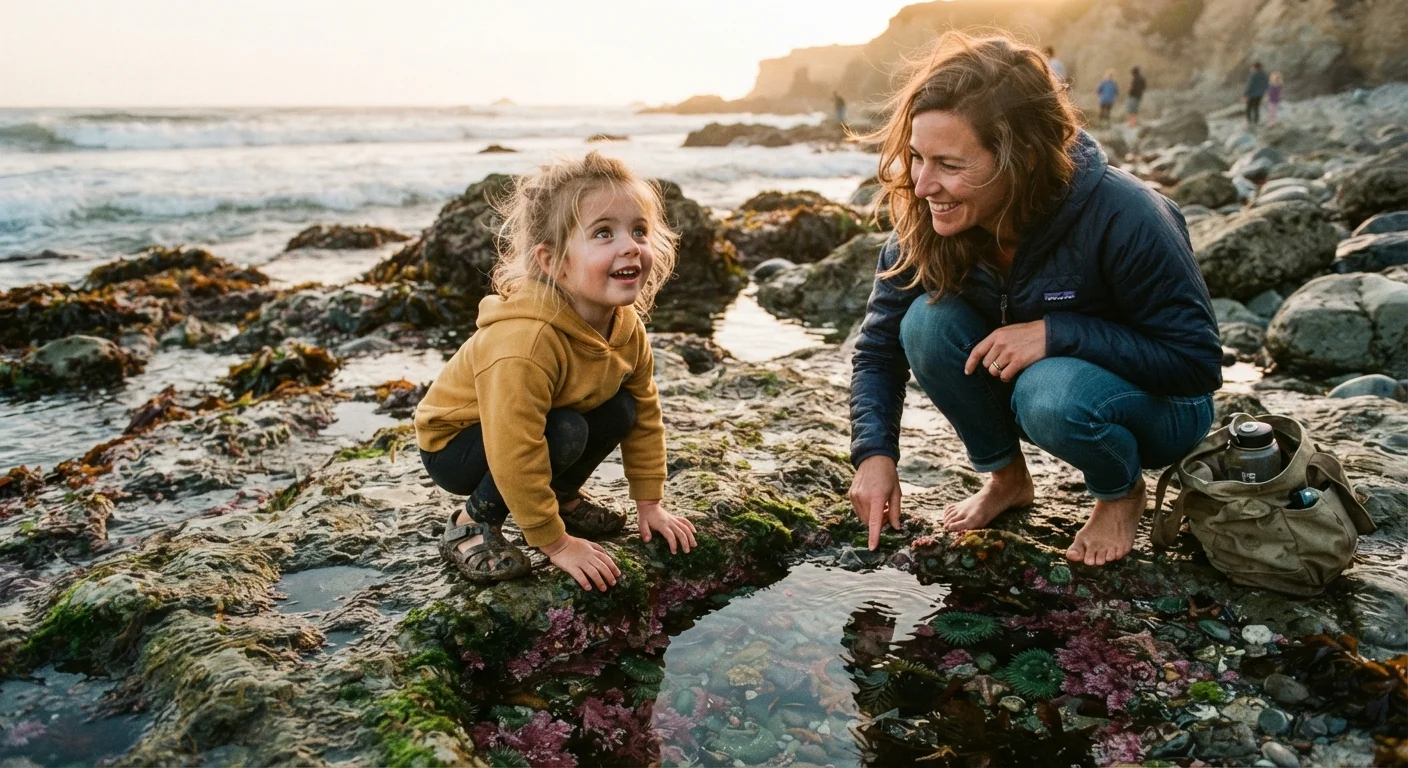
What this means practically: a child is more likely to remember the feeling of cold ocean water on their feet than the name of the beach, and more likely to recall a surprising encounter with a pelican than the carefully planned whale-watching excursion that preceded it. Novelty, physical sensation, and emotional intensity are the filters that determine what sticks.
~Age 3–4
Typical onset of durable autobiographical memory
Developmental researchers broadly agree that most people's earliest retrievable memories date to around age three or four, though there is meaningful individual variation.
40–50%
Share of early childhood memories that fade by adulthood
Studies on childhood amnesia suggest a substantial portion of memories formed before age seven are not reliably accessible in adulthood, though emotionally vivid experiences show greater persistence.
Higher retention
Emotionally charged vs. neutral events in child memory
Research in developmental psychology consistently finds that children show stronger memory retention for events involving surprise, strong emotion, or physical engagement than for neutral, routine experiences.
Childhood Amnesia and the Youngest Travelers
Parents of toddlers sometimes wonder whether it's even worth the logistical effort of traveling with very young children. From a strict memory standpoint, the honest answer is nuanced. Most adults retain virtually no clear, specific memories from before age three or four — a well-documented phenomenon developmental psychologists call childhood amnesia. The brain structures needed to form durable autobiographical memories simply aren't online yet.
That doesn't necessarily mean early travel is wasted. Researchers suggest that positive early experiences may still shape temperament, emotional associations, and general comfort with new environments, even without conscious memory. A toddler who explores tide pools and farm markets and mountain cabins may grow into a child who feels at ease with novelty — even if they can't recall the specific trips that built that ease.
For families wondering how travel strategies shift as children age, how family travel evolves from toddlers through teens is worth exploring in depth.
“Children's memory is not a smaller version of adult memory. It operates by different rules, and understanding those rules changes what we think is worth doing with and for young children.”
— Robyn Fivush, Professor of Psychology and researcher in autobiographical memory development, Emory University
What This Means for How You Plan Family Trips
Understanding how children's memories work has real, practical implications for family travel planning — and most of them point in the same direction: depth over breadth, experience over spectacle.
Packed itineraries that rush families through a dozen landmarks in a week may feel productive to adults but often leave children with blurred, undifferentiated impressions. Unstructured time — an afternoon to wander, dig in the sand, or revisit the same bakery twice — gives children the opportunity to engage deeply with a place. Those repeated, sensory-rich interactions are precisely what memory research suggests is most likely to leave a lasting impression.
Destinations that reward curiosity — living history sites, nature reserves, hands-on science centers — tend to provide the kind of emotionally engaging, exploratory experience that lines up well with how children actually form memories.
For families hitting the road, the principles apply just as much to long drives as to the destination itself. The spontaneous detour, the roadside oddity, the thunderstorm you waited out in a diner — these are the stories kids retell for years. See how experienced families navigate this in our guide to road trips with kids.
How Parents Can Help Memories Last
One of the most research-supported things parents can do to strengthen a child's travel memories is simply talk about them — repeatedly, specifically, and enthusiastically. Memory researchers who study parent-child reminiscing have found that families who engage in what's called elaborative reminiscing — retelling past events with detail, feeling, and follow-up questions — tend to have children who develop richer and more durable autobiographical memories.
In practice, this means pulling out photos together a week after returning home, asking kids what they remember and building on their answers, telling the funny or surprising moments of the trip at family dinners, and revisiting the experience over months and even years. The story of a trip, told collaboratively, becomes part of a family's shared identity.
It's also worth noting that returning to the same destination can be a genuine memory-building strategy rather than a sign of a lack of imagination. Familiarity gives children a foundation onto which new details can be added each visit, deepening rather than diluting the experience. This aligns naturally with a slow travel mindset that many families find transforms the quality of their trips.
This article is for general informational purposes only and does not constitute professional developmental or psychological advice. Consult a qualified pediatric or child development professional for guidance specific to your child.