

Key Takeaways
Why 'Kid-Friendly' Isn't Always Enough
Most parents have been there: you book a destination that checks every box for the kids, and by day two you're counting down to the flight home. "Kid-friendly" is a low bar. What families actually need are places where curiosity has no age limit - where a seven-year-old can be absorbed in something real, and the adults beside them are equally hooked.
This isn't just about keeping parents sane (though that matters). Research on how children form lasting memories suggests that emotionally charged, novel experiences - the kind adults find genuinely interesting too - tend to stick far longer than passive entertainment. See our exploration of how kids remember vacation experiences for a deeper look at what actually leaves an impression.
The destinations below are chosen precisely because they don't force a trade-off. They reward wandering minds at every age - and they hold up to a second, third, or fourth visit as kids grow. If you're still working out the logistics of getting there, our guide on what makes road trips with kids actually work covers the practical side.
US National Parks With Junior Ranger Programs
National parks are among the rare places where a geology lecture feels thrilling and a five-year-old can earn a badge for the same walk. The National Park Service's Junior Ranger program turns trails into structured investigations - kids answer questions, observe wildlife, and complete activities that mirror what rangers actually do. Meanwhile, adults have access to interpretive talks, geology exhibits, and backcountry depth that reward serious interest.
Parks like Grand Canyon, Acadia, and Olympic offer dramatically different ecosystems, so the experience never feels repetitive across visits or years. For logistics and seasonal planning, our practical primer on national parks as family destinations is a solid starting point.
Junior Ranger badges give kids ownership of the experience - and parents an excuse to slow down and look closer.
Living History Museums and Colonial Sites
Places like Colonial Williamsburg in Virginia or Plimoth Patuxent in Massachusetts reconstruct daily life from past eras with working craftspeople, period-accurate buildings, and interpreters who stay in character. For children, this is as close to time travel as a family vacation gets. For adults, the nuance goes deeper: these sites increasingly grapple honestly with complex history, including the lives of enslaved people, Indigenous communities, and ordinary workers - not just founding figures.
The layering is the point. A child might leave remembering the blacksmith's hammer; a parent might leave rethinking assumptions about early American life. Both responses are valid, and both are exactly what good travel should produce.
Living history sites work because the story is big enough for both a curious child and a critically thinking adult.
Aquariums With Behind-the-Scenes Access
Large public aquariums - particularly those affiliated with research institutions - often offer programming well beyond the main floor exhibits. Touch tanks, feeding demonstrations, and keeper Q&A sessions give younger kids direct sensory engagement. Many facilities also offer behind-the-scenes tours where families can see animal care operations, water filtration systems, and conservation research in progress.
For adults with even a passing interest in marine biology or conservation, the scientific context here is genuinely rich. Aquariums in cities like Monterey, Baltimore, and Seattle have developed reputations for educational depth that holds up for repeat visits as children age into more sophisticated questions.
The best aquariums function as working research institutions - and that depth is accessible to the whole family.
Archaeology and Paleontology Sites
Few things electrify a child like the idea that fossils or ancient artifacts are literally beneath their feet. Sites like Dinosaur National Monument in Utah and Colorado, or Cahokia Mounds in Illinois, offer something rare: real evidence of deep time that visitors can observe in context - not just inside a glass case.
Some sites allow families to participate in supervised surface surveys or digs during specific programs, which transforms passive observation into active discovery. Parents often find themselves just as absorbed as their children, particularly at sites where the interpretive material is honest about how much remains unknown. Uncertainty, it turns out, is one of the most engaging things you can share with a curious kid.
When kids realise scientists still don't have all the answers, their curiosity often doubles.
Science and Natural History Museums in Major Cities
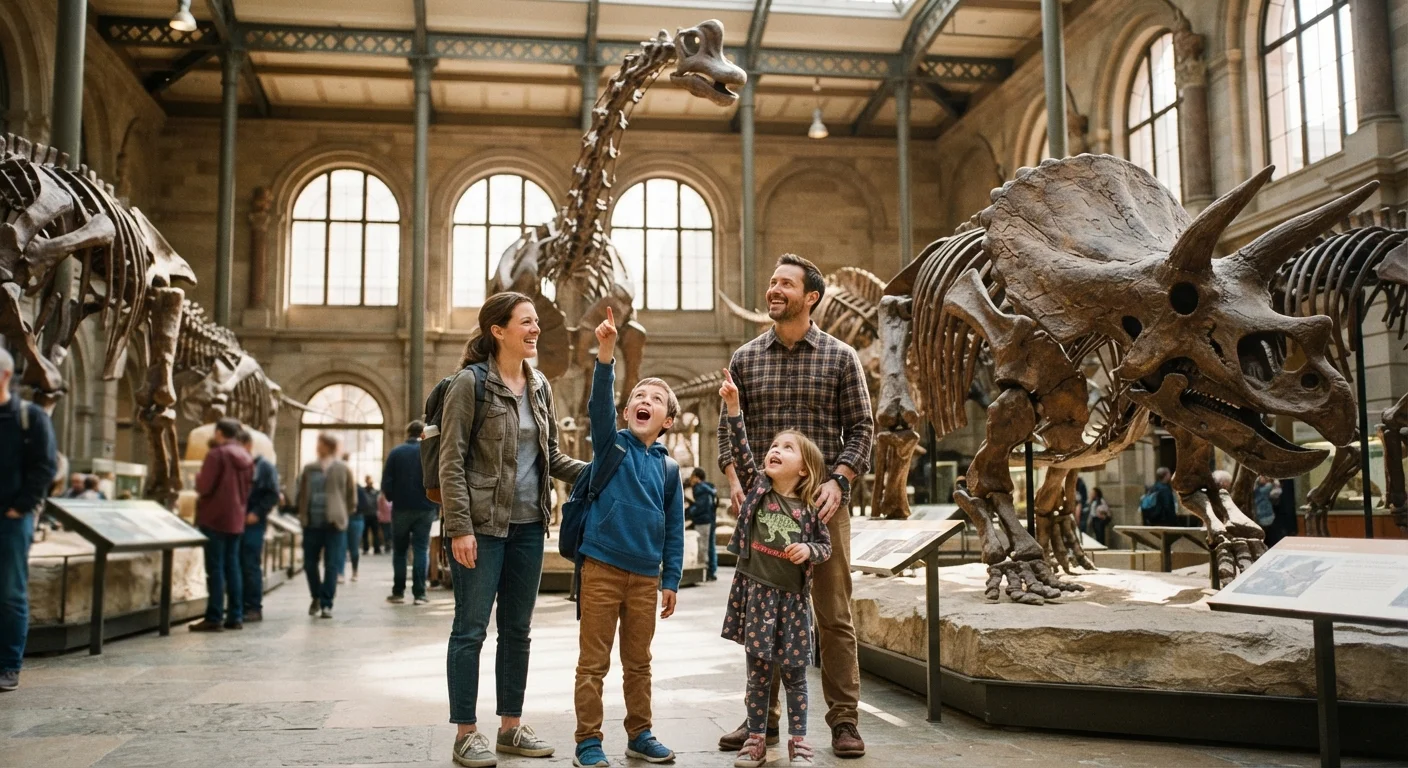
The Smithsonian's Natural History Museum in Washington, D.C., the Field Museum in Chicago, and the California Academy of Sciences in San Francisco represent a category of institution that genuinely earns a full day - or two. These aren't static trophy cases; they're active research facilities with rotating exhibitions, immersive planetarium shows, and staff who can answer real questions.
Children engage through scale (giant whale skeletons, meteorites, live insects), while adults can explore the research context, ethical debates around collection practices, and connections to current environmental issues. The cross-generational appeal is built into the architecture of these places. And because they change regularly, they reward return visits as children grow into new areas of interest.
Natural history museums are designed for wonder at every level - the exhibits just hit differently as you age.
Coastal Marine Reserves and Tidal Exploration Areas
Protected coastal areas - particularly those with accessible tidal pools - offer unscripted, open-ended exploration that no theme park can replicate. Locations along the California coast, Maine's rocky shoreline, and the Pacific Northwest present ecosystems that change with every tide. Children can observe sea stars, anemones, hermit crabs, and small fish in their actual habitat, guided by curiosity rather than a script.
Adults benefit from the same lack of structure. There's genuine scientific complexity in a tidal zone - predator-prey relationships, adaptation, climate vulnerability - that makes for rich conversation. Many reserves have naturalist staff or volunteer guides on weekends who can add context without turning the visit into a lecture. Check local marine reserve websites for seasonal access information and any handling guidelines before visiting.
A tidal pool rewards patience and attention - two things worth practicing together as a family.
How to Get the Most From These Experiences
A destination is only as good as the time you give it. Families who linger - who let a child ask one more question or circle back to the same tide pool twice - consistently report stronger memories and less friction than those sprinting through a checklist. The slow travel approach is worth considering here: fewer stops, more depth.
Let Kids Lead for a Morning
At any of these destinations, try designating one stretch of time where your child chooses the pace and direction entirely. Research on childhood memory suggests that agency and emotional investment deepen how experiences are encoded. You might be surprised where they lead - and what questions they ask when no one is steering them toward the 'right' exhibit.
It's also worth recognising that what works brilliantly for a curious eight-year-old might underwhelm a teenager or overwhelm a toddler. Our overview of traveling with kids at different ages can help you calibrate expectations and activities to where your child actually is right now. The destinations listed here are a starting point - your family's version of curiosity-led travel is yours to shape.