

Key Takeaways
Fewer transitions mean calmer, better-rested kids
Each move between destinations — packing, transit, new check-in, new sleep environment — is a stress event for children. Eliminating most of those events dramatically reduces the friction that makes family travel feel exhausting.
Kids build genuine familiarity with a place
Returning to the same playground, bakery, or beach over several days lets children develop a sense of belonging rather than a blur of sites. That depth of experience tends to stick with them far longer than a packed highlight reel.
Daily costs often decrease with longer stays
Vacation rentals priced by the week or month are typically cheaper per night than hotel rooms, and having a kitchen cuts restaurant spending considerably — a significant factor for families where meals out add up fast.
Easier to maintain routines around sleep and meals
Nap schedules, bedtimes, and dietary needs are much simpler to manage when you have a consistent home base with a kitchen and familiar surroundings, reducing the behavioral fallout that comes from disrupted routines.
Deeper cultural immersion for the whole family
Spending real time in a neighborhood — shopping locally, using public transport, interacting with residents — offers children and parents a lived-in understanding of a place that a two-night stop simply cannot.
Less packing and unpacking pressure
When you're not moving every two days, you can pack more practically for your actual needs, including bulkier items like portable gear or specialty foods, without it becoming a logistical burden.
Requires significantly more advance planning
Finding a suitable long-stay rental, verifying school enrollment windows if needed, and researching one destination in depth takes more effort than booking a standard packaged trip across multiple stops.
Some kids get bored without constant novelty
Younger children especially may exhaust a single location's attractions quickly, leaving parents scrambling for variety in a place with limited options — particularly in smaller or less activity-dense destinations.
Vacation time demands are higher
A meaningful slow-travel experience typically requires at least one to two weeks in one place, which isn't feasible for families with limited paid leave or rigid school calendars.
Missing out on broader geographic range
Choosing depth over breadth means accepting that you won't see multiple regions or countries on a single trip — a real trade-off for families eager to explore widely within a finite travel window.
Mismatched expectations within the family
One parent may love the slower pace while another feels under-stimulated; teens may resent a single location while younger siblings love the routine. Alignment before booking matters more than with conventional trips.
Our Verdict
Slow travel with kids trades breadth for depth, and for many families that swap is genuinely transformative. It reduces the friction that makes family trips exhausting — constant packing, airport chaos, and overtired children melting down in unfamiliar hotels — and replaces it with something closer to real life, just somewhere more interesting. That said, it demands flexibility, advance planning, and a family that can find meaning in the everyday rhythms of a single place.
Best suited to families with school-age or older children, parents who can work remotely or have generous vacation time, and anyone who has come home from a whirlwind trip feeling like they needed another vacation to recover.
What Slow Travel Actually Means for Families
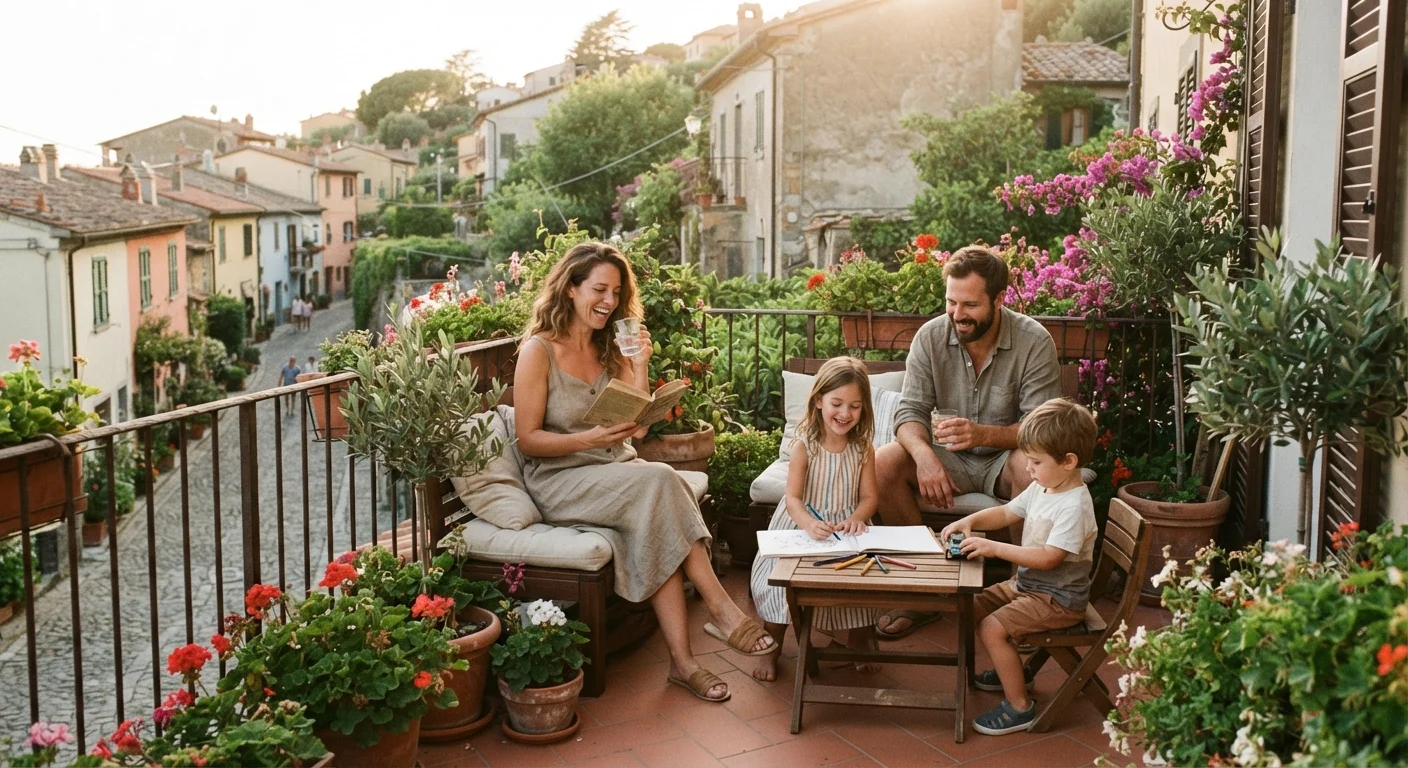
Slow travel is less a rigid philosophy and more a deliberate reframing of what a family vacation is for. Instead of covering maximum ground — five cities in ten days, every landmark checked off — you choose one place and stay long enough to actually know it. That might mean a week in a single coastal town, two weeks in an apartment in a walkable urban neighborhood, or a full month at a rented house near a national park.
For families, the case is especially compelling. Kids are notoriously bad at the fast-travel model: they don't care about the third cathedral, they're exhausted from airport security, and they need a nap schedule that doesn't accommodate a 6 a.m. bus to the next destination. Slowing down isn't settling — it's a strategic choice that often delivers richer experiences than the highlight-reel approach.
If you're weighing whether to concentrate your trip or spread it across many stops, our look at slow travel vs. country-hopping costs breaks down how each approach affects your wallet too.
Fewer transitions mean calmer, better-rested kids
Each move between destinations — packing, transit, new check-in, new sleep environment — is a stress event for children. Eliminating most of those events dramatically reduces the friction that makes family travel feel exhausting.
Kids build genuine familiarity with a place
Returning to the same playground, bakery, or beach over several days lets children develop a sense of belonging rather than a blur of sites. That depth of experience tends to stick with them far longer than a packed highlight reel.
Daily costs often decrease with longer stays
Vacation rentals priced by the week or month are typically cheaper per night than hotel rooms, and having a kitchen cuts restaurant spending considerably — a significant factor for families where meals out add up fast.
Easier to maintain routines around sleep and meals
Nap schedules, bedtimes, and dietary needs are much simpler to manage when you have a consistent home base with a kitchen and familiar surroundings, reducing the behavioral fallout that comes from disrupted routines.
Deeper cultural immersion for the whole family
Spending real time in a neighborhood — shopping locally, using public transport, interacting with residents — offers children and parents a lived-in understanding of a place that a two-night stop simply cannot.
Less packing and unpacking pressure
When you're not moving every two days, you can pack more practically for your actual needs, including bulkier items like portable gear or specialty foods, without it becoming a logistical burden.
Where Slow Travel Gets Complicated
The advantages are real, but so are the friction points. Families considering a longer stay in fewer places should go in clear-eyed about the trade-offs involved.
Requires significantly more advance planning
Finding a suitable long-stay rental, verifying school enrollment windows if needed, and researching one destination in depth takes more effort than booking a standard packaged trip across multiple stops.
Some kids get bored without constant novelty
Younger children especially may exhaust a single location's attractions quickly, leaving parents scrambling for variety in a place with limited options — particularly in smaller or less activity-dense destinations.
Vacation time demands are higher
A meaningful slow-travel experience typically requires at least one to two weeks in one place, which isn't feasible for families with limited paid leave or rigid school calendars.
Missing out on broader geographic range
Choosing depth over breadth means accepting that you won't see multiple regions or countries on a single trip — a real trade-off for families eager to explore widely within a finite travel window.
Mismatched expectations within the family
One parent may love the slower pace while another feels under-stimulated; teens may resent a single location while younger siblings love the routine. Alignment before booking matters more than with conventional trips.
Age matters enormously here. A teenager curious about local culture may thrive with two weeks in one city; a restless eight-year-old may exhaust every playground within three days. Our guide on traveling with kids at different ages is worth reading before you commit to the format.
Choosing the Right Destination for a Slow Stay
Not every destination rewards lingering. A slow-travel location needs enough variety to keep a family engaged over days, not just hours. Walkable neighborhoods, accessible outdoor space, local markets, and some degree of cultural texture are all indicators that a place will hold your family's attention past day two.
Look for destinations with a mix of structured and unstructured options. A town with a good beach or river, a neighborhood to explore on foot, a few museums or historic sites, and ideally a farmers market or community event gives kids and adults enough to rotate through without burning out. Destinations that reward curiosity are a natural fit for slow travel, where returning to the same spot multiple times reveals something new each visit.
Check Local Entry and Stay Requirements
If you're considering slow travel internationally, visa rules, permitted stay durations, and local registration requirements vary widely by country and nationality. Always verify current entry requirements with official government sources and your destination country's immigration authority well before booking. Requirements can change, and no travel article should be treated as a definitive legal guide.
Accommodation type shapes the experience significantly. A vacation rental with a kitchen, outdoor space, and laundry facilities makes a two-week stay dramatically more comfortable than a hotel room — and often more cost-effective. Packing lighter also becomes more achievable when you're not moving every few days.
Making It Work: Practical Tips for the Slow Travel Family
A successful slow-travel trip doesn't just happen because you booked a longer stay. A few habits make the difference between a family that thrives and one that's bored and bickering by day five.
- Build in a real rhythm. Morning routines, a regular lunch spot, an afternoon park visit — predictability is calming for kids and helps adults decompress too.
- Let kids lead occasionally. Give children ownership over one activity per day or one outing per week. When they choose, they're invested.
- Connect with the local community. Signing up for a local sports session, joining a library story time, or visiting the same café enough to become a regular transforms a tourist stay into something more meaningful.
- Resist over-scheduling. The temptation to fill every day is real, especially when you feel like you're not "seeing enough." An afternoon with no plan is often what families remember most fondly.
- Plan at least one bigger excursion. A day trip or overnight to a nearby point of interest gives the trip some movement and breaks up the rhythm when it starts to feel stale.
If grandparents or extended family are joining you, slow travel is often a better fit than a packed itinerary — older travelers benefit from the same reduction in transition stress. See our planning guide for multigenerational family vacations for more on making that dynamic work.
7–14 days
Typical minimum for meaningful slow-travel immersion
Travel researchers and family travel educators generally suggest at least one to two weeks in a single location for families to shift from tourist to temporary resident mode.
~30%
Potential daily cost reduction with longer rental stays
Weekly and monthly vacation rental rates can run 20–35% lower per night than equivalent nightly rates, according to general rental market observations, particularly in shoulder seasons.