

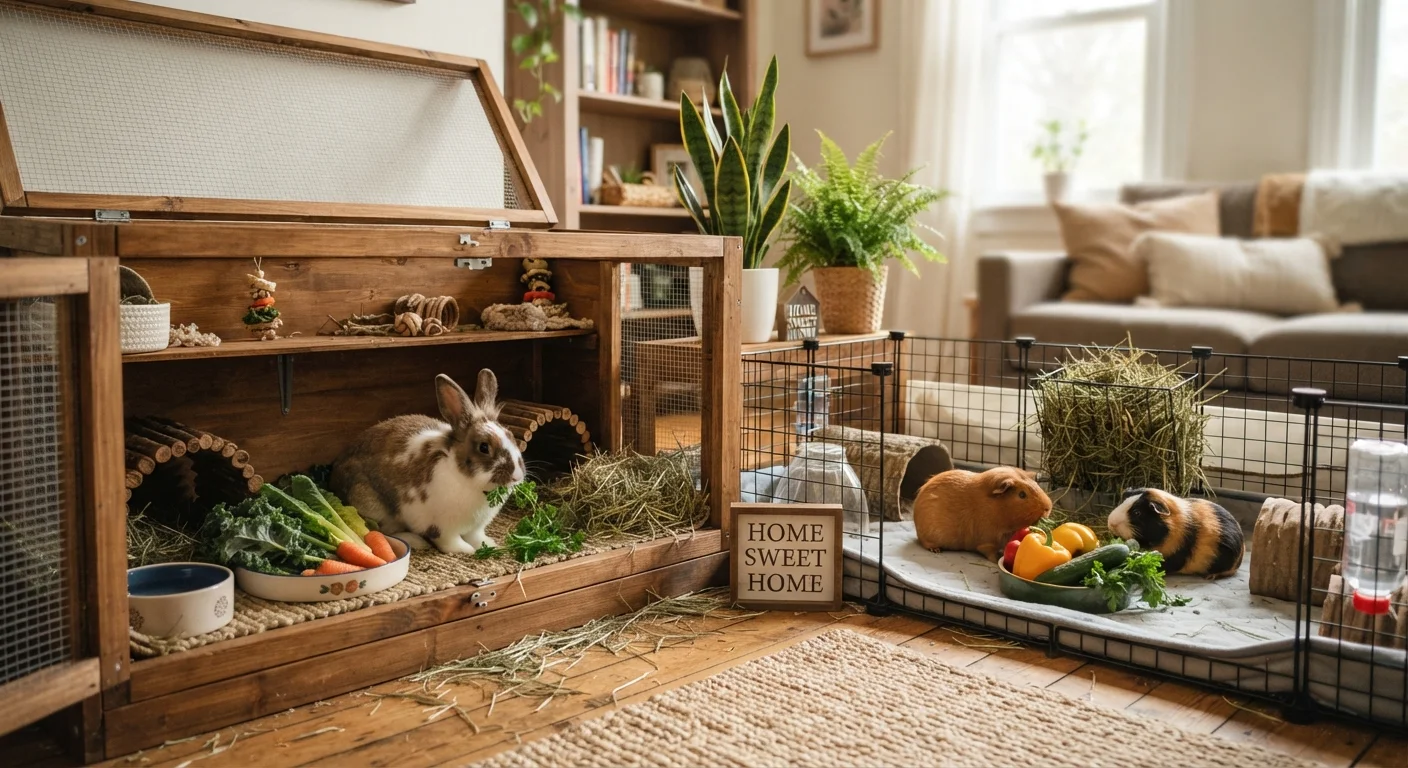
Key Takeaways
Suitable for smaller living spaces
Most small pets can thrive in apartments or homes without yards when their enclosure and exercise needs are properly met. This makes them a practical option for urban and suburban households that could not accommodate a dog.
Lower baseline food costs than dogs or cats
Hay, fresh vegetables, pellets, and seed mixes generally cost less per week than commercial dog or cat food. However, this advantage narrows quickly when habitat supplies and vet care are factored in.
Quieter than most traditional pets
Rabbits and guinea pigs produce minimal noise, and even vocal birds are generally quieter than dogs. This makes small pets more compatible with shared living arrangements or noise-sensitive households.
Rich behavioral repertoire and observable personalities
Guinea pigs vocalize with a wide range of sounds and display clear social behaviors. Rabbits exhibit binkying, grooming rituals, and recognizable bonding behaviors. Pet birds are capable of complex interaction and, in some species, mimicry.
Can build a strong bond with consistent handling
Animals introduced to gentle, consistent handling from a young age - and given proper socialization - often become responsive companions. First-time guinea pig owners benefit especially from starting bonding routines early.
Specialist vet access is not always available
Not all areas have exotic animal veterinarians within a reasonable distance. Owners in rural regions may face long drives or limited options during emergencies, which can have serious consequences for animals that deteriorate quickly when ill.
Habitat cleaning is a daily, not weekly, task
Ammonia buildup from urine causes respiratory damage in small animals even when odor isn't obvious to humans. Spot cleaning must happen every day, with full cleans required multiple times per week for many species.
Social species suffer without companionship
Guinea pigs in particular are highly social and can experience chronic stress when housed alone. Meeting this need often means acquiring two animals, which doubles feeding, space, and care requirements.
Lifespan commitments are longer than expected
Rabbits commonly live 8-12 years under good care, and some parrot species live several decades. Owners who expected a short-term commitment may find themselves responsible for an animal far longer than planned.
Prey animal instincts complicate handling
Many small animals are prey species and are not instinctively comfortable being held or restrained. Mishandling causes significant stress and can lead to injury. Building trust takes time and patience that not all owners anticipate needing.
Dietary errors are a leading cause of illness
Incorrect diets - too many pellets, wrong vegetables, or vitamin deficiencies - cause chronic health problems in rabbits and guinea pigs. Understanding species-appropriate nutrition is non-negotiable, not optional.
Our Verdict
Small pets offer genuine companionship and are well-suited to a range of living situations, but they are not a shortcut to effortless pet ownership. The daily time investment, specialist vet needs, and habitat upkeep are often greater than new owners anticipate. Going in with accurate expectations is the single most important factor in a successful outcome for both owner and animal.
Best suited to owners who can commit to consistent daily routines, have access to an exotic animal veterinarian, and understand the specific social and dietary needs of their chosen species before bringing one home.
The Reality Behind 'Easy' Pet Ownership
Small pets - rabbits, guinea pigs, hamsters, parakeets, cockatiels - are frequently positioned as the practical alternative to dogs and cats. They're smaller, quieter, and often assumed to need less of everything. That assumption is one of the most common reasons these animals end up surrendered to shelters or living in substandard conditions.
The truth is that small pets have highly specific welfare needs that require consistent attention. A rabbit needs a minimum of several hours of free-roaming exercise daily. Guinea pigs are social animals that typically require the company of at least one other guinea pig to avoid stress-related illness. Pet birds demand mental stimulation, structured social interaction, and environments that prevent boredom and feather-destructive behavior. For a fuller picture of what these needs look like in practice, see why 'low-maintenance' is the wrong framing for small pets.
Understanding the actual daily commitment before acquiring any small pet is not just practical - it's an ethical responsibility.
Pros of Small Pet Ownership
There are genuine, meaningful advantages to sharing your home with a small animal. These benefits are real, but they come attached to the responsibilities outlined throughout this article.
Suitable for smaller living spaces
Most small pets can thrive in apartments or homes without yards when their enclosure and exercise needs are properly met. This makes them a practical option for urban and suburban households that could not accommodate a dog.
Lower baseline food costs than dogs or cats
Hay, fresh vegetables, pellets, and seed mixes generally cost less per week than commercial dog or cat food. However, this advantage narrows quickly when habitat supplies and vet care are factored in.
Quieter than most traditional pets
Rabbits and guinea pigs produce minimal noise, and even vocal birds are generally quieter than dogs. This makes small pets more compatible with shared living arrangements or noise-sensitive households.
Rich behavioral repertoire and observable personalities
Guinea pigs vocalize with a wide range of sounds and display clear social behaviors. Rabbits exhibit binkying, grooming rituals, and recognizable bonding behaviors. Pet birds are capable of complex interaction and, in some species, mimicry.
Can build a strong bond with consistent handling
Animals introduced to gentle, consistent handling from a young age - and given proper socialization - often become responsive companions. First-time guinea pig owners benefit especially from starting bonding routines early.
Cons and Common Underestimations
Many owners report being surprised by the demands of small pet care - not because the animals are difficult by nature, but because expectations were set inaccurately. These are the areas where owners most frequently find themselves underprepared.
Specialist vet access is not always available
Not all areas have exotic animal veterinarians within a reasonable distance. Owners in rural regions may face long drives or limited options during emergencies, which can have serious consequences for animals that deteriorate quickly when ill.
Habitat cleaning is a daily, not weekly, task
Ammonia buildup from urine causes respiratory damage in small animals even when odor isn't obvious to humans. Spot cleaning must happen every day, with full cleans required multiple times per week for many species.
Social species suffer without companionship
Guinea pigs in particular are highly social and can experience chronic stress when housed alone. Meeting this need often means acquiring two animals, which doubles feeding, space, and care requirements.
Lifespan commitments are longer than expected
Rabbits commonly live 8-12 years under good care, and some parrot species live several decades. Owners who expected a short-term commitment may find themselves responsible for an animal far longer than planned.
Prey animal instincts complicate handling
Many small animals are prey species and are not instinctively comfortable being held or restrained. Mishandling causes significant stress and can lead to injury. Building trust takes time and patience that not all owners anticipate needing.
Dietary errors are a leading cause of illness
Incorrect diets - too many pellets, wrong vegetables, or vitamin deficiencies - cause chronic health problems in rabbits and guinea pigs. Understanding species-appropriate nutrition is non-negotiable, not optional.
First-Time Owner? Start With Research
Species differences matter enormously. A hamster's needs differ significantly from a rabbit's, and a cockatiel's care requirements are nothing like a parakeet's. Before choosing a species, research its social needs, lifespan, diet, and typical health concerns thoroughly. Our guinea pig care guide for first-time owners is a useful model for the depth of preparation that responsible small pet ownership requires.
Daily and Weekly Care: What the Schedule Actually Looks Like
For most small pets, daily tasks include fresh food and water, spot-cleaning of bedding or cage substrate, and active social time or exercise. For rabbits, this means supervised free-roaming in a safe space. For guinea pigs, it means handling and interaction - ideally with a bonded companion present as well. Nutrition across small animal species varies significantly, and diet errors are among the most common causes of preventable illness.
Weekly tasks typically include full habitat cleaning, health checks (weight, coat or feather condition, tooth length for rabbits and guinea pigs), and restocking of enrichment items. Birds require daily cage tray cleaning and may need weekly full cage disinfection depending on species and setup.
For anyone weighing species options, a structured comparison is available in our rabbit vs. guinea pig guide, which covers space requirements, lifespan, and vet costs side by side.
8-12 years
Average lifespan of a well-cared-for rabbit
Veterinary and welfare organizations consistently cite this range, underscoring rabbits as a long-term commitment often underestimated by new owners.
~1 hour
Minimum daily hands-on care time for most small pets
Animal welfare guidance from organizations such as the RSPCA and House Rabbit Society recommends at minimum this level of daily interaction, exercise, and habitat maintenance combined.
3rd most popular
Ranking of small animals among U.S. pet categories
According to the American Pet Products Association, small animals consistently rank among the most commonly owned pets in American households, following dogs and cats.
Veterinary Care and Health Monitoring
This is the area where small pet ownership most consistently diverges from owner expectations. Rabbits, guinea pigs, chinchillas, and pet birds are classified as exotic animals by most veterinary practices. This means they require a vet with specialized training - and those appointments typically cost more than standard dog or cat visits.
Rabbits are prone to gastrointestinal stasis, dental disease, and respiratory infections. Guinea pigs require vitamin C in their diet or they develop scurvy. Birds can mask illness until they are severely compromised, which means an owner needs to know their animal's normal baseline behavior well enough to detect subtle changes early. Routine wellness exams - not just sick visits - are a standard part of responsible small pet ownership.
Many widely believed assumptions about small animal health are simply wrong. The myths vets most wish owners would stop believing include the idea that these animals rarely need professional medical care.
This article provides general educational information about small pet care. It is not a substitute for professional veterinary advice. Always consult a qualified exotic animal veterinarian for guidance specific to your pet's health and needs.