

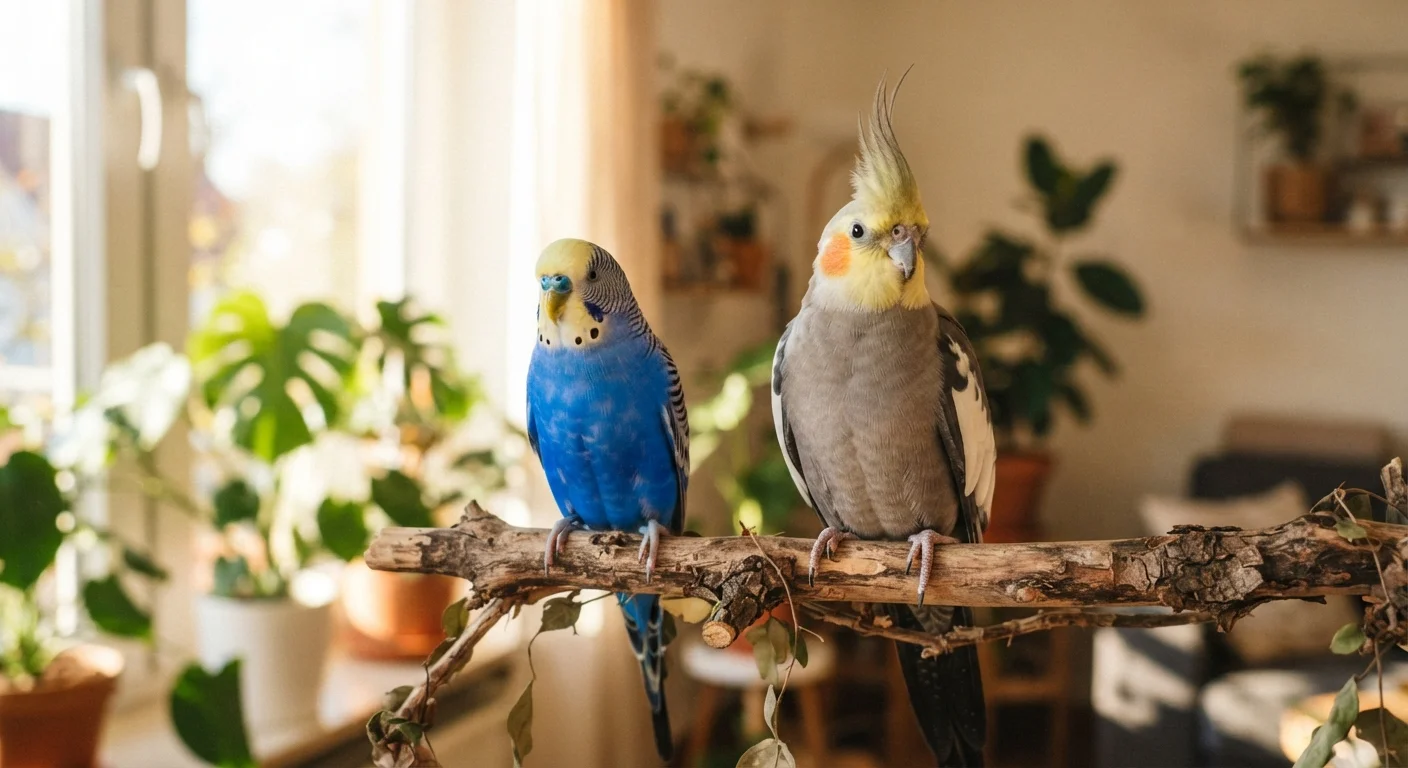
Key Takeaways
Option A
Parakeet (Budgerigar)
The compact, lively, budget-friendly starter bird.
Best for: First-time bird owners or households with limited space who want an interactive, entertaining companion.
Option B
Cockatiel
The affectionate, social bird with a gentle personality.
Best for: Owners who can commit to daily hands-on interaction and want a bird that bonds deeply with its people.
If you're a first-time bird owner with limited experience
Parakeet (Budgerigar)
Parakeets are more forgiving of beginner mistakes, require less daily hands-on time, and their smaller size makes housing and feeding more manageable.
If you want a bird that actively seeks affection and cuddling
Cockatiel
Cockatiels are well known for seeking out physical contact, enjoying head scratches, and forming strong attachments to individual family members.
If noise level is a concern in an apartment or shared living space
Parakeet (Budgerigar)
Parakeets produce cheerful chatter rather than loud calls, making them a more considerate choice for noise-sensitive environments.
If you want a long-term companion bird and can commit daily interaction time
Cockatiel
With a lifespan of up to 20 years, cockatiels offer a deeper, longer bond - rewarding for owners prepared for that commitment.
If your household includes young children or a busy, unpredictable schedule
Parakeet (Budgerigar)
Parakeets are more adaptable to varied household energy levels and are less prone to stress-related feather issues than the more sensitive cockatiel.
Temperament and Social Needs: Who Bonds With Whom?
Both parakeets and cockatiels are social birds that thrive with regular human interaction, but the nature of that bond differs meaningfully. Cockatiels - native to the arid interior of Australia - are known for their gentle, openly affectionate disposition. They frequently seek out their owners, enjoy being gently stroked on the head and neck, and can become visibly distressed when left alone for extended periods. Many cockatiel owners describe the relationship as comparable to a small, feathered dog in terms of emotional attentiveness.
Parakeets (also called budgerigars or budgies) are equally social but express that sociability differently. They are lively, curious, and entertaining - often more interested in playing and vocalizing than in sitting on a shoulder for long stretches. They can absolutely become hand-tame and enjoy human company, but they're generally less demanding about it. A parakeet kept with a companion bird can self-entertain in ways a lone cockatiel often cannot.
If your household is home most of the day and craves a bird that genuinely connects with people, a cockatiel rewards that investment. If schedules are irregular or you're newer to birds, a parakeet's more independent streak is actually an asset.
Noise, Space, and Daily Care Demands
| Criterion | Parakeet (Budgerigar) | Cockatiel |
|---|---|---|
| Average lifespan | 7-12 years | 15-20 years |
| Typical adult size | 7 inches, ~1 oz | 12-13 inches, ~3 oz |
| Noise level | Low-moderate chatter | Moderate whistling and calls |
| Affection style | Playful, less cuddly | Openly affectionate, seeks contact |
| Minimum cage size | 18" W × 18" D × 18" H | 24" W × 24" D × 30" H |
| Ease of taming | Moderate with patience | Generally receptive to handling |
| Best suited for | Beginners, smaller spaces | Experienced owners, bonding focus |
Cockatiels are vocal birds. Males in particular whistle, mimic tunes, and call throughout the day. The volume is moderate - not macaw-level - but persistent enough to matter in apartments or noise-sensitive households. Parakeets chatter almost constantly too, but at a softer, higher pitch that most people find easier to tune out.
Cage size requirements also differ. Cockatiels need a larger enclosure - generally at least 24 inches wide by 24 inches deep by 30 inches tall as a workable minimum - whereas a parakeet can be comfortably housed in a smaller cage, provided it still allows full wing extension and flight between perches. Both species benefit enormously from supervised out-of-cage time daily. For a deeper look at optimizing the physical environment for either bird, see our guide to setting up a safe, stimulating bird habitat.
Diet for both centers on a balanced pellet base supplemented with fresh vegetables and limited seed. Seed-only diets are associated with nutritional deficiencies in both species; consult an avian veterinarian for guidance specific to your bird's age and health status.
Lifespan, Health Considerations, and Long-Term Commitment
Avian Veterinary Care: Plan Before You Bring a Bird Home
Unlike dogs and cats, avian medicine is a specialized field, and not every veterinary clinic is equipped to treat birds. Before adopting either a parakeet or cockatiel, locate an avian-certified or experienced bird vet in your area. Early wellness exams help establish a baseline for your bird's health and catch issues before they become serious.
Parakeets typically live 7-12 years with good care, while cockatiels routinely reach 15-20 years in a well-managed home environment. That gap is not trivial - choosing a cockatiel is closer to a decade-longer commitment than choosing a parakeet. Prospective owners should factor this into decisions around travel, living situation changes, and life stage.
Both species are susceptible to respiratory illness, and both can develop feather-destructive behaviors when under-stimulated or stressed. Cockatiels are particularly prone to night frights - sudden panicked thrashing in the dark - and benefit from a low-level night light. Parakeets are more susceptible to certain tumors as they age, particularly budgerigar-specific conditions affecting the kidneys and reproductive system.
Regular check-ups with an avian-specialist veterinarian are strongly recommended for either bird. General-practice vets may have limited experience with avian species; seek out a vet with specific bird expertise where possible. If you're weighing other small companion animals alongside birds, our rabbit vs. guinea pig comparison offers a useful parallel framework for thinking through space, care, and lifespan trade-offs.
This article provides general educational information about pet bird care and is not a substitute for professional veterinary advice. Always consult a qualified avian veterinarian for guidance specific to your bird's health needs.