

Key Takeaways
Start here
Setting Up the Right Habitat
Next
What Guinea Pigs Should Eat
Then
Social Needs and Handling
When you're ready
Health Basics and Early Warning Signs
Ongoing
Daily and Weekly Care Routines
Setting Up the Right Habitat
Before your guinea pig arrives, its enclosure should already be clean, stocked, and ready. The most common beginner mistake is underestimating how much space these animals need. A single guinea pig - and guinea pigs should rarely be kept alone - requires a minimum of 7.5 square feet of usable floor space. A pair needs at least 10 square feet. C&C (cubes and coroplast) modular enclosures have become a popular option because they're affordable and genuinely spacious.
Avoid wire-bottom cages entirely. The mesh puts painful pressure on guinea pig feet and can cause a condition called bumblefoot (pododermatitis), a bacterial infection of the foot pad. Solid floors lined with soft, absorbent bedding - such as paper-based or fleece bedding - are the standard. Cedar and pine shavings carry aromatic oils that can irritate the respiratory tract and should not be used.
Place the enclosure in a room with stable temperatures between roughly 65°F and 75°F, away from direct sunlight, drafts, and loud sound systems. Guinea pigs are sensitive to heat stress and can develop heatstroke above 80°F. Keep them away from spaces where they'll be startled repeatedly - a calm environment supports better health and easier socialization.
Timothy hay
A dried grass that forms the foundation of a guinea pig's diet, supporting digestion and natural tooth wear. It should be available at all times.
Vitamin C
An essential nutrient guinea pigs cannot produce on their own. Without enough from food, they develop scurvy - a painful deficiency disease.
Pododermatitis
Commonly called bumblefoot, this is a bacterial infection of the foot pads caused by standing on wire-mesh floors or living in unsanitary conditions.
Malocclusion
A dental condition where a guinea pig's teeth do not align correctly, making it difficult to chew and leading to weight loss if untreated.
Exotic veterinarian
A vet with specialized training in animals beyond dogs and cats, including guinea pigs and other small mammals. Their expertise is important for accurate diagnosis and treatment.
C&C enclosure
A modular cage system built from wire grid panels and a coroplast (corrugated plastic) base - a popular choice for guinea pig housing because it offers generous space at low cost.
What Guinea Pigs Should Eat
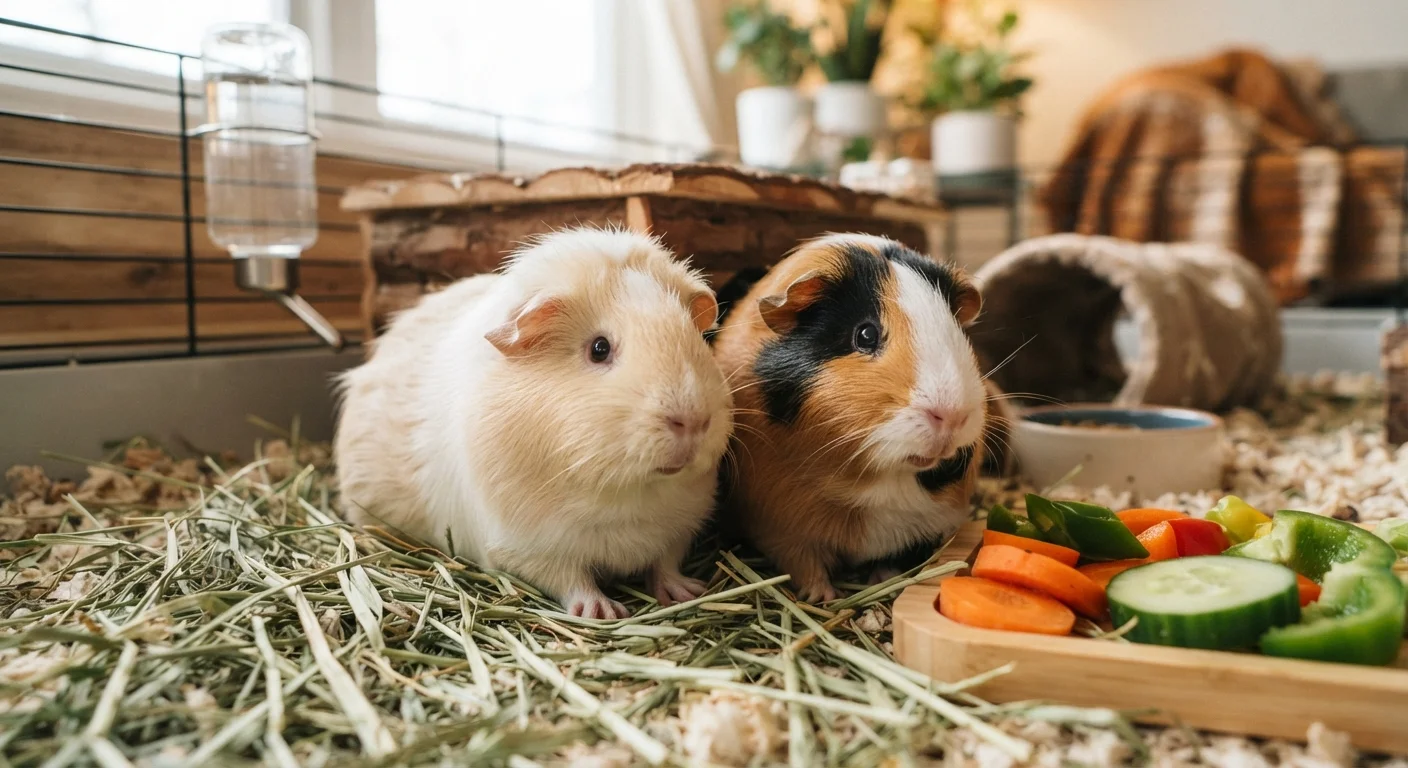
Diet is one of the areas where guinea pig care diverges sharply from common assumptions. Unlimited, fresh timothy hay should make up 70-80% of their intake every single day. Hay supports healthy digestion and keeps their continuously-growing teeth worn down properly. Running out of hay - even briefly - can cause serious gastrointestinal problems.
Fresh leafy greens are the next essential component. Romaine lettuce, green leaf lettuce, cilantro, and bell pepper (particularly red and yellow, which are higher in vitamin C) are reliable daily choices. Unlike most mammals, guinea pigs cannot synthesize their own vitamin C. Deficiency leads to scurvy, a painful and entirely preventable condition. Providing fresh vegetables rich in vitamin C daily is the primary way to prevent it - drops added to water bottles are unreliable because vitamin C degrades quickly in light and water.
A small amount of plain, pellet-based guinea pig food (not seed mixes) can supplement the diet, but pellets should not be the centerpiece of the meal. Treats high in sugar - including most commercial treat sticks - should be offered only rarely or avoided entirely. If you're weighing whether a guinea pig or another small animal is the right fit, our rabbit vs. guinea pig comparison covers diet differences in detail.
Test Vegetables Before Buying in Bulk
Introduce new vegetables one at a time and in small amounts to watch for digestive upset or loose stools. Some guinea pigs are more sensitive than others to high-water-content produce like cucumber or tomatoes. Once you know which vegetables your guinea pig tolerates well, you can build a reliable weekly rotation.
Social Needs and Handling
Guinea pigs are prey animals, which means their instinct when uncertain or threatened is to freeze or flee. Building trust with a new guinea pig takes patience and consistency. Start by sitting near the enclosure and speaking softly. Let the animal approach your hand before attempting to pick it up. Forcing early handling extends the adjustment period rather than shortening it.
When lifting a guinea pig, always support its full body weight - one hand under the chest, one supporting the hindquarters. Never dangle them by their body or hold them high off the ground. Drops cause serious injuries. Having children sit on the floor before being handed a guinea pig is a practical safety rule that should be non-negotiable.
As noted above, guinea pigs do better in pairs. A single guinea pig may appear active, but the behavioral and physiological effects of social isolation in this species are well-documented among exotic vets. When you're ready to add a companion, the introduction process matters significantly - our guide on introducing a second guinea pig explains how to do it without causing stress or injury.
Health Basics and Early Warning Signs
Guinea pigs are stoic animals. They instinctively mask signs of illness - a survival trait that makes early detection genuinely difficult for new owners. The most useful habit you can build is weighing your guinea pig weekly. A loss of even 2-3 ounces over one to two weeks often signals a problem before any visible symptoms appear. A simple kitchen scale works well for this.
Common health concerns in guinea pigs include respiratory infections, dental disease (malocclusion), urinary stones, and skin conditions such as ringworm or mite infestations. Scurvy from vitamin C deficiency is also seen regularly in guinea pigs fed an inadequate diet. Signs to watch for include loss of appetite, lethargy, hunched posture, runny eyes or nose, limping, or abnormal droppings.
Locate an exotic or small-mammal veterinarian before you bring your guinea pig home, not after an emergency arises. Standard small-animal practices focused on dogs and cats may have limited experience with guinea pig anatomy and physiology. An annual wellness exam is a reasonable baseline; your vet may recommend more frequent visits for older animals.
Do Not Delay Veterinary Care
Guinea pigs can decline rapidly once illness progresses - what appears minor one day may become critical within 24-48 hours. If your guinea pig stops eating, loses noticeable weight, or becomes lethargic, contact your exotic vet the same day rather than waiting to see if things improve. Early intervention significantly improves outcomes for small animals.
Daily and Weekly Care Routines
Consistent, predictable care is one of the most valuable things you can give a guinea pig. Daily tasks include refreshing hay, providing fresh vegetables, checking and refilling the water bottle or bowl, and doing a visual health check. A brief scan each day - eyes clear, coat smooth, moving normally, eating - helps you catch changes early.
Spot-cleaning the enclosure (removing soiled bedding and droppings from high-use corners) should happen daily or every other day. A full bedding change and enclosure scrub-down is typically needed once a week, though this varies with enclosure size and the number of guinea pigs. Fleece bedding systems require more frequent washing but produce less waste over time.
Nails should be trimmed roughly every four to six weeks - overgrown nails curl and cause discomfort. Many owners learn to do this at home with small animal nail clippers; others prefer to have it done at a vet visit. Long-haired breeds such as Peruvians and Silkies also need regular brushing and occasional coat trimming to prevent matting.
For a realistic sense of how much time guinea pig care actually takes week to week, our small pet ownership commitment guide offers an honest overview that applies directly to guinea pig owners. If you've ever considered how guinea pig care compares to another common first pet, you may also find our cat ownership guide a useful contrast.
This article is for general informational purposes only and does not constitute veterinary advice. Always consult a qualified exotic or small-animal veterinarian for guidance specific to your pet's health and needs.