

Key Takeaways
Our Verdict
No single grooming routine works for every dog. Short coats are the most forgiving, while long and double coats demand consistent, time-intensive care. Curly coats sit in their own category, requiring professional clipping that owners cannot skip. Understanding your dog's specific coat structure is the first step toward a routine that keeps them comfortable year-round.
| Best for | Recommended |
|---|---|
| First-time dog owners or those with limited grooming time | Short coat routine |
| Owners comfortable with daily brushing and seasonal blowouts | Double coat routine |
| Owners willing to budget for regular professional grooming | Curly coat routine |
| Experienced owners who enjoy daily hands-on dog care | Long coat routine |
Why Coat Type Determines Everything
A Labrador Retriever and a Poodle both need grooming - but treating them the same way would leave one under-maintained and the other in serious discomfort. A dog's coat structure dictates how oils distribute across the skin, how quickly tangles form, and how much dead hair accumulates. Ignoring those differences is one of the most common grooming mistakes dog owners make.
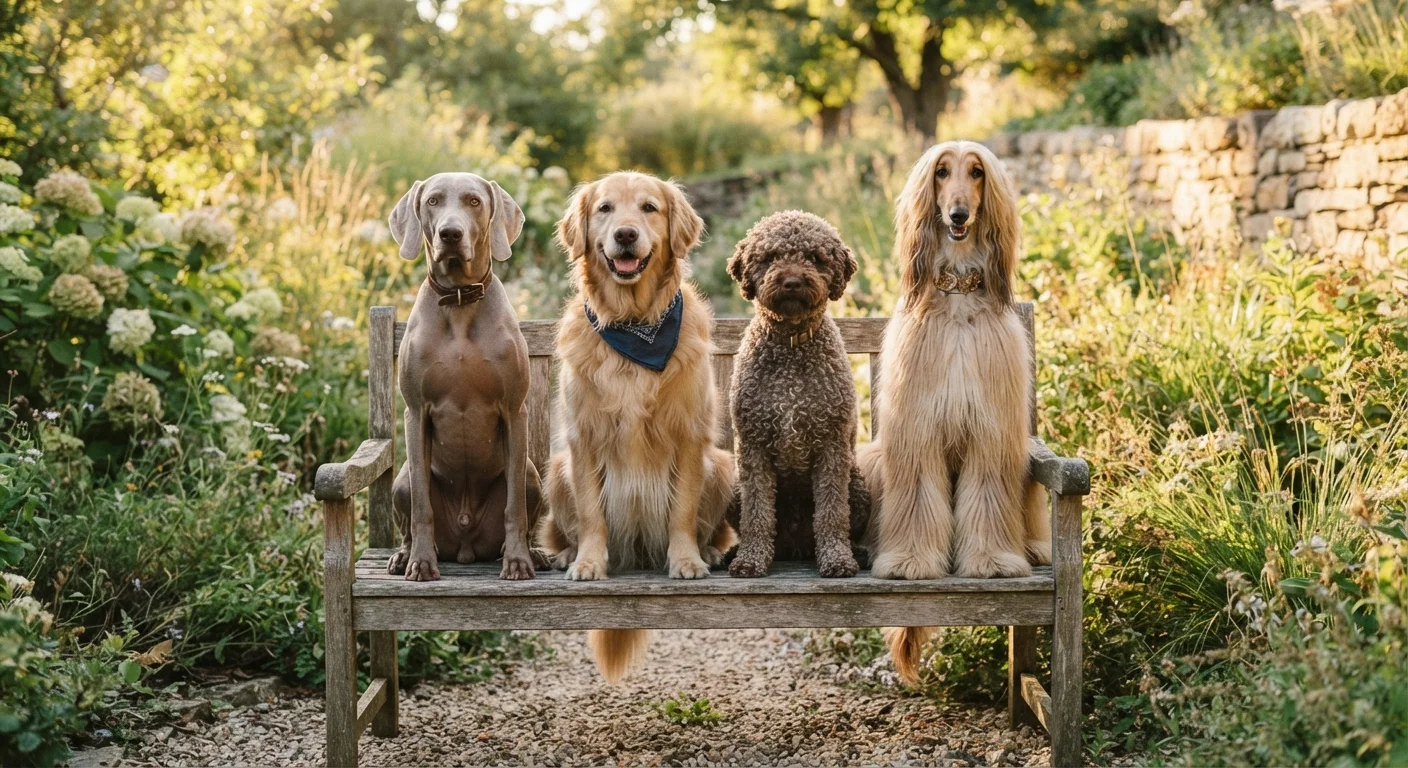
Veterinary dermatologists generally categorize dog coats into four broad types: short, double, curly, and long. Each has distinct maintenance needs around brushing frequency, bathing schedules, and shedding management. This guide breaks down what each type actually requires - and why.
If you share your home with a cat, the same principle applies: grooming routines must match the animal's coat rather than the owner's convenience.
| Short Coat | Double Coat | Curly Coat | Long Coat | |
|---|---|---|---|---|
| Brushing frequency | 1-2x per week | 3-5x per week | Daily (longer styles) | Daily |
| Bathing schedule | Every 4-6 weeks | Every 4-8 weeks | Every 4-6 weeks | Every 3-4 weeks |
| Matting risk | Very low | Moderate (undercoat) | High without brushing | High at friction points |
| Shedding level | Moderate, seasonal | Heavy, seasonal blowouts | Minimal external shedding | Low to moderate |
| Professional grooming need | Occasional | Occasional | Every 6-8 weeks | Every 6-8 weeks |
| Key tool | Rubber grooming mitt | Undercoat rake | Slicker brush + comb | Pin brush + metal comb |
| Time investment | Low | Moderate to high | High | High |
Short Coats: Low Maintenance, Not No Maintenance
Breeds like Beagles, Boxers, and Dachshunds have short, smooth coats that lie flat against the skin. These coats shed - sometimes more than owners expect - but they resist matting and dry quickly. A rubber grooming mitt or bristle brush used once or twice per week removes loose hair and distributes skin oils effectively.
Bathing every four to six weeks is sufficient for most short-coated dogs unless they've rolled in something. Over-bathing strips the coat's natural oils and can cause dry, flaky skin. Between baths, a damp cloth wipe-down handles everyday dirt.
Build the Habit Before It's Needed
Introducing grooming tools to puppies - even before their adult coat comes in - builds tolerance for handling that pays off throughout their life. Brief, positive sessions with treats and calm praise condition dogs to accept brushing, ear checks, and paw handling without resistance. A dog that trusts the grooming process is far easier to care for safely as an adult.
Shedding spikes seasonally, particularly in spring and fall. A rubber deshedding tool used weekly during these periods dramatically reduces hair accumulation on furniture and clothing.
Double Coats: Managing the Undercoat Is the Real Job
Double-coated breeds - German Shepherds, Golden Retrievers, Huskies, Corgis - have a dense, insulating undercoat beneath a weather-resistant topcoat. This structure regulates body temperature in both heat and cold, which is why shaving a double coat is widely discouraged by veterinarians and professional groomers: it disrupts thermal regulation and can cause coat texture changes.
These coats require brushing three to five times per week, escalating to daily during seasonal shedding, often called a "coat blow." An undercoat rake or slicker brush penetrates past the topcoat to remove dead undercoat before it compacts into mats. During heavy shedding seasons, a high-velocity dryer used before brushing loosens significantly more dead coat than brushing alone.
Bathing every four to eight weeks works well, though thorough drying is critical - trapped moisture in the undercoat can lead to hot spots, a painful localized skin condition.
Curly Coats: Professional Grooming Is Non-Negotiable
Poodles, Bichon Frises, Portuguese Water Dogs, and Labradoodles carry curly or wavy coats that grow continuously rather than shedding in the traditional sense. This means less hair on the floor - but significantly more work on the dog. Curls trap shed hair within the coat, and without consistent intervention, it compacts into dense mats that can pull painfully on the skin and harbor moisture or debris.
Daily brushing is the realistic standard for curly-coated dogs kept in a longer style. Many owners opt for a shorter "puppy clip" that requires brushing every two to three days instead. Professional grooming appointments every six to eight weeks are generally necessary regardless of home brushing frequency - this is not an optional expense for this coat type.
Understanding your dog's comfort signals during grooming is important. Learning to read your dog's body language helps you identify when handling is causing stress, which is particularly relevant during the extended sessions curly coats require.
Long Coats: Consistency Prevents Compounding Problems
Afghan Hounds, Maltese, Shih Tzus, and Yorkshire Terriers have long, flowing coats that are visually striking but demanding to maintain. Unlike double coats, long single-layer coats can mat at friction points - behind the ears, under the collar, in the armpits, and around the hindquarters - within days of inconsistent brushing.
Daily brushing is standard for long-coated dogs kept in full coat. A pin brush followed by a metal comb is the most effective combination: the pin brush detangles the outer layer while the comb confirms that the brush reached all the way to the skin. Skipping days creates tangles that compound quickly, and attempting to brush out a severe mat can be painful enough to damage your dog's trust in the grooming process.
Bathing every three to four weeks with a conditioning rinse helps maintain coat pliability and reduces static, which worsens tangling. Many owners of long-coated breeds choose a shorter "maintenance trim" every six to eight weeks to make daily care more manageable without abandoning the breed's characteristic coat.
This article provides general educational information about dog grooming and is not a substitute for advice from a licensed veterinarian or certified professional groomer familiar with your individual dog's needs.