

Key Takeaways
Feline Mental Health
A cat's mental health refers to its overall psychological well-being - its ability to express natural behaviors, manage stress, and engage meaningfully with its environment. Cats have complex cognitive and emotional needs that go well beyond food, water, and shelter. When those needs go unmet, cats can develop behavioral problems, chronic stress, and even physical illness.
Veterinary behaviorists use the term 'behavioral welfare' to describe the degree to which an animal can perform species-typical behaviors. For cats, this includes predatory play, exploration, social interaction on their own terms, and control over their daily routine.
Why Cat Mental Health Is Often Overlooked
Cats have a reputation for being self-sufficient - an image that works against them. Because they don't vocalize distress the way dogs do, and because they're skilled at masking discomfort, owners often miss early signs that something is wrong. A cat sleeping in the same spot for hours, avoiding play, or grooming excessively may not simply be being "a cat" - it may be struggling.
Wild and feral cats spend a significant portion of their day engaged in predatory behavior, territorial exploration, and social calculation. Domestic cats share that same wiring. When an indoor environment fails to engage those drives, the result isn't contentment - it's understimulation, which veterinary behaviorists increasingly recognize as a genuine welfare concern.
Understanding what cats actually need starts with accepting that they are not small, low-maintenance dogs. Their needs are specific, instinct-driven, and often misread. See our companion piece on how cats form bonds with people for more on interpreting feline behavior accurately.
~60%
Indoor cats showing signs of inadequate enrichment
Veterinary behavior researchers estimate a substantial portion of indoor-only cats display at least one stress-related behavioral problem linked to environmental deficits.
2-3x
Daily interactive play sessions recommended
Feline welfare guidelines from veterinary behavior organizations generally recommend two to three dedicated play sessions per day to meet predatory behavioral needs.
10-15 min
Ideal length per play session
Sessions mimicking a full hunt cycle - stalk, chase, catch, and rest - in this range are considered sufficient for most adult cats by veterinary behaviorists.
The Core Pillars of Feline Environmental Enrichment
Environmental enrichment is the deliberate design of a cat's living space to support its physical and psychological needs. It isn't about buying expensive toys - it's about structuring the environment so a cat can express natural behaviors safely.
Predatory Play
Play that mimics hunting is the single most impactful form of enrichment for most cats. Wand toys, feather attachments, and small moving objects allow cats to stalk, chase, and pounce - completing a behavioral sequence that brings genuine psychological satisfaction. The key is interactive sessions with a person guiding the toy, not just leaving items on the floor.
Vertical Space and Territory
Cats are climbers by instinct. Access to elevated perches, cat trees, or cleared shelf space gives them vantage points to survey their environment - which is directly calming, not just physically engaging. Vertical real estate is especially important in multi-cat homes, where height can reduce social tension. Our guide to setting up a cat-friendly home covers this room by room.
Hiding Spots and Safe Retreat
The ability to withdraw from a situation - and do so safely - is a fundamental stress-regulation tool for cats. A cat that can't hide when overwhelmed is a cat that stays in a constant low-grade state of alert. Boxes, covered beds, and quiet corners all serve this function.
Sensory Stimulation
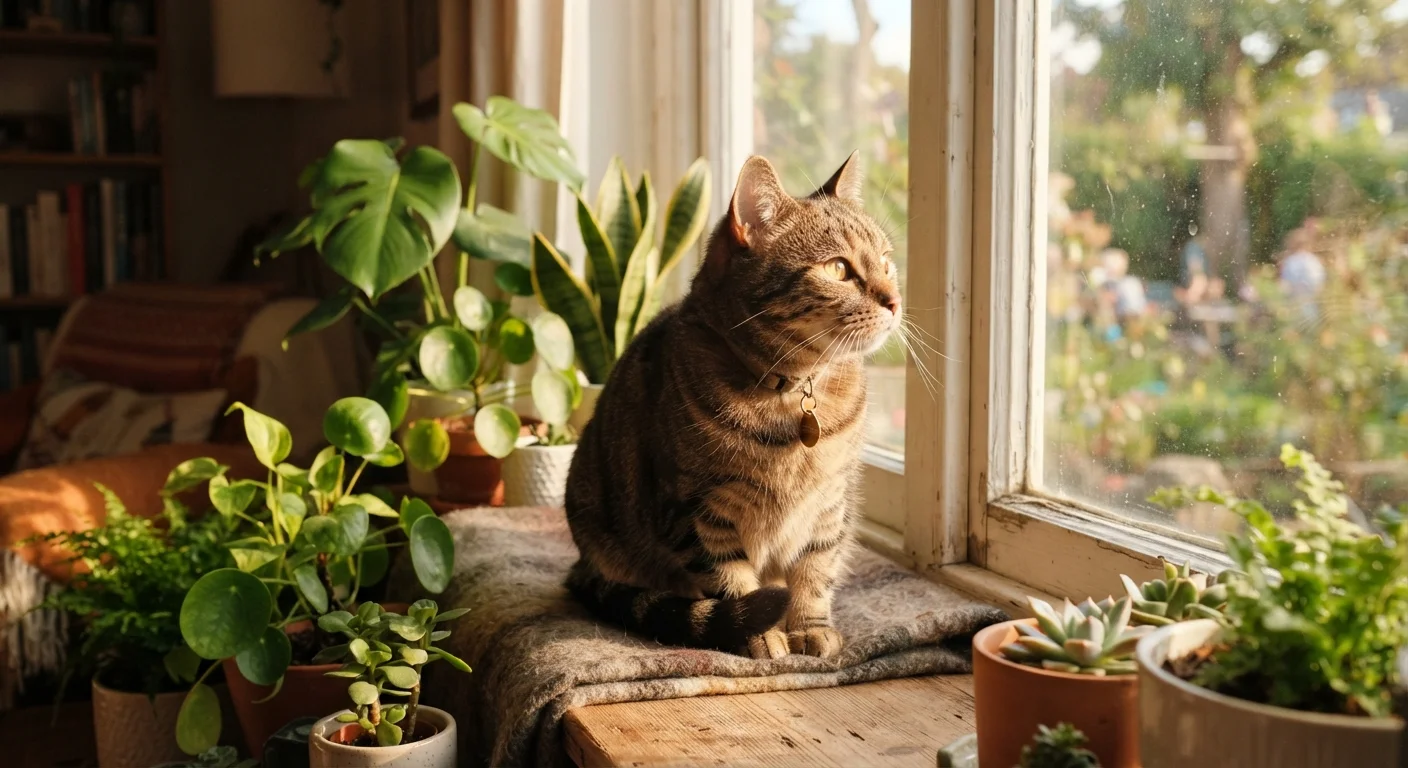
Window access for bird-watching, rotating toy types, and occasional novel scents (such as catnip or silver vine, which affect cats differently) engage the brain without overwhelming it. Predictability in routine combined with novelty in stimulus is a useful framework.
“Enrichment is not a luxury for cats - it is a medical necessity. The behavioral consequences of an impoverished environment are just as real as the consequences of an improper diet.”
— Tony Buffington, Veterinary internist and researcher specializing in feline stress and environmental health, The Ohio State University
Behavioral Signs That Your Cat Needs More Enrichment
Because cats don't communicate distress directly, behavioral changes are often the clearest signal. Watch for patterns rather than isolated incidents.
It's worth noting that some of these behaviors - particularly over-grooming, changes in litter box use, or sudden aggression - can also indicate medical problems. Always consult a veterinarian before attributing behavioral changes purely to environmental causes. Our article on signs your cat may be in pain covers the overlap between behavioral and physical symptoms in more detail.
The Role of Routine and Autonomy
Cats are creatures of pattern. A predictable daily schedule - consistent feeding times, regular play sessions, stable sleeping spots - provides a psychological scaffold that reduces ambient anxiety. Disruptions like moving, new household members, or schedule changes can have measurable effects on feline stress levels.
Equally important is autonomy: the cat's ability to choose when to engage and when to retreat. Forced handling, interrupting sleep, or blocking access to preferred spaces undermines a cat's sense of control over its environment - which is a significant source of chronic low-level stress. Enrichment should invite participation, not demand it.
For owners weighing whether outdoor access might help address stimulation deficits, indoor versus outdoor cat trade-offs is a balanced starting point. Outdoor enrichment carries real risks that must be weighed carefully against the behavioral benefits.
This article is for general informational purposes only and does not constitute veterinary advice. Always consult a licensed veterinarian if you have concerns about your cat's health or behavior.