

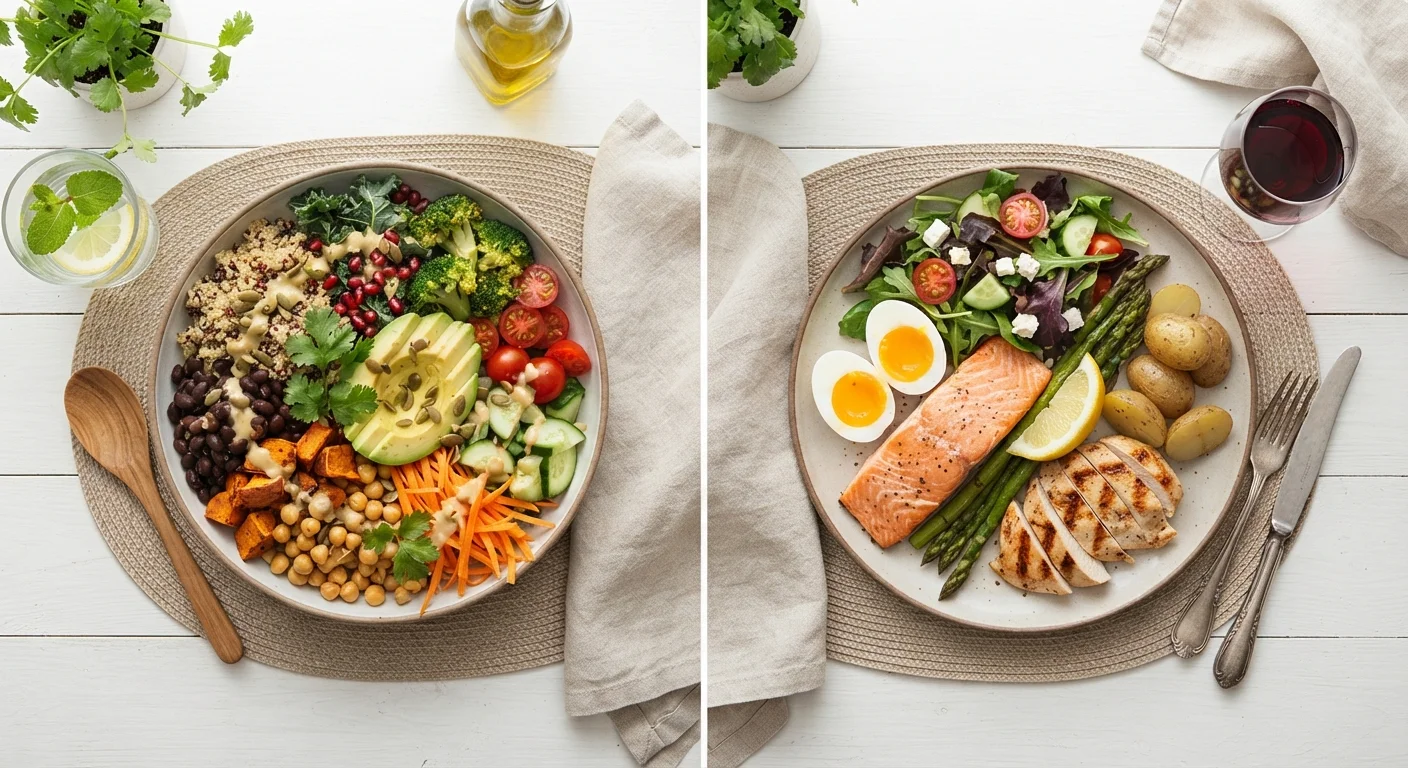
Key Takeaways
Option A
Plant-Based Diet
The predominantly or exclusively whole-food, plant-centered approach.
Best for: People seeking to reduce chronic disease risk, lower environmental impact, or eliminate animal products from their eating pattern.
Option B
Omnivore Diet
The flexible, food-diverse approach that includes both plant and animal foods.
Best for: People who want broad dietary variety, easier access to complete proteins, and flexibility across different cultural food traditions.
If you want to actively reduce cardiovascular risk through diet
Plant-Based Diet
Consistent observational evidence links plant-centered eating with lower LDL cholesterol and reduced cardiovascular disease incidence. High fiber and phytonutrient intake are likely contributors.
If you need dietary flexibility and straightforward nutrient completeness
Omnivore Diet
Including animal foods makes it easier to meet requirements for vitamin B12, heme iron, complete proteins, and long-chain omega-3 fatty acids without extensive planning.
If you have specific medical conditions or nutrient absorption concerns
Omnivore Diet
Certain conditions - including some GI disorders or increased iron needs - may make obtaining sufficient nutrients from plants alone more challenging. Always consult a registered dietitian.
If environmental sustainability is a primary concern alongside health
Plant-Based Diet
Plant-centered diets generally carry a lower environmental footprint. Health benefits and reduced resource use can align well for motivated individuals.
If you want a middle path supported by robust long-term evidence
Omnivore Diet
Patterns like the Mediterranean diet - an omnivore approach heavy in plants, fish, and legumes - have some of the strongest long-term evidence for health outcomes of any eating style.
What the Evidence Actually Compares
Most large-scale research on diet and health relies on observational studies - cohort studies tracking thousands of people over years. These studies consistently show associations between plant-based eating patterns and lower rates of heart disease, type 2 diabetes, hypertension, and certain cancers. However, observational data cannot prove cause and effect. Plant-based eaters often differ from omnivores in exercise habits, smoking rates, and health consciousness, which complicates direct comparisons.
Randomized controlled trials (RCTs) - the gold standard - are harder to conduct around whole dietary patterns, but short-term trials do show that shifting toward plant-centered eating tends to lower LDL cholesterol, reduce blood pressure, and improve markers of insulin sensitivity. Omnivore diets that emphasize whole foods, fish, and vegetables (such as the Mediterranean pattern) show similarly strong outcomes in long-term trial data. For a broader look at how these structured eating patterns compare, see our overview of widely studied diet approaches.
| Criterion | Plant-Based Diet | Omnivore Diet |
|---|---|---|
| Cardiovascular risk markers | Often lower LDL, blood pressure | Variable; depends on food choices |
| Protein completeness | Requires combining sources | Easier with animal foods |
| Vitamin B12 | Supplementation typically needed | Naturally obtained from diet |
| Fiber intake | Generally higher | Varies widely |
| Dietary flexibility | More restrictive | Highly flexible |
| Saturated fat intake | Typically lower | Depends on animal food choices |
| Long-term RCT evidence | Limited but promising | Stronger for whole-food patterns |
Nutritional Gaps and Strengths on Each Side
No eating pattern is nutritionally complete by default - both require attention to food quality. Plant-based eaters face documented risks of deficiency in vitamin B12 (found almost exclusively in animal foods), heme iron, long-chain omega-3 fatty acids (EPA and DHA), zinc, iodine, and calcium. Supplementation or fortified foods are often necessary, particularly for vitamin B12. This is not a minor caveat - B12 deficiency can cause irreversible neurological damage if left unaddressed.
Omnivore diets carry their own risk patterns. Diets heavy in processed meats and refined foods are associated with elevated cardiovascular and colorectal cancer risk, while high saturated fat intake remains a concern in some eating profiles. However, a well-constructed omnivore diet that prioritizes vegetables, legumes, whole grains, fish, and lean meats addresses most of these risks effectively.
~25%
Lower heart disease risk in plant-based eaters
A meta-analysis published in the Journal of the American Heart Association found vegetarian diets associated with roughly 25% lower ischemic heart disease risk compared to non-vegetarian diets.
92%
Of vegans insufficient in B12 without supplements
Research consistently shows the majority of long-term vegans have insufficient B12 levels without supplementation or fortified food consumption.
~10 g/day
Average U.S. fiber gap
Most American adults consume around 15-17 grams of fiber daily, well below the recommended 25-38 grams - a shortfall relevant to both plant-based and omnivore eaters.
Understanding where your protein comes from matters on both patterns. Our guide to protein sources across eating styles provides a practical breakdown of options, including plant-based and animal-based sources with general nutrient profiles.
Diet Quality Trumps Diet Category
Perhaps the most consistent finding across nutrition research is that food quality outweighs dietary category. A plant-based diet built around ultra-processed meat alternatives, refined grains, and sugary beverages offers few of the health advantages seen in whole-food plant-based research. Similarly, an omnivore diet anchored in fried foods and processed meats will not deliver the outcomes associated with a thoughtfully constructed mixed diet.
Practical meal construction matters significantly on both patterns. Building a balanced plate without calorie counting covers evidence-informed frameworks that apply regardless of whether your meals include animal products. And when navigating packaged foods on either diet, reading ingredient lists carefully is a critical skill - the nutrition panel rarely tells the whole story.
Special Populations: Seek Professional Guidance
Pregnant individuals, children, older adults, and those managing chronic conditions have distinct nutrient needs that make dietary transitions higher-stakes. For these groups, neither a plant-based nor an omnivore eating pattern should be adopted or significantly modified without guidance from a registered dietitian or physician. General advice in this article does not apply to individual medical circumstances.
This article provides general health information for educational purposes only and is not a substitute for personalized medical or nutritional advice. Consult a registered dietitian or qualified healthcare provider before making significant changes to your eating pattern, particularly if you have existing health conditions.