

Key Takeaways
Why Calorie Counting Isn't the Only Path to Balanced Eating
Calorie tracking apps have their place, but for many people, logging every bite creates stress and an adversarial relationship with food - without delivering lasting results. Research into dietary adherence consistently finds that sustainability matters more than precision. A framework you'll stick with for years is far more valuable than a perfect plan that collapses under the pressure of real life.
The good news: decades of nutrition science support simple, visual approaches to portioning that cover your nutritional bases without requiring math. These frameworks are used by registered dietitians and public health programs globally - and they're accessible regardless of cooking skill, food budget, or lifestyle.
For a deeper look at how different dietary patterns hold up in the evidence, see what the research says about plant-based vs. omnivore diets.
Core Practices for a Balanced Plate
These evidence-informed practices form the foundation of balanced, sustainable eating. None require a tracking app, food scale, or specialized knowledge - just a shift in how you approach the plate in front of you.
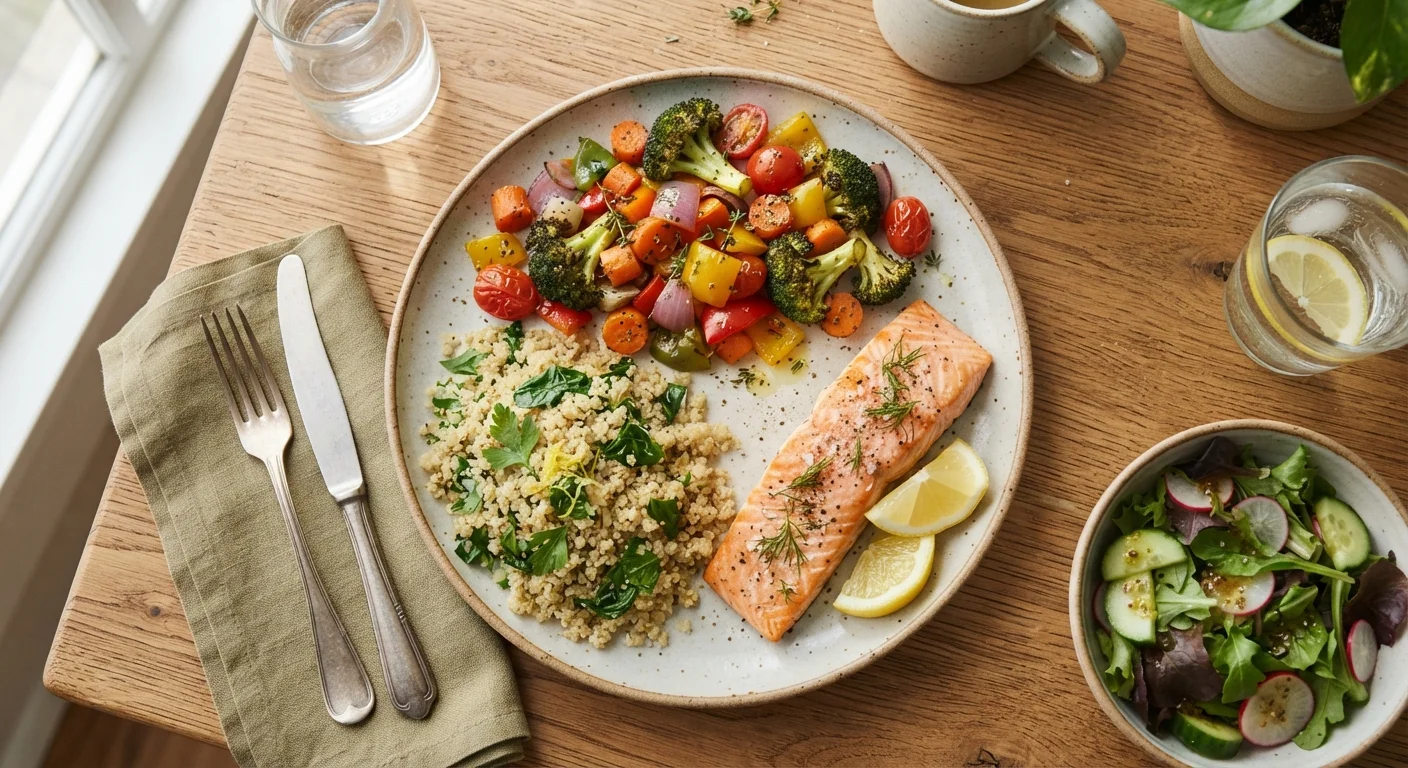
Fill half your plate with non-starchy vegetables at most meals.
Non-starchy vegetables are high in fiber, water, vitamins, and minerals while being relatively low in calories. This single habit is supported by major dietary guidelines and has been linked to reduced risk of chronic disease. It naturally limits room for less nutrient-dense foods without requiring restriction rules.
Reserve roughly one quarter of your plate for a quality protein source.
Protein supports muscle maintenance, immune function, and - critically - satiety. Including a protein source at each meal helps stabilize hunger signals and reduces the likelihood of energy crashes and overeating later. Sources can be animal- or plant-based depending on preference and dietary pattern.
Dedicate the remaining quarter to whole or minimally processed grains and starchy vegetables.
Whole grains and starchy vegetables provide sustained energy through complex carbohydrates and additional fiber. Choosing minimally processed options - brown rice, quinoa, sweet potato, whole-grain bread - over refined versions preserves fiber content and moderates blood sugar response.
Include a source of healthy fat, even in small amounts, at most meals.
Dietary fat supports absorption of fat-soluble vitamins (A, D, E, and K) and contributes to meal satisfaction. Unsaturated fats from sources like olive oil, avocado, nuts, and fatty fish are well-supported by cardiovascular research. Small additions to meals are sufficient - fat is calorie-dense, so large portions aren't needed.
Eat slowly and pause before deciding on second portions.
Satiety signals from the stomach take approximately 15-20 minutes to register in the brain. Eating quickly can lead to consuming more than intended before fullness is recognized. Slowing the pace of eating is a simple behavioral change supported by research on appetite regulation.
Quick Actions You Can Take at Your Next Meal
You don't need to overhaul your entire diet to start eating more intentionally. Small, targeted changes at individual meals accumulate into meaningful habits over time.
If grocery costs are a concern, these habits pair well with budget-conscious strategies. Eating well on a budget explores how to build nutritious meals without overspending.
Making Balance a Long-Term Habit
The most effective nutrition habits are the ones that survive a busy Tuesday, a holiday weekend, and a stressful month at work. Aiming for balance across the week - rather than perfection at every single meal - is a more realistic and psychologically sustainable standard.
Aim for Consistency, Not Perfection
No single meal determines your overall nutritional health. A meal that doesn't fit the balanced-plate model isn't a failure - it's simply one data point in a much larger pattern. Nutrition researchers generally emphasize dietary patterns over weeks and months rather than individual meals as the meaningful unit of health impact. Give yourself room to eat flexibly on social occasions and high-stress days, and return to your baseline habits without guilt.
Meal planning can reinforce these habits by reducing decision fatigue. However, planning systems often fail when they're too rigid or time-intensive. Why meal planning falls apart and how to make it stick offers practical strategies for building a system that holds up in real life.
Physical activity is a natural complement to balanced nutrition. Explore approachable routines at the Fitness & Exercise hub.
This article is for general informational and educational purposes only and does not constitute medical or dietary advice. Consult a registered dietitian or qualified healthcare professional before making significant changes to your diet, especially if you have an existing health condition.