

| Recommended dietary allowance (general adult baseline) | 0.8g protein per kg of body weight/day (U.S. National Academies of Sciences, Engineering, and Medicine) |
| Number of essential amino acids | 9 |
| Highest plant protein source by weight | Seitan (~25g per 3.5 oz cooked) |
| Complete plant proteins | Soy (tofu, tempeh, edamame), quinoa, amaranth, buckwheat |
| Protein in one large egg | ~6g (USDA FoodData Central) |
| Protein in cooked lentils (½ cup) | ~9g (USDA FoodData Central) |
Why Protein Source Matters
Protein is an essential macronutrient involved in muscle maintenance, immune function, enzyme production, and tissue repair. Most adults need a meaningful amount each day, though individual requirements vary based on age, activity level, and health status. A qualified healthcare or nutrition professional can help determine what's appropriate for your situation.
What often gets overlooked is that protein sources differ not just in quantity but in quality - specifically in their amino acid profiles and digestibility. Animal proteins are generally considered "complete," meaning they contain all nine essential amino acids in adequate proportions. Many plant proteins are lower in one or more essential amino acids, though eating a varied diet across the day addresses this for most people.
For a broader look at how different eating patterns approach protein and other nutrients, see our comparison of plant-based and omnivore diets.
| Recommended dietary allowance (general adult baseline) | 0.8g protein per kg of body weight/day (U.S. National Academies of Sciences, Engineering, and Medicine) |
| Number of essential amino acids | 9 |
| Highest plant protein source by weight | Seitan (~25g per 3.5 oz cooked) |
| Complete plant proteins | Soy (tofu, tempeh, edamame), quinoa, amaranth, buckwheat |
| Protein in one large egg | ~6g (USDA FoodData Central) |
| Protein in cooked lentils (½ cup) | ~9g (USDA FoodData Central) |
Animal-Based Protein Sources
Animal-derived foods remain among the most protein-dense options available and are staples across many eating styles, from omnivore to pescatarian diets.
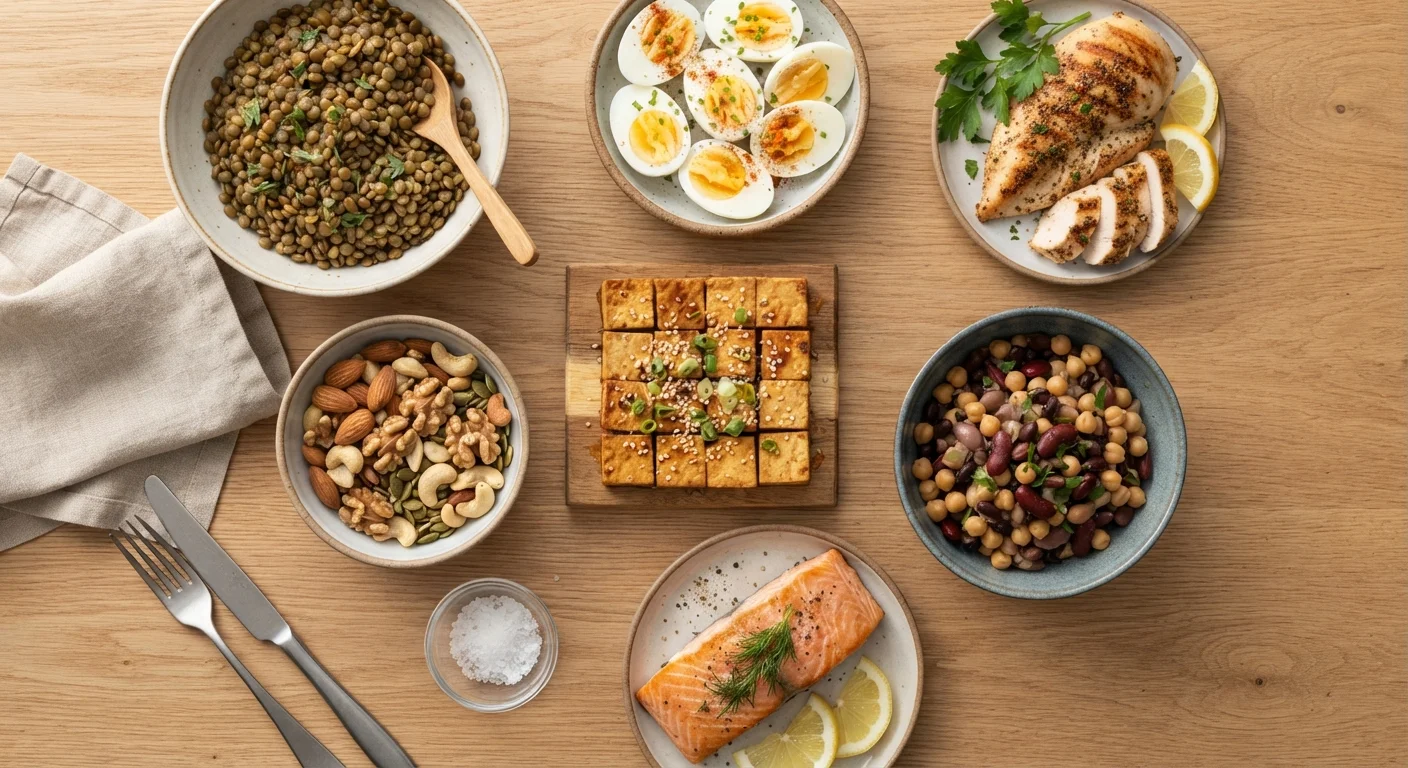
- Poultry (chicken, turkey): A 3.5 oz (100g) cooked skinless breast provides roughly 30-31g of protein. Versatile for grilling, roasting, or soups.
- Fish and seafood: Salmon, tuna, cod, and shrimp range from about 20-26g of protein per 3.5 oz cooked serving. Fatty fish also contribute omega-3 fatty acids.
- Eggs: One large egg contains approximately 6g of protein. Eggs are inexpensive, quick to prepare, and provide a complete amino acid profile.
- Dairy (Greek yogurt, cottage cheese, milk): Greek yogurt delivers roughly 10g per 100g serving; cottage cheese offers similar amounts. Both are useful for breakfasts or snacks.
- Red meat (beef, pork, lamb): Lean cuts provide approximately 25-28g per 3.5 oz cooked. These are also notable sources of iron, zinc, and B12.
For guidance on fitting these foods into a budget-conscious routine, our article on eating well on a budget covers practical strategies.
Plant-Based Protein Sources
Plant proteins are central to vegan, vegetarian, and flexitarian eating styles - and increasingly common in omnivore diets as well. Variety and combination are the keys to meeting amino acid needs.
Complete protein
A food that contains all nine essential amino acids in amounts sufficient for the body's needs. Animal foods and a few plant foods (like soy and quinoa) fall into this category.
Essential amino acids
Amino acids the human body cannot synthesize on its own and must obtain through food. There are nine essential amino acids in total.
Bioavailability
The proportion of a nutrient that the body can absorb and use. Protein bioavailability varies between sources - animal proteins are generally absorbed more efficiently than many plant proteins.
Complementary proteins
A practice of combining two or more plant protein sources - such as rice and beans - to provide a fuller range of essential amino acids across a meal or day.
Legumes
A family of plants whose seeds grow in pods, including lentils, chickpeas, black beans, and soybeans. Legumes are among the most protein-rich plant foods and are also high in fiber.
- Legumes (lentils, black beans, chickpeas): Cooked lentils provide about 9g of protein per half-cup. Also high in fiber and iron.
- Tofu and tempeh: Firm tofu offers roughly 8-10g per half-cup; tempeh is higher, at around 15-16g, and has a nuttier flavor suited to stir-fries or grain bowls.
- Edamame: A half-cup of shelled edamame provides approximately 8-9g. One of the few plant sources with a complete amino acid profile.
- Seitan (wheat gluten): Very high in protein - around 25g per 3.5 oz - but unsuitable for those with celiac disease or gluten sensitivity.
- Nuts and seeds (hemp, pumpkin, peanuts, almonds): Hemp seeds offer about 10g per 3 tablespoons. Nuts are calorie-dense, so portions matter; they're best used as complements, not primary sources.
- Whole grains (quinoa, amaranth): Quinoa provides roughly 4g per half-cup cooked and is a complete protein - unusual among grains.
Mixed and Flexible Eating Patterns
Many people don't follow a strict dietary category - and that's perfectly workable. A flexitarian or Mediterranean-style approach might combine eggs and dairy with generous amounts of legumes, fish, and occasional meat. Research suggests this kind of varied intake can support both nutrient adequacy and long-term dietary adherence.
For context on how these patterns compare on health outcomes, see our overview of Mediterranean, DASH, and whole-food eating approaches.
~1 in 3
U.S. adults identify as flexitarian or reduce meat intentionally
Based on consumer survey data cited in industry and academic nutrition literature over recent years; exact figures vary by survey methodology.
70%+
Of global protein intake comes from plant sources worldwide
According to Food and Agriculture Organization (FAO) estimates on global dietary protein supply patterns.
Regardless of eating style, paying attention to ingredient composition is worthwhile - especially with processed protein products. Our guide to reading ingredient lists can help decode what's actually in packaged protein foods.
This article is for general informational and educational purposes only and does not constitute medical or nutritional advice. Individual protein needs vary. Please consult a qualified healthcare or registered dietitian professional for guidance tailored to your health situation.