
Driving in Rain, Snow, Ice, and Fog: Adjusting Your Habits for Every Condition

Key Takeaways
Why Weather Conditions Demand a Different Mindset
Most driving habits are built around clear skies and dry pavement. Rain, snow, ice, and fog don't just add inconvenience - they fundamentally change the physics of driving. Stopping distances increase, visibility shrinks, and hazards appear with less warning. According to the U.S. Department of Transportation, weather-related crashes account for a substantial share of annual traffic fatalities, with wet pavement and rain consistently among the leading environmental factors.
The core adjustment isn't one single technique - it's a shift in how you think about time and space. Everything requires more of both: more distance ahead of you, more time to brake, more time to react. Overconfidence in familiar vehicles or familiar roads is a documented risk factor. See how everyday habits break down in our look at the hidden patterns behind everyday accidents.
21%
Weather-related share of annual U.S. traffic crashes
According to the U.S. Department of Transportation Federal Highway Administration's Road Weather Management data.
4x
Stopping distance increase on ice vs. dry pavement
Commonly cited across traffic safety research and driver education materials as a general estimate under comparable speeds.
70%
Weather crashes occurring on wet pavement
The FHWA estimates roughly 70% of weather-related crashes happen on wet roads, making rain the most common adverse condition.
Driving in Rain: Traction, Visibility, and Timing
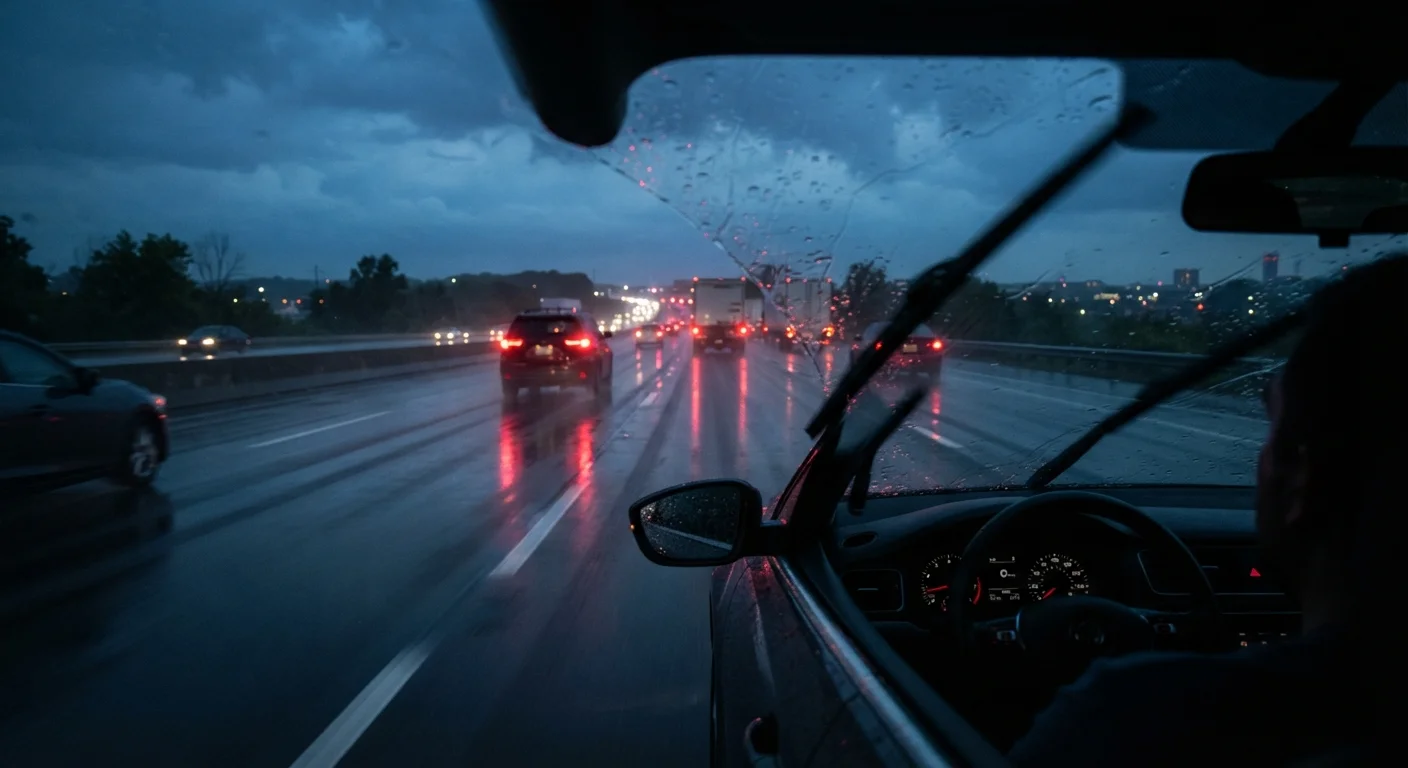
Rain introduces two simultaneous problems: reduced visibility and reduced tire grip. The first 10-20 minutes of rain are often the most dangerous, as water mixes with oil residue on the road surface before washing it away, creating especially slick conditions.
Speed and Following Distance
Reduce your speed by at least 5-10 mph below the posted limit in light rain, and more in heavy downpours. Double your normal following distance - a three-second gap in dry conditions should become at least six seconds in rain. Hydroplaning (when tires lose contact with the road surface and ride on a film of water) typically occurs at highway speeds. If you feel the steering go light, ease off the accelerator gradually without braking sharply.
Lights and Wipers
Turn on your headlights whenever you run your wipers - many states legally require this. Make sure your wiper blades are in good condition before rainy seasons arrive. If visibility drops to the point where you cannot see clearly even with wipers on full, find a safe place to pull well off the road and wait it out.
If you feel your car hydroplaning, resist the urge to brake hard. Ease off the accelerator smoothly, hold the steering wheel straight, and let speed drop naturally until your tires regain contact.
Hard braking during hydroplaning can cause the vehicle to skid sideways; gradual deceleration lets tire contact re-establish progressively.
When driving in snow, look as far ahead as possible and anticipate stops early - momentum is your enemy on a slick surface, so use gravity and engine braking rather than your brake pedal whenever you can.
Early speed reduction through coasting preserves tire grip and reduces the likelihood of ABS activation or skidding under hard braking.
Snow and Ice: The Slowdown Imperative
Ice and packed snow can increase stopping distances by four times or more compared to dry pavement. The single most effective adjustment you can make is simply slowing down - significantly. Speeds that feel comfortable on a snowy road may still be far too fast to stop safely.
Black Ice
Black ice is a thin, transparent layer of ice that takes on the color of the pavement beneath it, making it nearly invisible. It forms most readily on bridges, overpasses, and shaded road sections where temperatures drop fastest. Treat any road surface below 32°F as potentially icy, even if it looks clear and dry.
Braking and Steering on Snow
In vehicles with antilock brakes (ABS), apply firm, steady pressure to the brake pedal and let the system do its job - do not pump the pedal. Steer smoothly and avoid sudden inputs. If your vehicle begins to skid, look where you want to go and steer gently in that direction. Accelerate and decelerate slowly to maintain traction from a stop.
All-season tires perform adequately in light snow, but dedicated winter tires offer meaningfully better grip in sustained cold and snow. Pair good tires with seasonal vehicle preparation to cover all your bases.
AWD and 4WD Don't Mean You Can Stop Faster
All-wheel drive and four-wheel drive systems distribute engine power to improve acceleration and traction on loose surfaces. They do not improve braking performance on ice or snow. Drivers in AWD or 4WD vehicles who follow too closely or drive too fast for conditions are at the same stopping-distance risk as any other vehicle - sometimes more so because of greater confidence.
Fog: When Your Headlights Become the Enemy
Dense fog can reduce visibility to a few car lengths in severe cases. The instinctive response - switching to high beams - actually makes things worse. High-beam light reflects off water droplets in the fog and bounces back toward the driver, creating a bright wall that reduces how far ahead you can see.
The Right Lighting Approach
Use low-beam headlights in fog. If your vehicle has dedicated front fog lights, use them - they are positioned lower and angled to illuminate the road beneath the fog layer. Rear fog lights, where equipped, help following drivers see you. Never drive with only your parking lights on in fog; they are not bright enough.
Speed, Sound, and Stopping
Reduce speed so that your stopping distance never exceeds your sight distance - if you can only see 100 feet ahead, you need to be able to stop within 100 feet. In thick fog, roll down your window slightly; you may hear traffic or warning signals before you can see them. If fog becomes too dense to drive safely, pull completely off the roadway - not just onto the shoulder - and turn off your lights to avoid other drivers steering toward them.
Fog often accompanies nighttime driving hazards. The practices covered in night driving risk reduction complement fog safety well.
Habits That Apply Across All Adverse Conditions
Beyond condition-specific techniques, several practices improve safety in any type of bad weather:
- Eliminate distractions entirely. Adverse weather demands your full attention. Even a glance at a phone during normal driving is dangerous; in rain or ice, it's far more so.
- Increase following distance. Whatever gap you normally maintain, double it. This gives you time to react to hazards, including other drivers' mistakes.
- Signal earlier and brake earlier. Other drivers need more warning time when roads are slick. Begin slowing down well before turns and stops.
- Know your vehicle's limits. Four-wheel drive and all-wheel drive help with acceleration and getting unstuck, but they do not significantly improve braking on ice or snow. Many drivers overestimate their traction.
- Plan ahead or delay travel. If conditions are severe, consider whether the trip is necessary. Adjusting departure time before a storm or after road treatment crews have worked is a legitimate and often underused safety strategy.
These principles connect directly to the core ideas behind defensive driving - anticipating problems before they reach you.
Preparing Your Vehicle Before the Weather Hits
No amount of skill behind the wheel compensates for worn tires, failed wipers, or dim headlights. Before any drive in questionable weather - and certainly before a season known for it - run through the basics.
Check tire tread depth and inflation pressure; cold temperatures cause tire pressure to drop roughly 1 PSI for every 10°F decrease. Inspect wiper blades for streaking or skipping. Verify all exterior lights work. Keep your fuel tank at least half full in winter to prevent fuel line issues and give you options if you're delayed. Make sure your defroster - front and rear - is functioning.
Our pre-trip safety checklist covers these items in a format you can run through in a few minutes. For deeper seasonal preparation, see seasonal car care guidance on what to inspect and address each season.
Good vehicle condition and adjusted driving habits work together - neither alone is enough. Treat adverse weather as a system to prepare for, not a surprise to react to.