

Key Takeaways
Start here
Why Maintenance Matters Even If You're Not a Car Person
Next
The Fluids You Should Know How to Check
Then
Tires, Brakes, and Lights: Your Safety Trio
When you're ready
When to Go to a Shop (and What to Expect)
Put it together
Building a Simple Maintenance Routine
Why Maintenance Matters Even If You're Not a Car Person
You don't need to be mechanically inclined to take care of a car - you just need to understand what to look for and when. Vehicles are built to be durable, but that durability depends on basic upkeep. Skipping routine care rarely causes an immediate problem; instead, it quietly shortens the car's life and turns manageable repairs into expensive ones.
The good news: most of the fundamentals are straightforward. Your first resource should always be your owner's manual, which contains a maintenance schedule tailored specifically to your vehicle. If you haven't opened it yet, the maintenance sections most drivers ignore are worth reading before anything else.
Owner's manual
The booklet that came with your vehicle - it contains the manufacturer's exact maintenance schedule, fluid specifications, and warning light explanations for your specific model.
Dipstick
A long metal rod in the engine bay used to measure engine oil level and check its condition - one of the easiest checks any driver can perform.
Tire pressure (PSI)
The amount of air inside your tires, measured in pounds per square inch. The correct number for your car is on a sticker inside the driver's door - not on the tire itself.
Tread depth
The depth of the grooves in your tire surface. Adequate tread is essential for gripping wet roads; worn tread significantly increases stopping distance.
Coolant (antifreeze)
A fluid that circulates through the engine to regulate temperature - it prevents the engine from overheating in summer and freezing in winter.
Service interval
The mileage or time period after which a specific maintenance task - such as an oil change or tire rotation - should be performed.
The Fluids You Should Know How to Check
Five fluids keep your car running safely, and most can be checked without any tools in about ten minutes with the hood open:
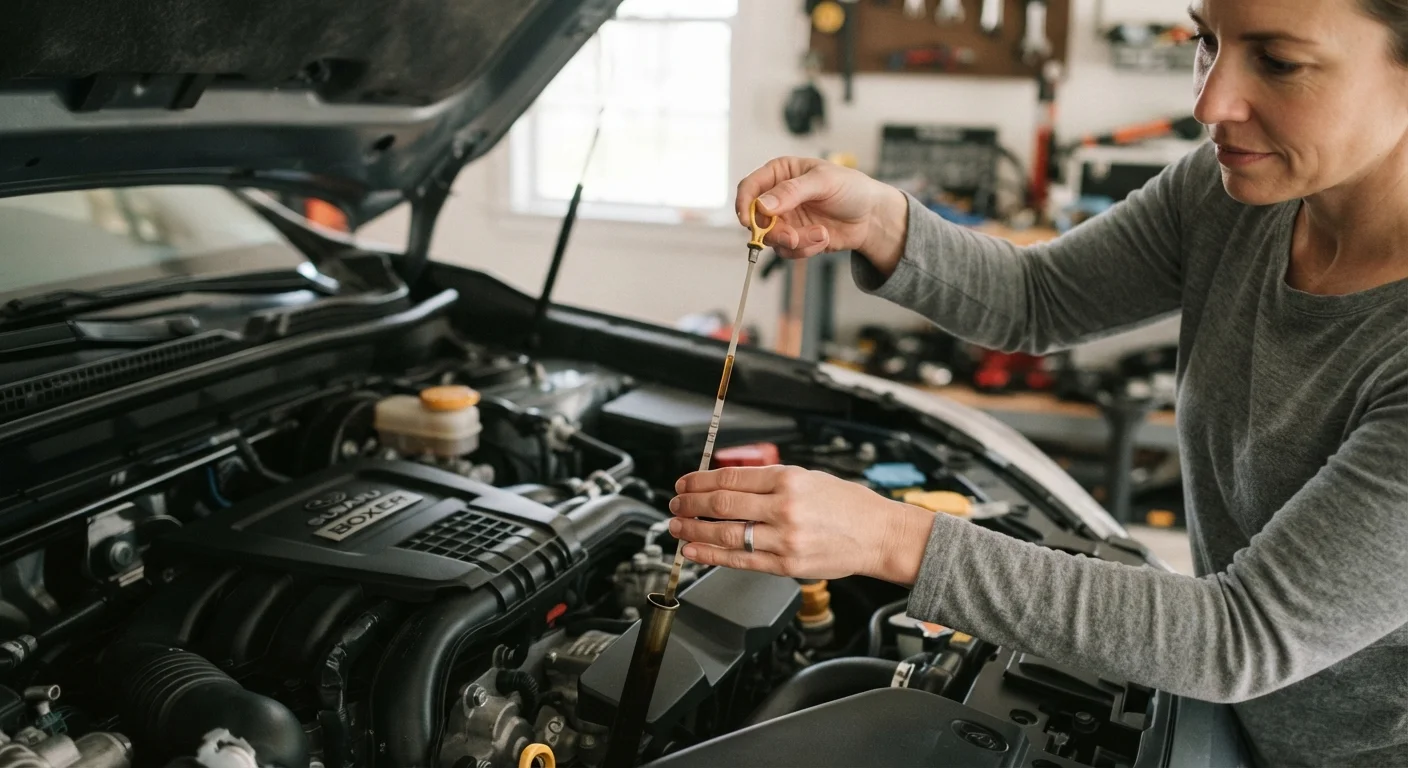
- Engine oil - Pull the dipstick, wipe it clean, reinsert it fully, then pull again. The oil should be between the two marks and appear amber to dark brown, not milky or gritty.
- Coolant (antifreeze) - Check the plastic reservoir (never open the radiator cap on a hot engine). The level should fall between the MIN and MAX lines.
- Brake fluid - Located in a small reservoir near the firewall. If it's below the minimum line, have your brakes inspected - low brake fluid often signals worn pads or a leak.
- Power steering fluid - Many newer vehicles have electric power steering and no reservoir. If yours has one, check it the same way as brake fluid.
- Windshield washer fluid - The only fluid you can safely top up yourself without mechanical risk. Use rated washer fluid, not plain water, to prevent freezing.
Check Fluids When the Engine Is Cold
Most fluid checks are most accurate when the engine has been off for at least 30 minutes. A hot engine can give misleading oil and coolant readings, and opening a hot radiator cap is dangerous. Make it a habit to check fluids before your first drive of the day.
For a deeper look at what these service intervals actually mean, see your car's maintenance schedule explained.
Tires, Brakes, and Lights: Your Safety Trio
These three systems directly affect your ability to avoid accidents. They deserve a quick check every month - no tools needed for most of it.
Tires
Check pressure monthly with an inexpensive gauge (the correct PSI is on a sticker inside your driver's door jamb, not the tire sidewall). Visually inspect for uneven wear, cracking, or objects embedded in the tread. To check tread depth, the quarter test described in the FAQ section gives a rough indicator - when in doubt, have a shop measure it.
Brakes
You don't need to see your brakes to notice early warning signs. A squealing noise when stopping, vibration in the pedal, or a longer stopping distance than usual all suggest it's time for a professional inspection. Brakes are not a DIY area for beginners - have a qualified mechanic evaluate them.
Lights
Walk around your car periodically and confirm headlights, taillights, and turn signals work. A burned-out bulb can result in a traffic stop and, more importantly, makes you harder to see. Many bulbs are user-replaceable, though some modern vehicles require professional access.
When to Go to a Shop (and What to Expect)
Knowing your limits is part of being a capable car owner. Tasks like air filter swaps and wiper blade changes are realistic DIY jobs. But oil changes (if you're unfamiliar with disposal requirements), brake work, suspension issues, and anything involving the electrical system belong with a trained technician.
When you bring your car in, you have every right to ask for a written estimate before work begins. Reputable shops will explain what they found, show you the worn part if asked, and prioritize safety-critical repairs. If something doesn't feel right, a second opinion from another shop is entirely reasonable.
Never Ignore a Flashing Warning Light
A flashing check-engine light - unlike a steady one - typically indicates an active problem that can damage the engine or catalytic converter if you keep driving. Pull over safely when conditions allow and arrange for the vehicle to be inspected before continuing. Your owner's manual explains what each symbol means.
Understanding the real costs of car ownership helps you plan for both routine and unexpected service visits without financial surprise.
Building a Simple Maintenance Routine
The most effective approach is a tiered checklist - monthly, every few months, and annually. Here's a simple framework to start with:
- Monthly: Check tire pressure, inspect all lights, glance at fluid levels.
- Every 3-6 months or per manual guidance: Oil and filter change, rotate tires.
- Annually or as scheduled: Inspect brakes, replace cabin and engine air filters, check battery terminals.
Your owner's manual will refine these intervals for your specific model - mileage-based schedules are often more accurate than time-based ones for drivers who put on many miles. For a thorough breakdown of what each interval covers, your car's maintenance schedule explained walks through the details.
First-time owners also often benefit from understanding the common upkeep mistakes that shorten a car's life - catching those habits early makes a meaningful difference.